QUICK
What is the difference between heartburn, acid reflux and GERD?
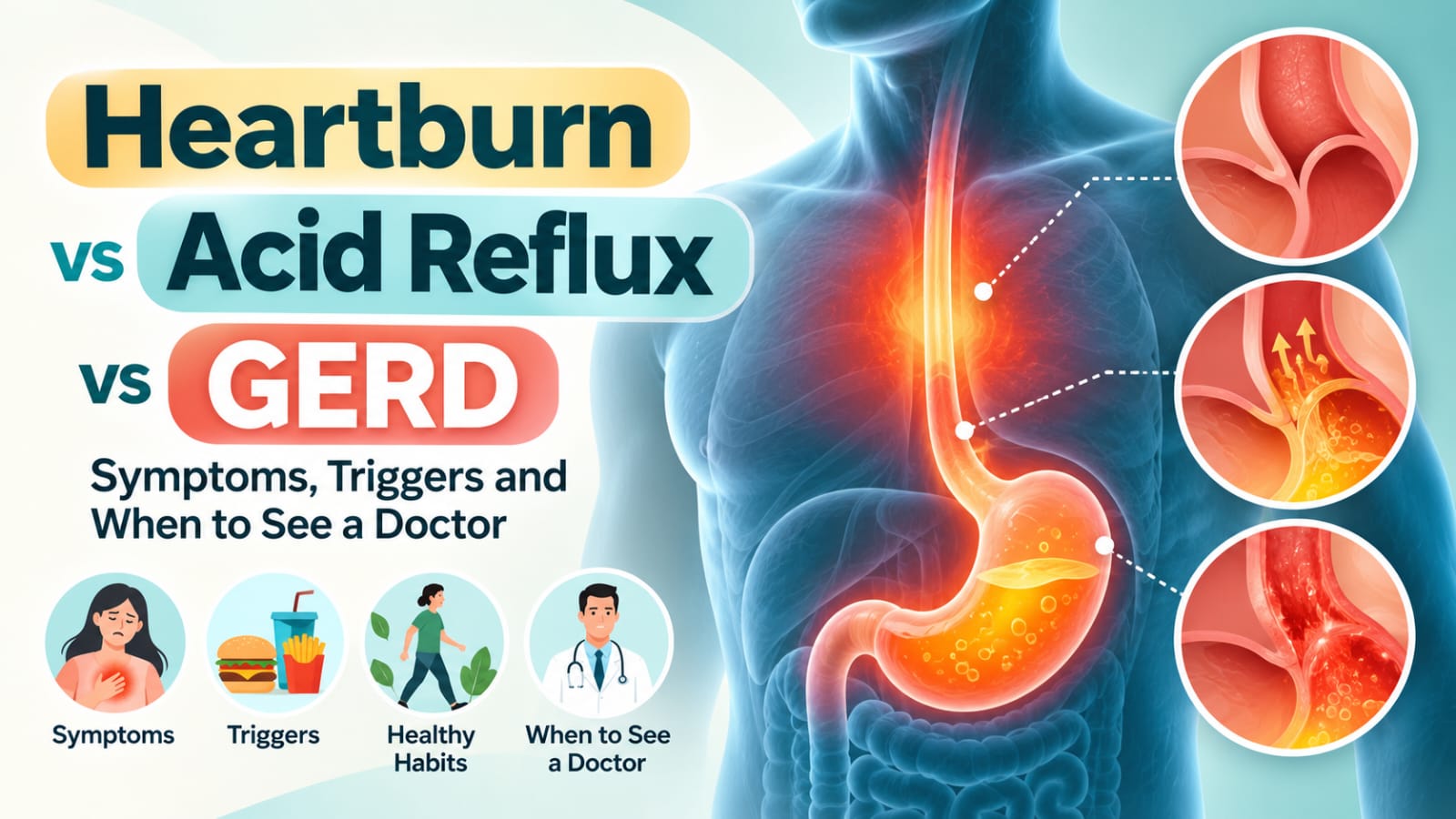
Heartburn is a burning feeling in the chest. Acid reflux is stomach contents flowing back up into the food pipe (esophagus). GERD (gastroesophageal reflux disease) is when reflux keeps coming back and causes troublesome symptoms or problems.
Heartburn = the feeling · Acid reflux = the event · GERD = the repeating condition.
Why does reflux happen? Your stomach’s one-way door
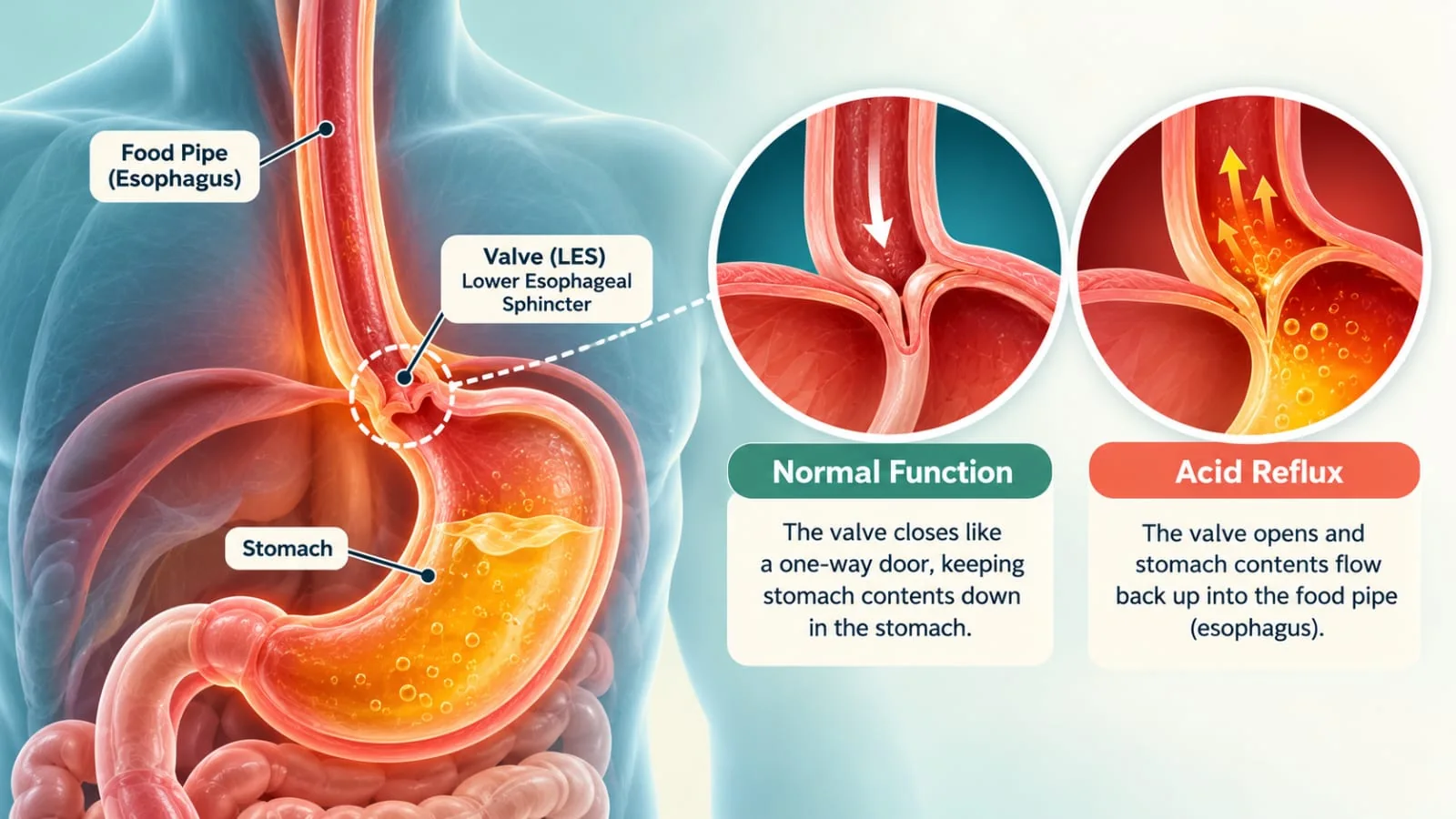
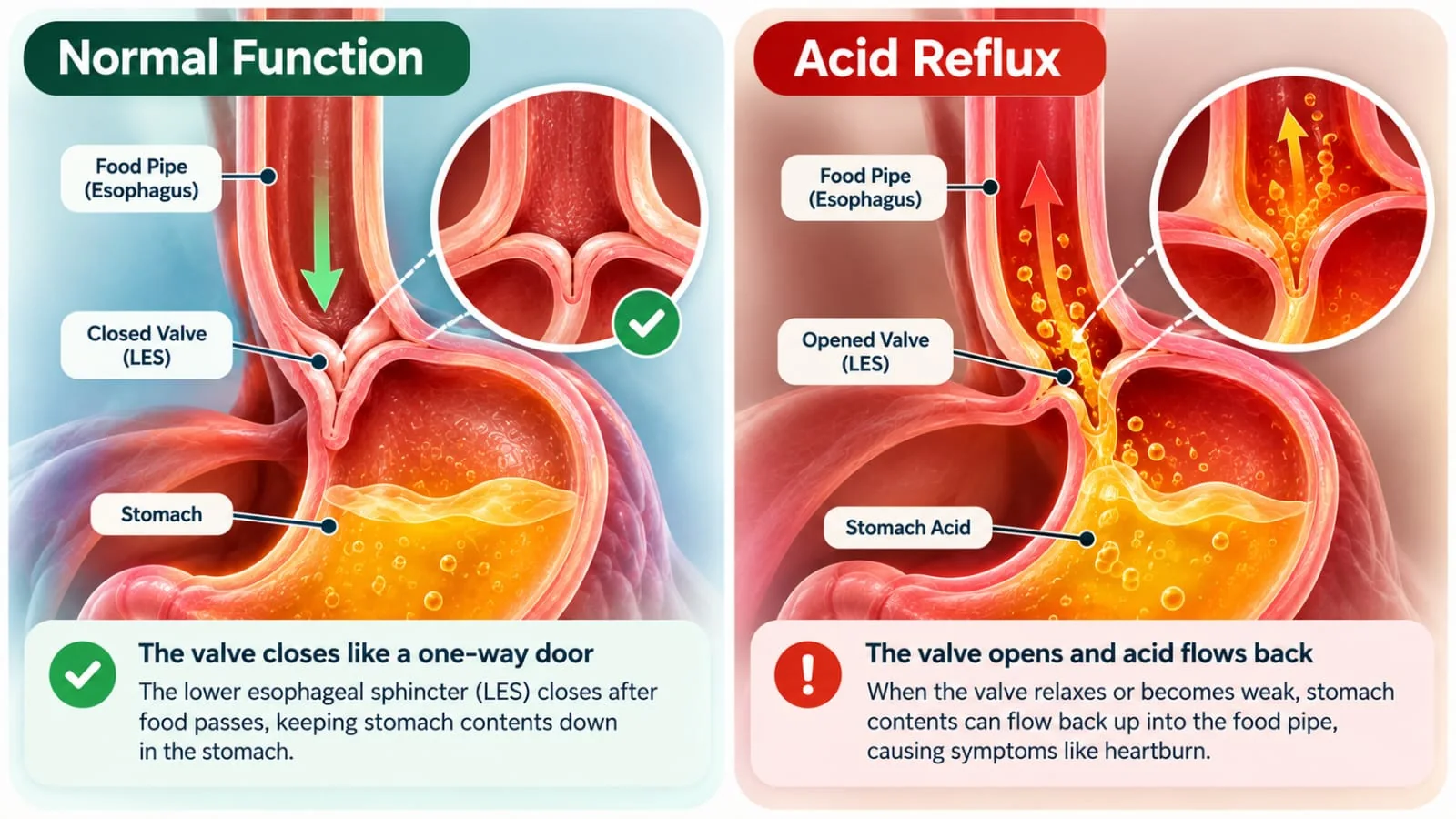
Between your food pipe and stomach sits a ring of muscle called the lower esophageal sphincter (LES). Think of it as a one-way door: food goes down, and the door should close behind it. If it relaxes at the wrong time or does not close well, stomach contents can move back up. The stomach lining handles acid better than the food pipe lining, which is why reflux may cause a burning feeling.
Hasan’s late dinner: a short story
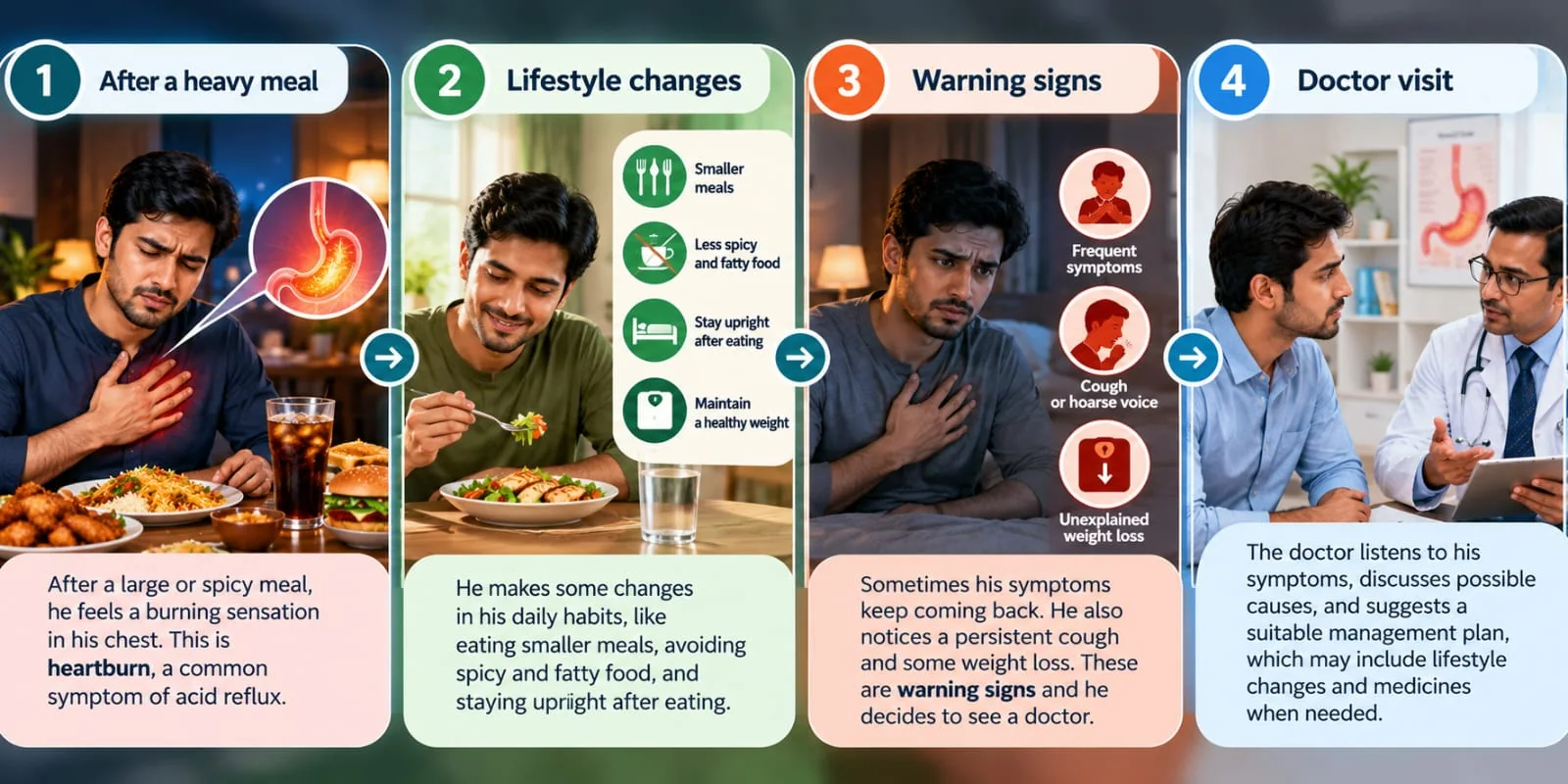
Hasan works late. Most nights he eats a heavy, oily dinner at 11 pm and lies down right away. For weeks he wakes with a burning chest and a sour taste in his mouth. First he blames the tea.
Then he tries something different. He eats a smaller dinner earlier, stays upright for a few hours afterwards, and raises the head end of his bed. The burning eases.
One week, though, he notices pain when swallowing. This time he does not wait. He books an appointment with a doctor.
Hasan learned: good habits can help, but warning signs need a doctor.
What does acid reflux feel like? Common symptoms
- Heartburn: a burning feeling behind the breastbone, often after eating or when lying down or bending over.
- Regurgitation: a sour or bitter taste, or food coming back up into the mouth.
- Chest discomfort.
- Trouble or pain when swallowing.
- A long-lasting cough or hoarse voice, especially if reflux happens at night.
Symptoms are often worse after meals and at night. Chest pain can also come from the heart, so read the warning signs below.
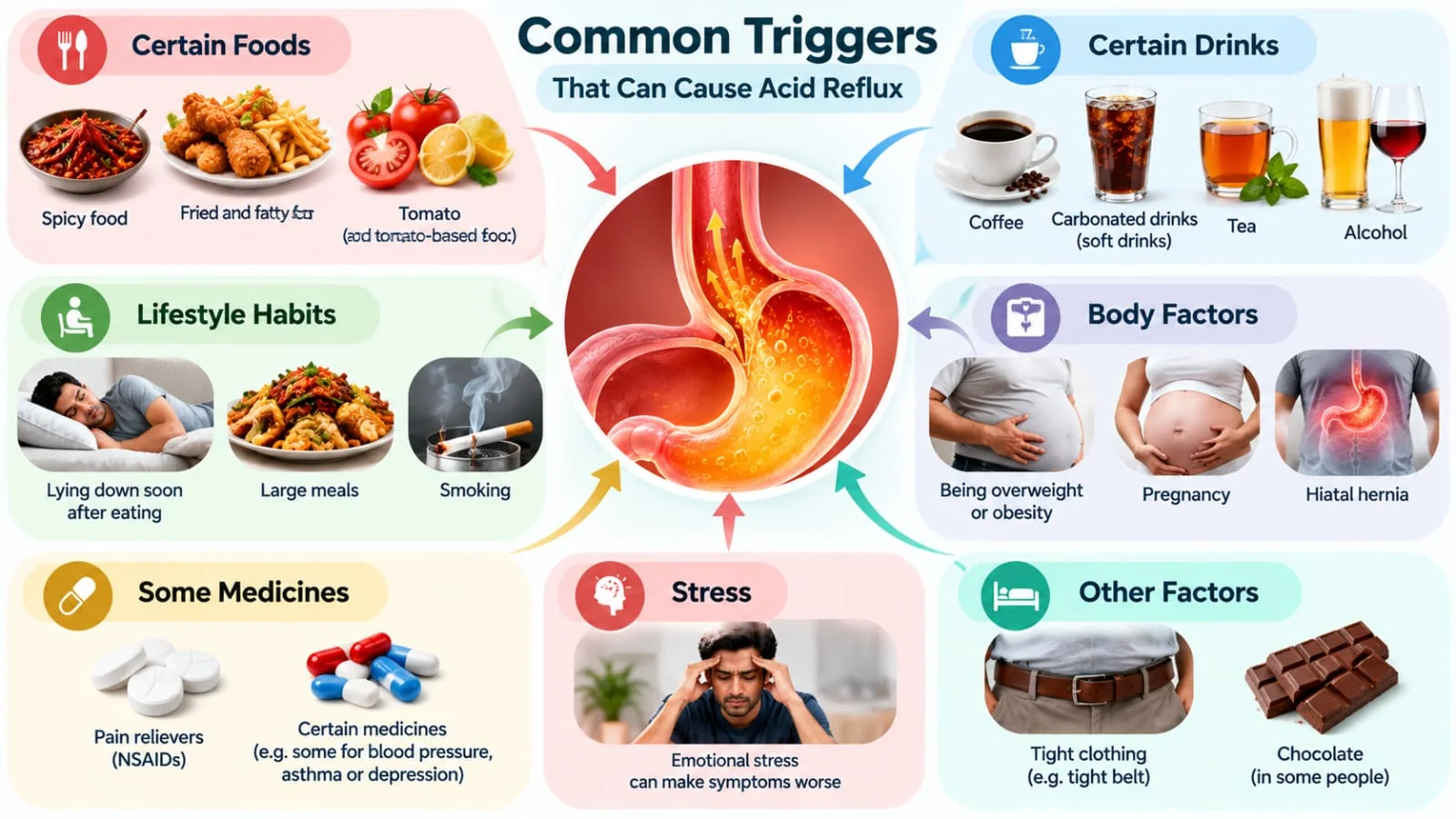
Common triggers of acid reflux
Some habits and foods can trigger or worsen reflux in some people. Your triggers may differ from someone else’s.
- Large meals and eating late at night.
- Lying down soon after eating.
- Fatty, fried or spicy foods, and chocolate.
- Tea, coffee, fizzy drinks and alcohol.
- Smoking, extra body weight or tight clothes around the waist.
- Some medicines. Never stop a prescribed medicine without asking your doctor.
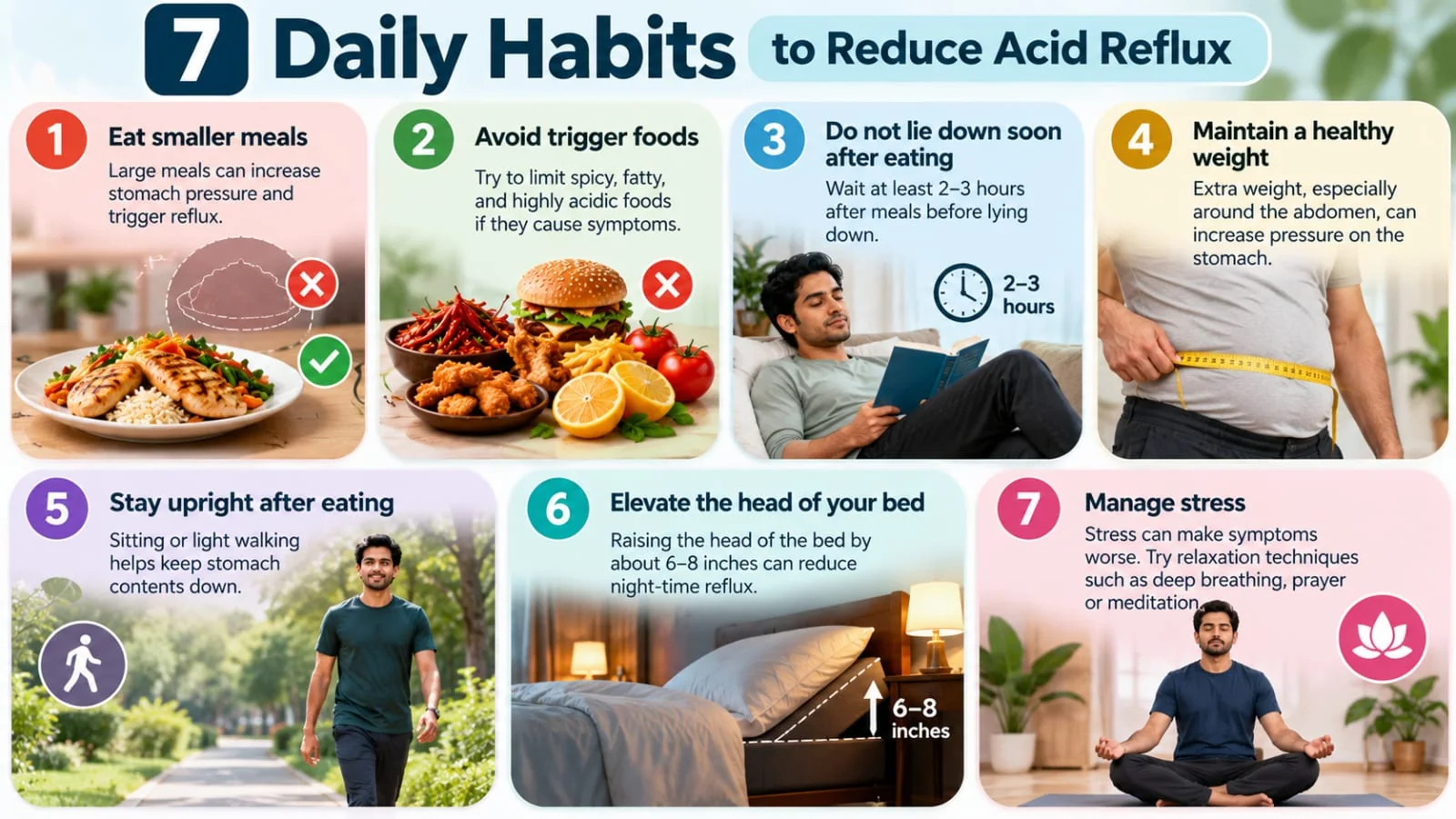
7 daily habits that may help
- Eat smaller meals instead of a few very large ones.
- Finish your last meal 2 to 3 hours before lying down.
- Raise the head end of your bed with sturdy blocks or a wedge.
- Keep a healthy weight.
- Stop smoking and limit alcohol.
- Wear loose clothing around the waist.
- Notice your own triggers and limit them.
If symptoms continue despite these changes, see a doctor.
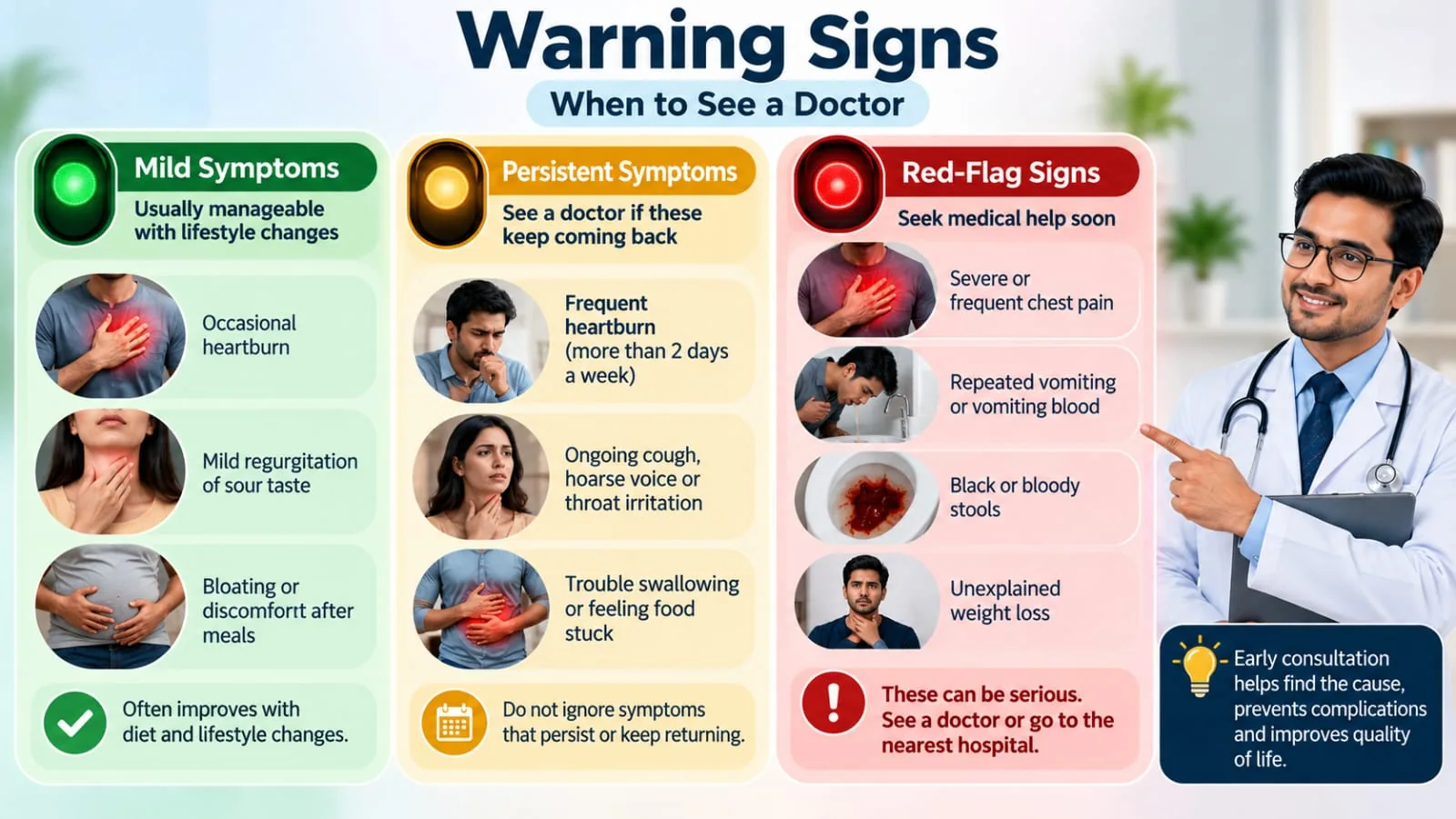
When to see a doctor: warning signs
Occasional mild heartburn after a big meal that eases with the habits above.
- Symptoms keep coming back or do not improve with lifestyle changes or over-the-counter medicines.
- Trouble or pain when swallowing, loss of appetite, repeated vomiting or unexplained weight loss.
- Chest pain with sweating, shortness of breath, or pain spreading to the jaw or arm. These can be signs of a heart problem, not reflux.
- Vomiting blood or black stools.
What can doctors do?
Doctors usually start with lifestyle advice. They may also suggest medicines that neutralise or reduce stomach acid, such as antacids, H2 blockers or proton pump inhibitors (PPIs). Which medicine, how much and for how long is a decision for a doctor because it depends on your symptoms and health. If symptoms are persistent or you have warning signs, tests such as an upper endoscopy may be arranged. Do not take acid medicines for a long time without asking a doctor.
Test yourself: 3-question quiz
1. Which best describes GERD?
2. Chest pain with sweating and shortness of breath: what should you do?
3. Which habit may help with reflux?
5 myths about acid reflux
| Myth | Fact |
|---|---|
| Any burning in the chest is just gas or heartburn. | No. Chest pain can come from the heart. Warning symptoms need emergency help. |
| Acid reflux is normal, so I never need a doctor. | Occasional reflux is common, but repeated symptoms or warning signs need medical attention. |
| If I take an acid medicine, I can eat and lie down whenever I like. | No. Habits still matter. Medicines are a doctor's decision. |
| Everyone has the same trigger foods. | No. Triggers differ from person to person. |
| Reflux only affects the stomach. | No. It can be associated with cough, hoarse voice and swallowing trouble. |
Frequently asked questions
What is the difference between heartburn and acid reflux?
Heartburn is the burning feeling in the chest. Acid reflux is the backward flow of stomach contents into the food pipe that often causes it.
Is acid reflux the same as GERD?
No. Occasional acid reflux is common. GERD is when reflux keeps coming back and causes troublesome symptoms or problems.
What causes acid reflux?
The LES may relax at the wrong time or not close well. Large or late meals, lying down soon after eating, smoking and extra weight can play a part. Sometimes a hiatal hernia is involved.
When should I see a doctor?
See a doctor if symptoms keep returning, do not improve, or come with swallowing problems, loss of appetite, repeated vomiting or unexplained weight loss. Get emergency help for chest pain with sweating or shortness of breath, vomiting blood or black stools.
Can acid reflux cause chest pain?
Yes, but chest pain can also be a sign of a heart problem. If unsure, especially with sweating or shortness of breath, get emergency help.
Which foods trigger heartburn?
It differs from person to person. Common triggers include fatty, fried or spicy foods, chocolate, tea, coffee, fizzy drinks and alcohol.
Should I lie down after eating?
It is best to stay upright and finish your last meal 2 to 3 hours before lying down.
Is “gastric” the same as acid reflux?
Not exactly. “Gastric” is a common word for several stomach complaints, such as reflux, gastritis or ulcers. A doctor can tell which one you have.
What is a PPI?
PPI stands for proton pump inhibitor, a class of medicines that reduce stomach acid. A doctor decides whether you need one, which one and for how long.
Safety check
Chest pain with sweating, shortness of breath or pain spreading to the jaw or arm, vomiting blood, and black stools need emergency help. Do not treat these as simple heartburn. For symptoms that keep coming back, see a doctor instead of relying on medicines on your own.
Key takeaways
- Heartburn = the feeling. Acid reflux = the event. GERD = the repeating condition.
- The valve between the food pipe and stomach should close like a one-way door.
- Smaller earlier meals, staying upright after eating and noticing triggers can help.
- Amber signs mean see a doctor soon. Red signs mean emergency help now.
- Medicines are a doctor's decision.
Fact check
Fact-checked · Sources and review notes
The article's explanations of heartburn, reflux and GERD; the LES valve; warning signs; and lifestyle advice are based on the references below. Last reviewed: October 2026.
- Heartburn is a symptom; reflux is backward flow; GERD is recurrent troublesome reflux — NIDDK and Mayo Clinic.
- Smaller meals, staying upright after eating and identifying personal triggers are commonly advised habits.
- PPIs are a class of acid-reducing medicines; treatment decisions belong with a doctor.
References
Educational content only; it does not replace individual medical advice, diagnosis or treatment. If you have symptoms, talk to a doctor. In an emergency, seek emergency care immediately.

Sayedul Abrar
A Grade Pharmacist · Registration Code: A-22040
Product Executive, Product Management Department (PMD) · Opsonin Pharma Ltd.