 Sayedul Abrar
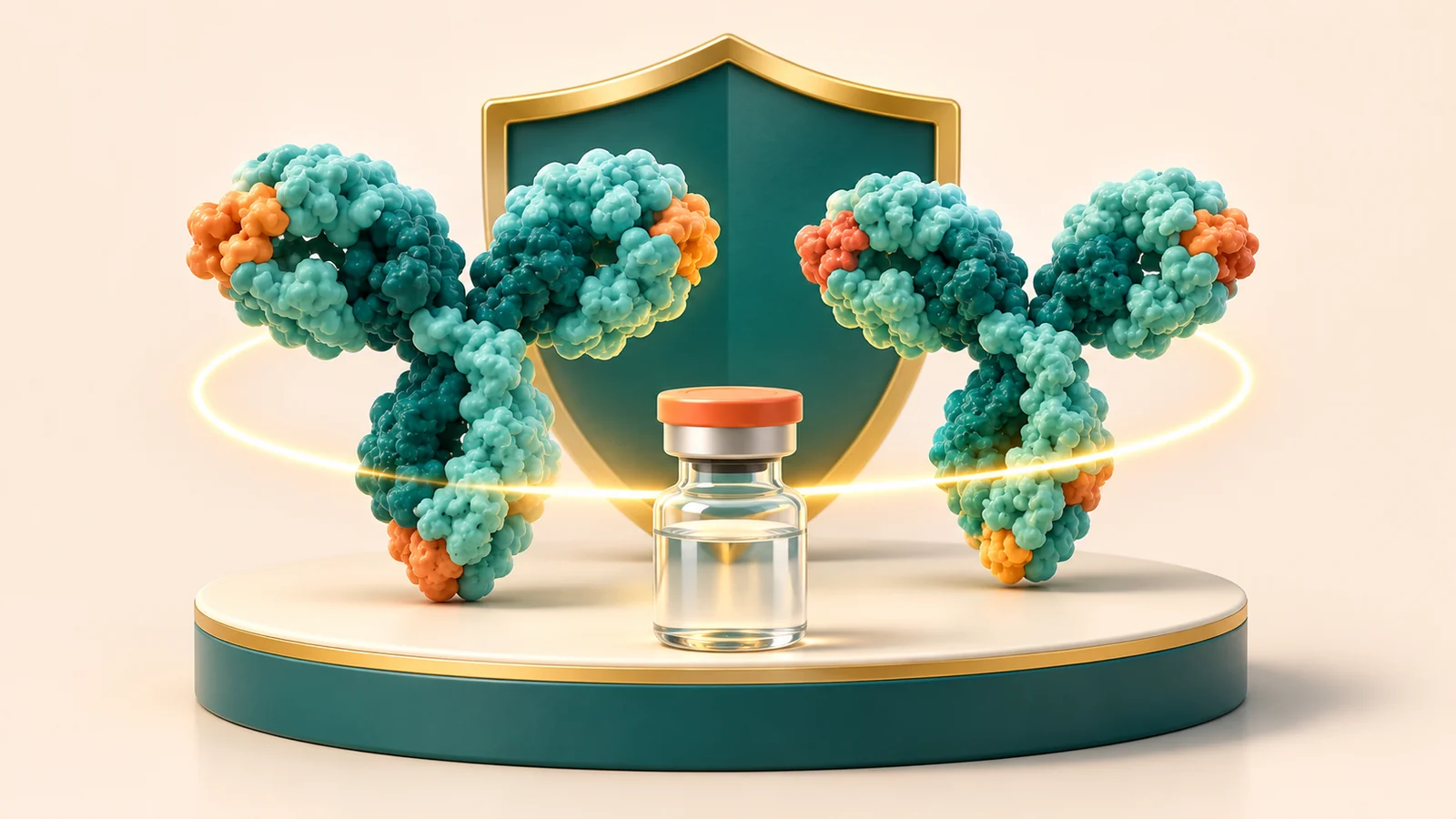
1. First, what is a biological medicine?
Many familiar medicines are made by chemical reactions and have relatively small, well-defined active ingredients. Biological medicines are different. Their active substances are made in or obtained from living systems, such as specially selected bacteria, yeast or mammalian cells.
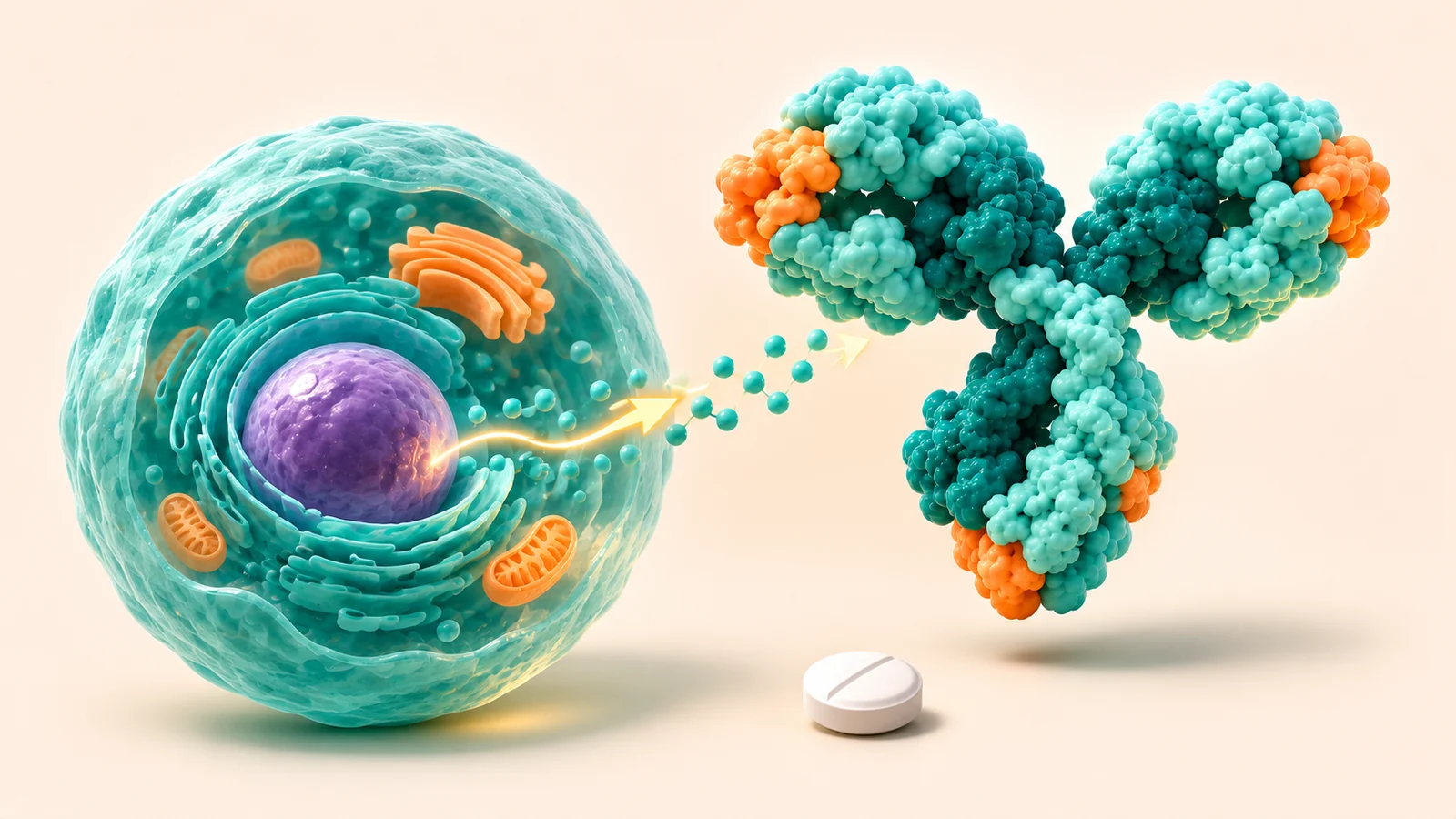
- Made in living cellsbacteria, yeast or mammalian cells
- Large and complexfar bigger than a typical tablet molecule
- Process mattersmanufacturing conditions shape the final product
Examples include some insulins, growth hormones, blood-clotting factors, monoclonal antibodies and medicines used in cancer or autoimmune diseases. These molecules can be large and structurally complex. Their final characteristics depend not only on the genetic instructions, but also on the living cells, manufacturing conditions and purification process.
That is why biological medicines are often described as products of a living manufacturing system. The process needs careful control at every stage.
2. What exactly is a biosimilar?
A biosimilar is a biological medicine developed to be highly similar to a biological medicine that has already been approved by a regulatory authority. The previously approved medicine is called the reference product or originator product.
The biosimilar must be shown to have no clinically meaningful differences from its reference product in terms of quality, safety and effectiveness. Small differences can exist because biological products naturally show some variability. What matters is whether the observed differences affect how the medicine works or its safety for patients.
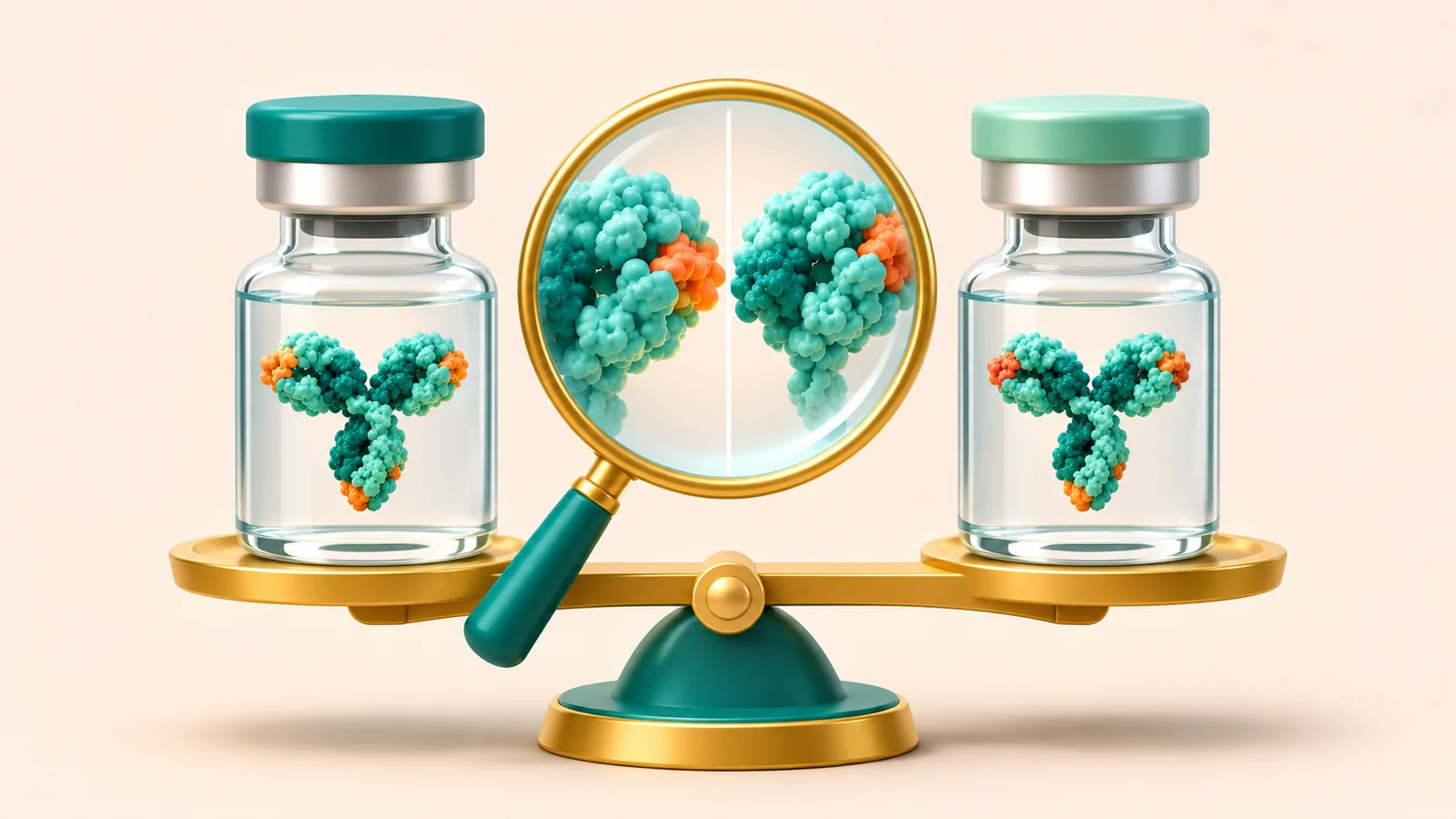
- Reference productthe biological medicine already approved
- Biosimilarhighly similar, compared head to head
- The testno clinically meaningful differences in quality, safety and effectiveness
Think of two carefully made batches of a complex food produced using living fermentation: they may not be molecule-for-molecule identical, but their important characteristics must remain within controlled limits. The analogy is only to explain natural variability—medicine manufacturing and regulatory testing are much more rigorous.
3. Biosimilar vs generic medicine: what is the difference?
Both generics and biosimilars can increase treatment options and competition. However, they are developed and assessed differently.
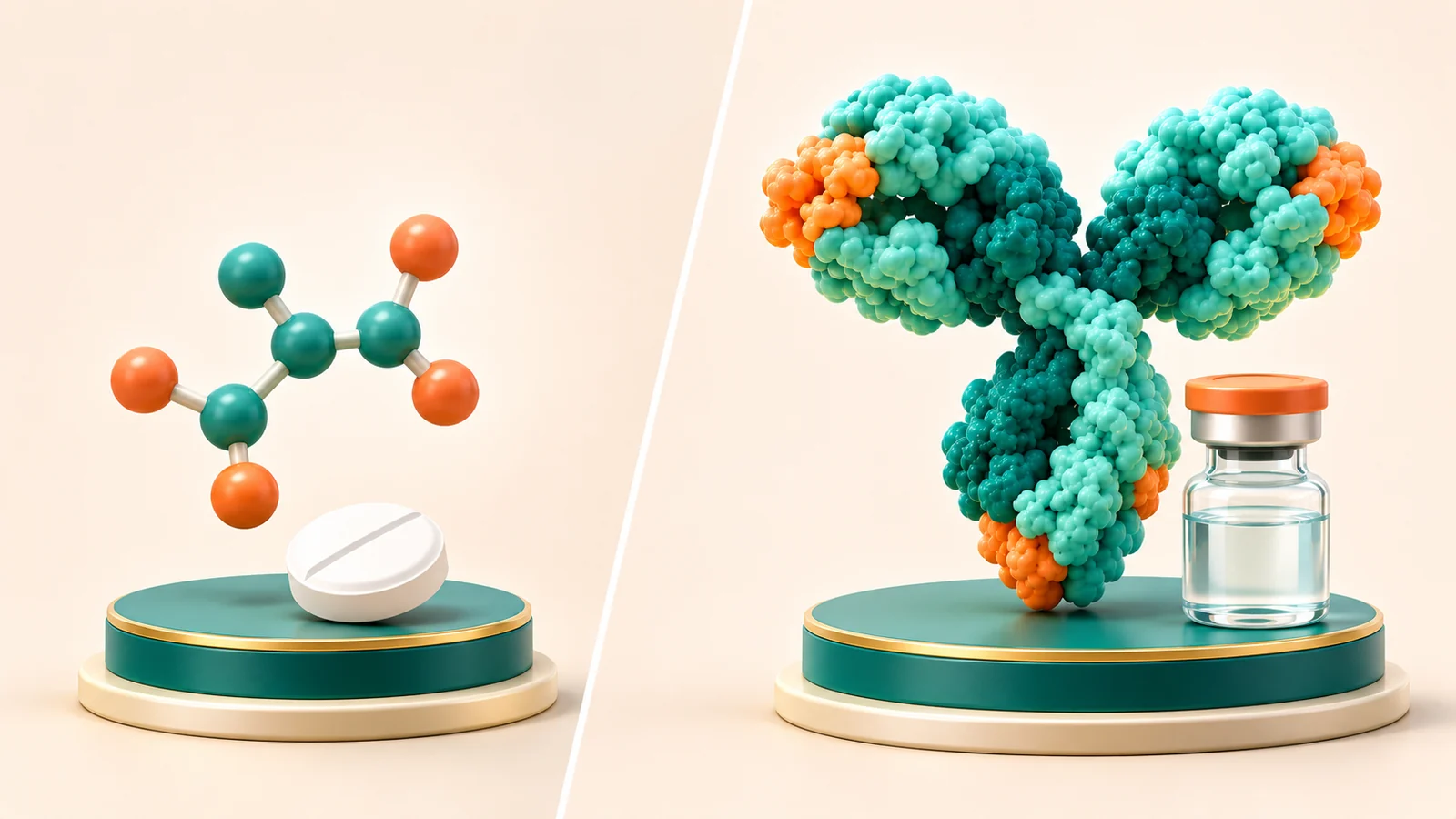
- Conventional genericusually a small chemical molecule with the same active ingredient
- Biosimilara large, complex biological molecule, highly similar to the reference
| Point | Conventional generic | Biosimilar |
|---|---|---|
| Type of medicine | Usually a small-molecule chemical medicine | A biological medicine made using living systems |
| Relationship to original | Same active ingredient as the reference medicine | Highly similar to a reference biological medicine, but not an exact molecular copy |
| How similarity is shown | Usually pharmaceutical equivalence and bioequivalence, as applicable | A stepwise, head-to-head comparability exercise covering analytical quality and, where needed, non-clinical and clinical evidence |
| Manufacturing complexity | Generally more chemically defined and reproducible | More complex; cell line, process controls and purification are critical |
| Interchange or substitution | Often governed by generic substitution rules | Depends on the regulator’s designation and the country’s prescribing and pharmacy laws |
A generic version of a small-molecule medicine can generally contain the same active ingredient as its reference product. For a complex biological medicine, copying every molecular detail is not realistically possible. A biosimilar pathway therefore asks a different question: has the manufacturer demonstrated that the product is sufficiently similar, with no clinically meaningful difference?
4. How is a biosimilar developed?
Development starts with selecting and understanding the reference product. The manufacturer then develops a production process and a cell line capable of making the biological substance. The product is grown, harvested, purified, formulated and filled under controlled conditions.
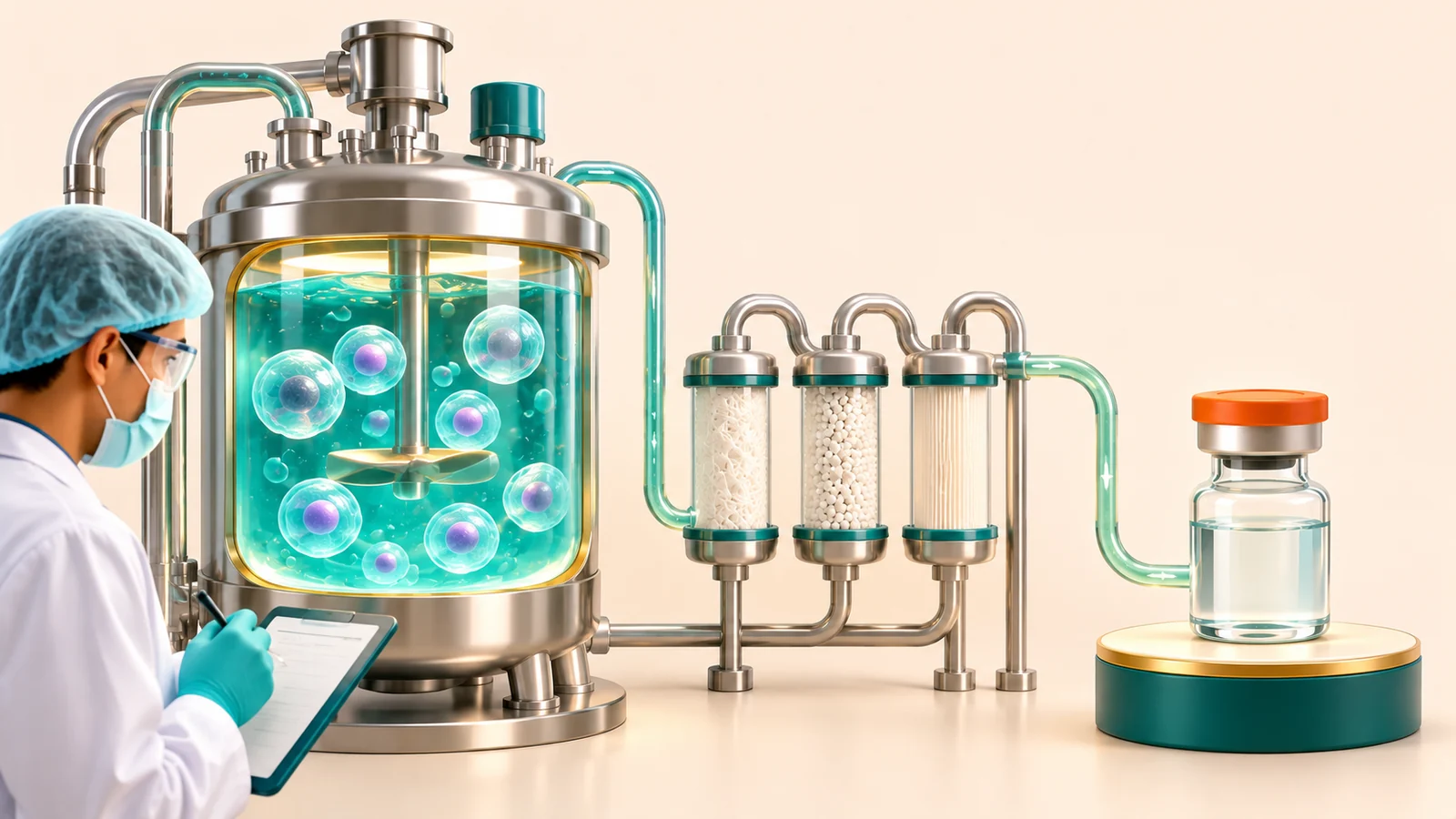
- Growcells make the biological substance
- Purifyfilters remove unwanted material
- Fillthe product is formulated and filled into vials
- Checkquality is controlled and compared with the reference product
Scientists compare the proposed biosimilar with the reference product using sensitive analytical methods. They examine features such as:
- Identity and structure: amino-acid sequence, molecular structure and relevant higher-order features.
- Purity and impurities: unwanted substances, aggregates and product-related variants.
- Biological activity: whether the molecule performs its intended biological function.
- Stability: how the product behaves during storage and within its proposed shelf life.
- Manufacturing consistency: whether different batches remain within established quality limits.
The manufacturer must establish a controlled process and demonstrate that the final product consistently meets its quality specifications. For biologics, process knowledge and process control are especially important.
5. How is a biosimilar tested and approved?
Regulators use the totality of evidence: all relevant analytical, functional, non-clinical and clinical information is considered together. The comparison is usually stepwise. Strong analytical evidence comes first because it can detect many differences directly.

- Lab comparisonstructure, purity and potency
- Function testsdoes it work in the same way?
- Clinical evidence when neededtailored to the product
- Regulator decisionall evidence considered together
- Analytical and quality comparison: detailed laboratory testing compares structure, purity, potency and other quality attributes.
- Functional comparison: tests assess whether the biological activity is comparable.
- Non-clinical studies, when needed: these may help resolve remaining scientific questions.
- Clinical pharmacology: comparative pharmacokinetic (PK) and, where relevant, pharmacodynamic (PD) studies assess how the body handles the medicines and their biological effects.
- Clinical safety, efficacy and immunogenicity evidence: additional studies are designed when uncertainty remains after earlier comparisons.
- Risk management and monitoring: the manufacturer must have a plan to monitor safety after approval.
This does not mean every biosimilar must repeat every clinical trial conducted for the original medicine. If high-quality analytical and functional comparisons resolve the key questions, regulators may consider a tailored clinical data package appropriate. The exact requirements depend on the product and the applicable regulatory guideline.
6. Are biosimilars safe? What about immune reactions and switching?
Biological medicines can sometimes trigger an immune response. This is called immunogenicity. The response may be mild, but in some cases antibodies can reduce the medicine’s activity or cause safety concerns. That is why immunogenicity is an important part of biosimilar assessment and post-approval monitoring.
When a biosimilar has been properly approved under a robust regulatory pathway, it is expected to provide the same clinical benefit and have the same risk profile as its reference product. Approval is based on evidence—not simply on the fact that the products have similar names or ingredients.
Interchangeability is a separate regulatory and practice question. A biosimilar may be prescribed as an alternative to its reference product, but automatic pharmacy-level substitution is not permitted everywhere. Some regulators have a separate interchangeability designation or additional requirements. In the European Union, EMA and national authorities distinguish scientific interchangeability from each country’s rules on automatic substitution. In the United States, FDA has a specific interchangeable-biosimilar designation. Always follow local law and the prescriber’s instructions.
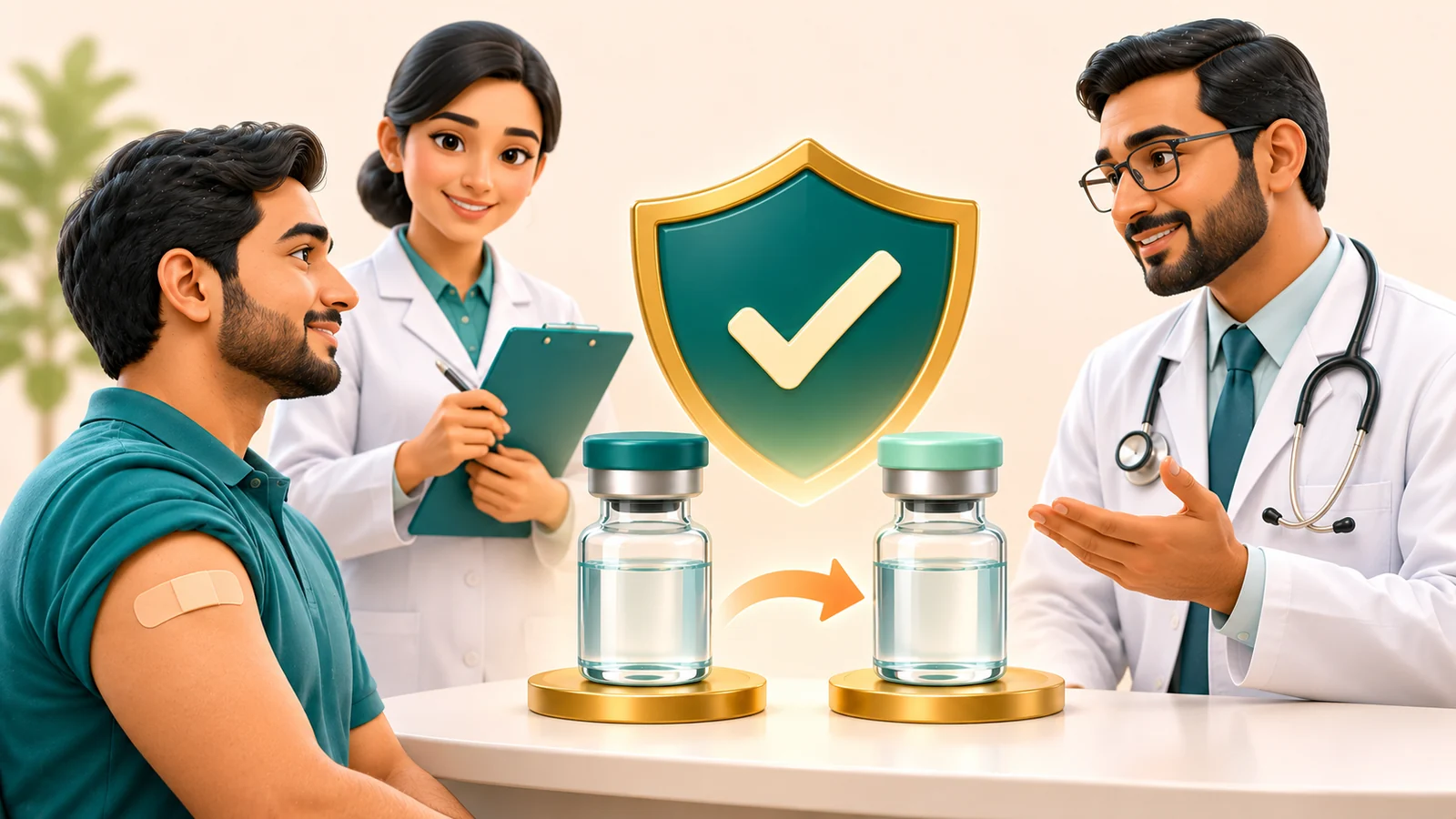
- Monitoring continuesimmune reactions and safety are followed after approval
- Do not switch alonetalk to your clinician or pharmacist first
- Rules differinterchangeability depends on the country and regulator
7. What does this mean in Bangladesh?
Bangladesh has a specific regulatory history for biosimilars. DGDA and WHO Bangladesh announced the launch of a Guideline for Registration of Biosimilar Products in 2018. DGDA’s official guidelines repository now lists a document titled Guidelines for Registration of Biosimilar Products in Bangladesh 2025.

- Cold storagemany biologics need refrigeration; follow the pack instructions
- DGDA statuscheck official DGDA information for a product's registration
- Cost and accessmatter in real life; this article gives no prices
There is an important status detail: DGDA’s news page also published an invitation dated 17 August 2025 asking stakeholders to send comments on a draft “Biosimilar Product Registration Guideline-2025”. Therefore, readers should not assume that the 2025 draft notice itself proves the draft has become a final, effective guideline. Applicants and healthcare professionals should verify the latest applicable version and requirements directly with DGDA.
International documents from WHO, EMA and FDA are useful for understanding the science. They do not replace Bangladesh’s own registration requirements. A product’s regulatory status must be checked through official DGDA information rather than inferred from approval in another country.
8. What should healthcare professionals and patients remember?

- Ask about the product and plan
- Ask about schedule and storage
- Ask about follow-up
- Never start, stop or switch alone
- A biosimilar is a biological medicine compared directly with an approved reference product.
- It is highly similar, not an exact molecular copy.
- Approval relies on the totality of evidence, especially sensitive analytical and functional comparisons.
- Immunogenicity, manufacturing quality and ongoing safety monitoring matter.
- Interchangeability and automatic substitution depend on local regulatory and pharmacy rules.
- In Bangladesh, check current DGDA requirements and product registration status.
Key takeaways

- Made by living cellscomplex molecules from living systems
- Not a simple copyhighly similar, not an exact molecular copy
- Compared in the labanalytical and functional comparison comes first
- Weighed on all the evidencetailored clinical data where needed
- Used with monitoringimmunogenicity, quality and clinician guidance matter
- Safe use rests on evidencenot on similar names or ingredients
Frequently asked questions
Is a biosimilar the same as a generic medicine?
No. A conventional generic usually has the same active ingredient as a small-molecule reference medicine. A biosimilar is a highly similar version of a complex biological medicine and is assessed through a comparability exercise.
Is a biosimilar less effective than the original biologic?
Not when it has been approved as a biosimilar under a robust regulatory pathway. It must show no clinically meaningful differences in safety and effectiveness compared with its reference product.
Why are biosimilars not identical to the original?
Biological medicines are made in living systems and naturally show some molecular variability. Manufacturing processes also influence product characteristics. Regulators assess whether any differences are within acceptable limits and have no clinically meaningful impact.
Does every biosimilar need a large clinical trial?
Not necessarily. The evidence package is tailored to the product. Detailed analytical and functional comparisons are central, and clinical studies are used where they add information needed to resolve uncertainty.
Can a pharmacist automatically substitute a biosimilar?
That depends on the applicable national law and the product’s regulatory status. Do not assume that the rules are the same in every country.
Are biosimilars registered in Bangladesh?
Check the latest official DGDA registration information for the specific product. A guideline or draft guideline is not proof that a particular product has been approved.
References and further reading
- World Health Organization (WHO). Guidelines on evaluation of biosimilars (2022). Read the official source
- Directorate General of Drug Administration (DGDA), Bangladesh. Guidelines for Registration of Biosimilar Products in Bangladesh 2025 (listed in the DGDA guidelines repository). Read the official source
- DGDA, Bangladesh. Notice inviting comments on the draft Biosimilar Product Registration Guideline 2025 (17 August 2025). Read the official source
- DGDA / WHO Bangladesh. Launch of the Guideline for Registration of Biosimilar Products 2018. Read the official source
- European Medicines Agency (EMA). Biosimilar medicines: overview. Read the official source
- U.S. Food and Drug Administration (FDA). Overview for health care professionals. Read the official source
- U.S. Food and Drug Administration (FDA). Biosimilars basics for patients. Read the official source

Sayedul Abrar
A Grade Pharmacist · Registration Code: A-22040
Product Executive, Product Management Department (PMD) · Opsonin Pharma Ltd.