 Sayedul Abrar
1. What is pharmacogenetics?
Pharmacogenetics looks at how inherited differences in a particular gene can influence a person's response to a particular medicine. The field connects pharmacology—the science of medicines—with genetics, which studies inherited information in DNA.
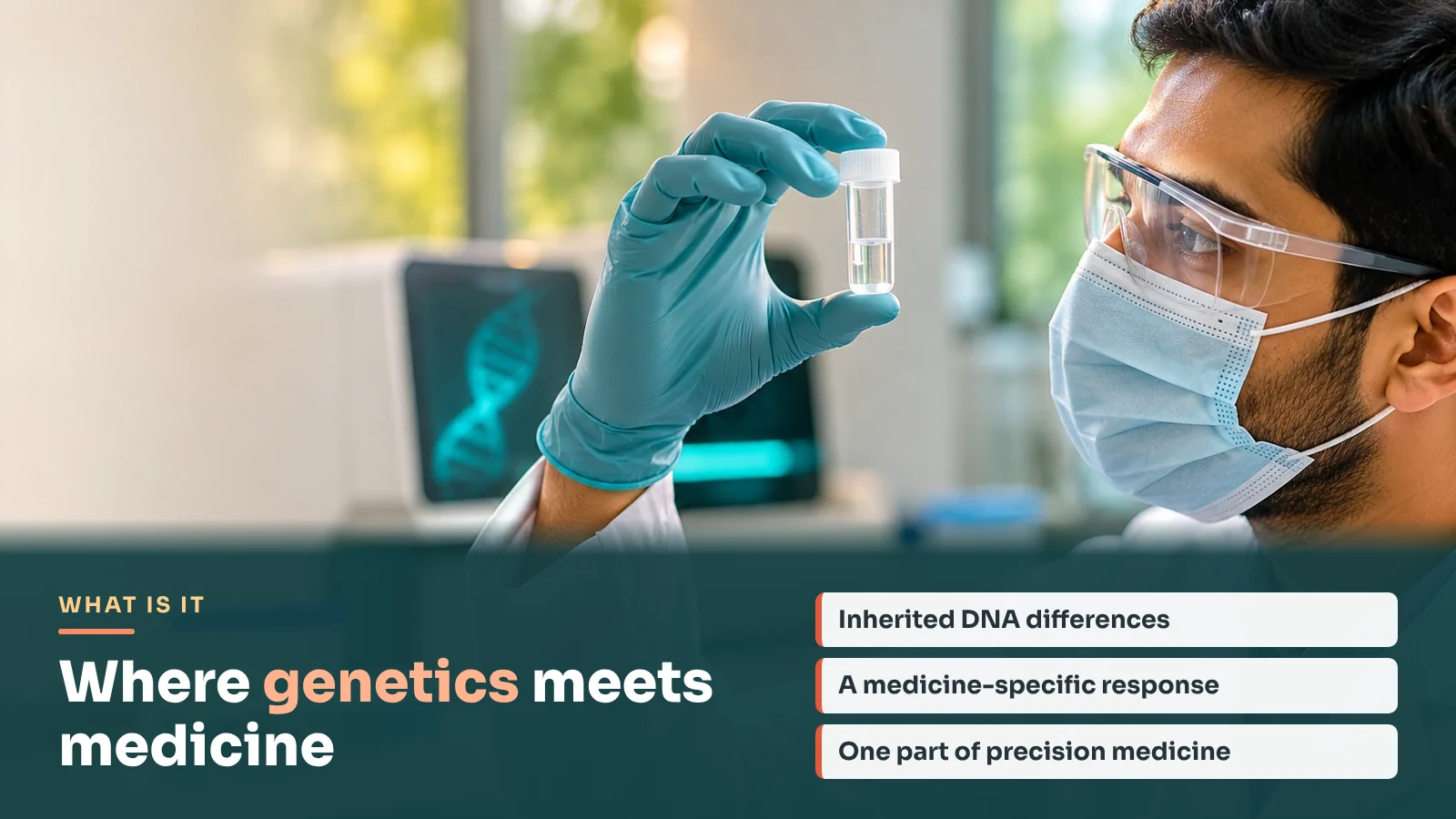
You may also see the word pharmacogenomics. The terms are often used interchangeably. Traditionally, pharmacogenetics has focused on individual gene–drug relationships, while pharmacogenomics can describe a broader analysis involving many genes or the genome. The exact distinction varies across research and healthcare organisations.
Why does this matter? Two people may receive the same medicine at the same labelled dose yet have different drug concentrations, benefits or unwanted effects. Genetic variation is one possible reason. Age, kidney and liver function, illness, diet, smoking, other medicines and adherence also matter.
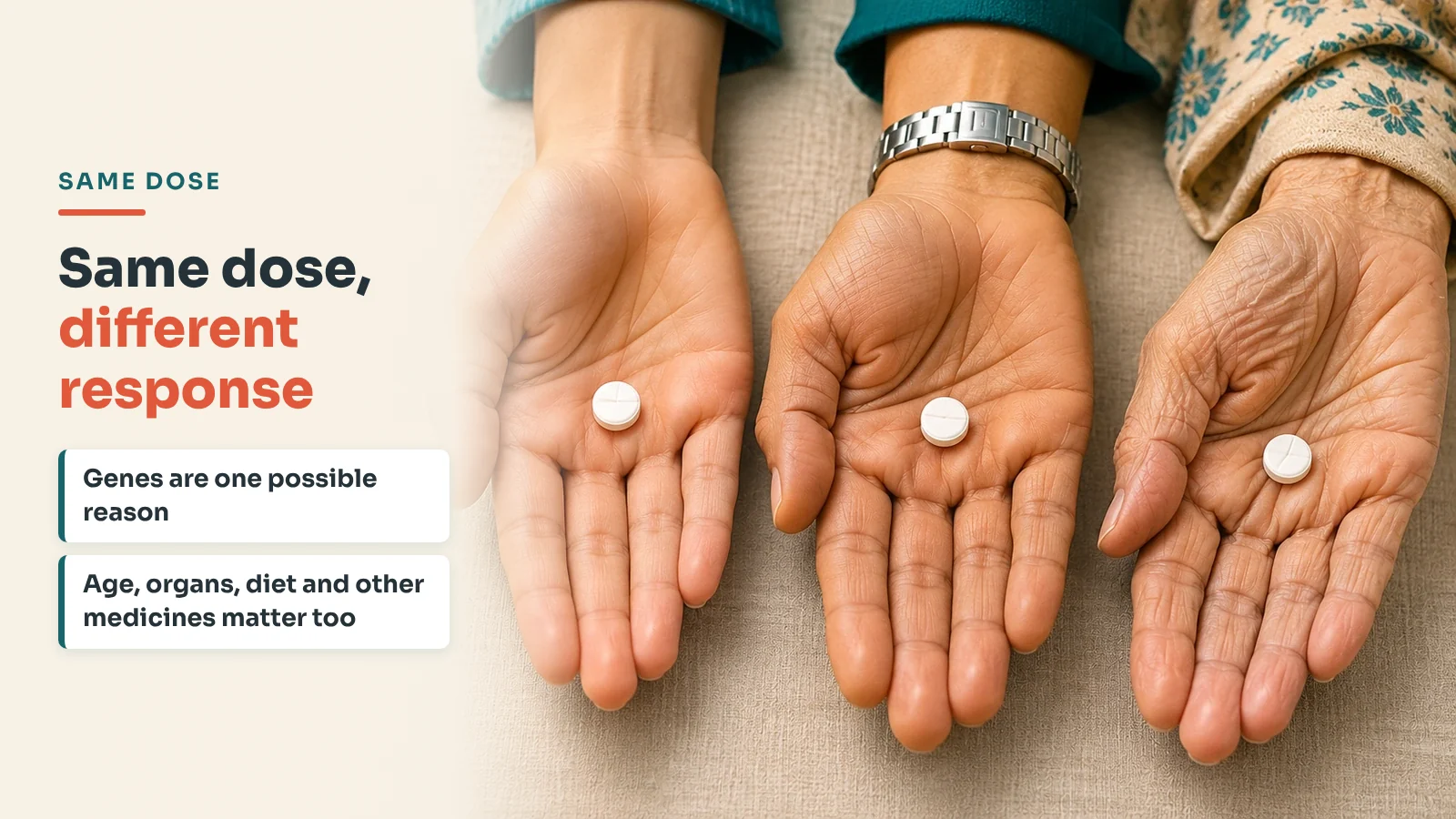
Pharmacogenetic information is therefore one part of precision medicine, not a replacement for clinical assessment. It is most useful when a specific gene–drug relationship has been studied well enough to support a practical decision.
2. How can genes influence a medicine?
Genes contain instructions for making proteins. Some proteins help absorb, transport, break down or remove medicines. Others are drug targets, while some immune-system proteins influence the risk of a particular reaction. A DNA variant can change the amount or activity of a protein.

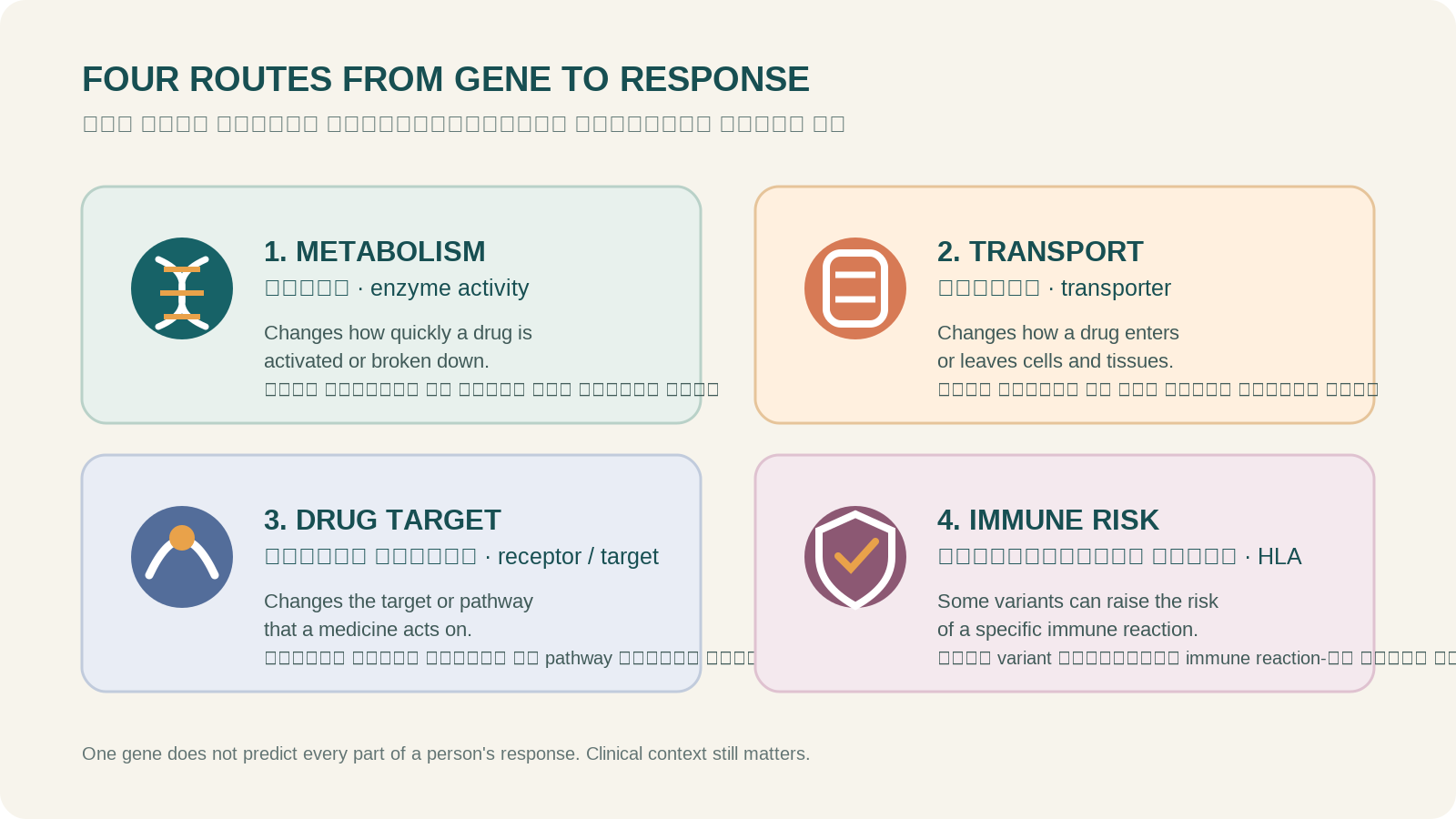
- Drug-metabolising enzymes: enzymes such as CYP2C19 and CYP2D6 can affect how quickly some medicines are activated or broken down.
- Transport proteins: proteins such as those encoded by SLCO1B1 can influence how a medicine enters or leaves cells.
- Drug targets: genetic differences may alter a receptor, enzyme or other target that a medicine acts on.
- Immune-related proteins: certain HLA variants can increase the risk of a specific immune-mediated adverse reaction.
The direction of the effect depends on the medicine. If an enzyme normally breaks down an active drug, reduced enzyme activity may increase exposure. If the medicine is a prodrug that needs the enzyme for activation, reduced activity may instead reduce the active metabolite. A “slow” or “poor” metaboliser result does not automatically mean a medicine will be stronger or weaker.
3. From genotype to predicted phenotype
A laboratory may report a genotype: the variants or allele combination detected in a gene. For some pharmacogenes, variants are grouped using a star-allele system, such as CYP2C19*1 or CYP2C19*2. The combination of the two inherited gene copies is often called a diplotype.
For selected drug-metabolising enzymes, a validated genotype-to-phenotype system translates that result into a predicted functional category. Depending on the gene, these may include normal, intermediate, poor, rapid or ultrarapid metaboliser. Other genes use different categories—for example, a high-risk HLA allele may be reported as present or absent rather than as a metaboliser status.
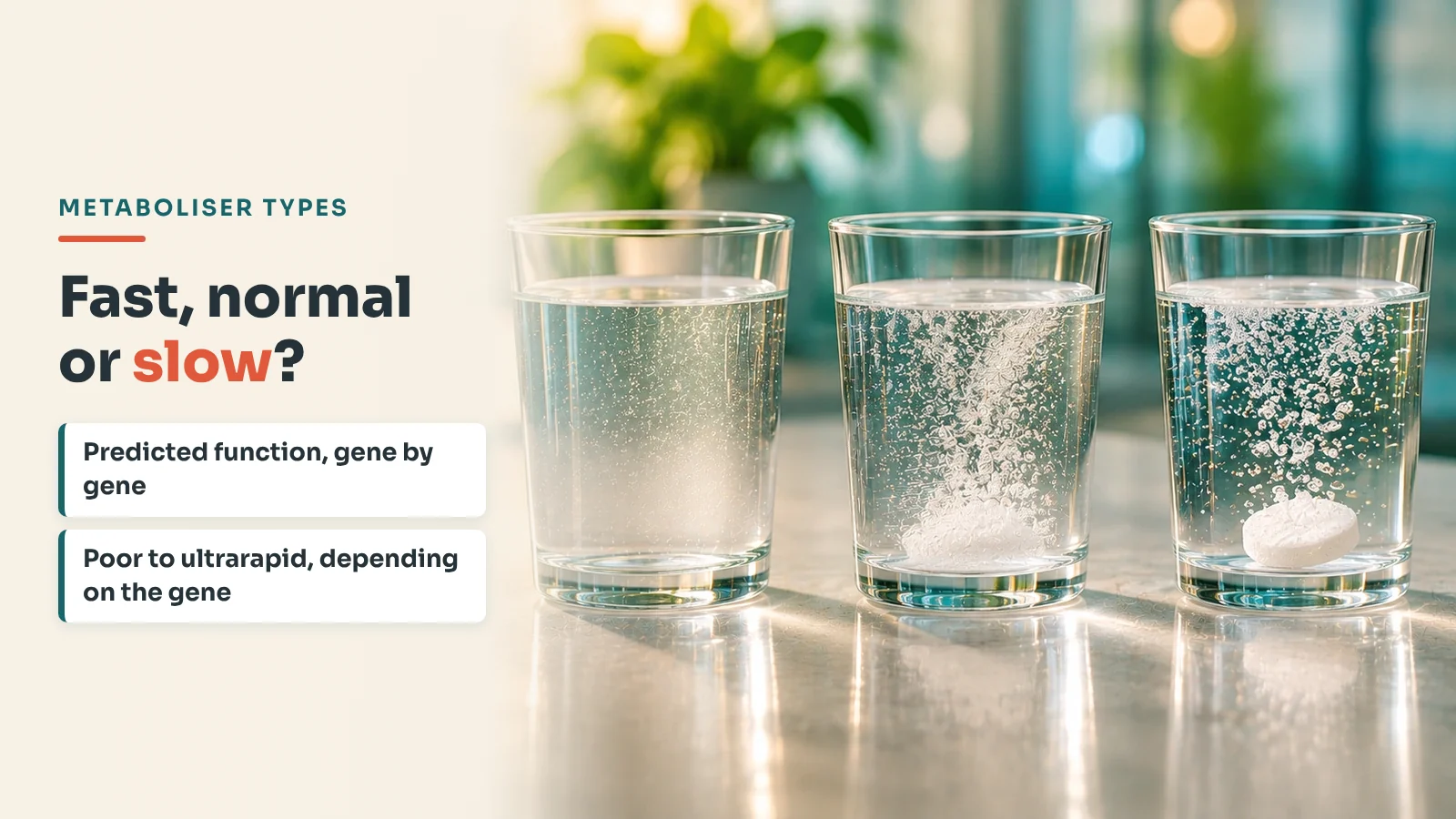
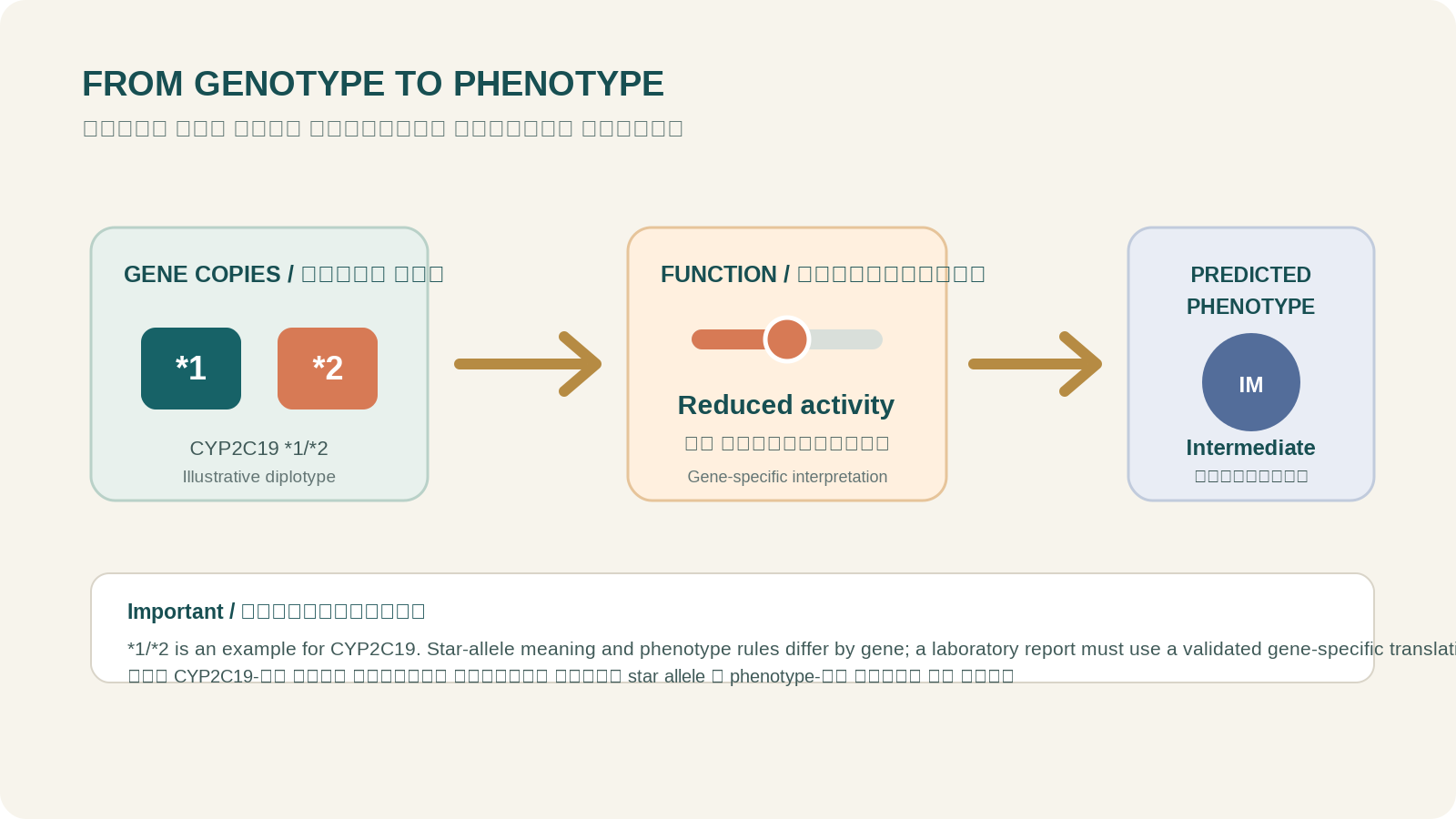
These categories are not personality labels or a complete prediction of treatment success. They describe a particular gene's predicted function under a defined interpretation system. A test may miss variants that were not included in its panel, and some results remain uncertain. Gene-specific interpretation matters; the same star-allele notation should never be assumed to mean the same thing in every gene.
4. Examples where the evidence matters
CYP2C19 and clopidogrel
Clopidogrel is a prodrug. The body uses CYP2C19 as one of the enzymes involved in forming its active metabolite. People predicted to be CYP2C19 intermediate or poor metabolisers may form less active metabolite and have reduced platelet inhibition. The 2022 Clinical Pharmacogenetics Implementation Consortium (CPIC) update describes how available CYP2C19 results can inform clopidogrel therapy in relevant clinical settings.

This is a useful example of why the word “metaboliser” must be interpreted for the specific drug: lower enzyme activity can mean less activation of clopidogrel. The guideline is intended for clinical decision-making; it is not an instruction for a patient to stop or replace an antiplatelet medicine.
TPMT, NUDT15 and thiopurines
Thiopurine medicines such as azathioprine and mercaptopurine can suppress bone-marrow activity. Variants in TPMT and NUDT15 can increase the risk of severe myelosuppression at standard doses. The 2025 CPIC update provides drug-specific recommendations for known TPMT and NUDT15 results and adds guidance for people with reduced function in both genes. Blood-count monitoring and the disease-specific treatment plan remain important.
HLA-B*57:01 and abacavir
This is not a metabolism example. The FDA's pharmacogenetic table states that people who test positive for HLA-B*57:01 have a higher risk of abacavir hypersensitivity and should not receive abacavir. It illustrates how a genetic result can relate to an immune-mediated safety risk rather than drug concentration.
CYP2C19, proton pump inhibitors and a rabeprazole research example
CYP2C19 variation has been studied with several proton pump inhibitors (PPIs). The 2020 CPIC guideline provides recommendations for omeprazole, lansoprazole, pantoprazole and dexlansoprazole; it does not provide a rabeprazole dosing recommendation. This distinction matters because the medicines do not all have identical metabolic pathways.
A 2006 study in the research literature examined 20 healthy, H. pylori-negative Chinese Han men who received rabeprazole 20 mg. The investigators reported differences in rabeprazole exposure between some CYP2C19 groups, but did not find significant differences in median intragastric pH between the groups. This small, short study in healthy volunteers cannot establish what every patient will experience or support a universal dosing rule. It is a good example of why a pharmacokinetic difference does not automatically prove a clinically important difference in treatment outcome.
5. What can a pharmacogenetic test tell you?
Testing usually analyses DNA from a blood sample, saliva or a cheek swab. Depending on the laboratory and the purpose, the method may look for selected known variants or examine a wider set of genetic changes. The report should identify which genes and variants were tested, what was detected and how the result was interpreted.
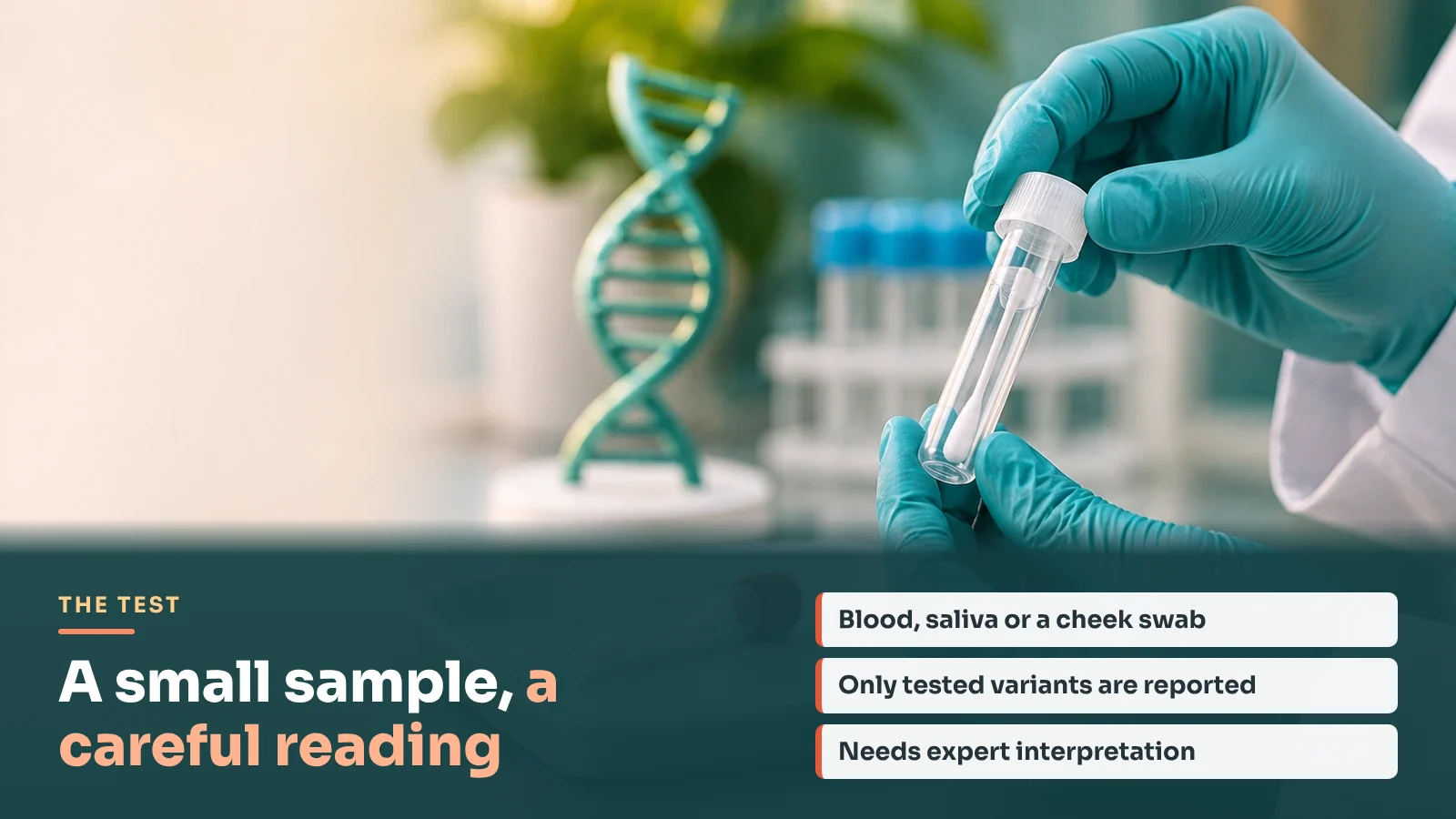
A test can be helpful only if the relevant gene–drug relationship is supported by evidence and the result is reliable enough to guide a decision. Different laboratories may test different variant panels. A report that does not detect a variant is not proof that every possible variant in that gene is absent.
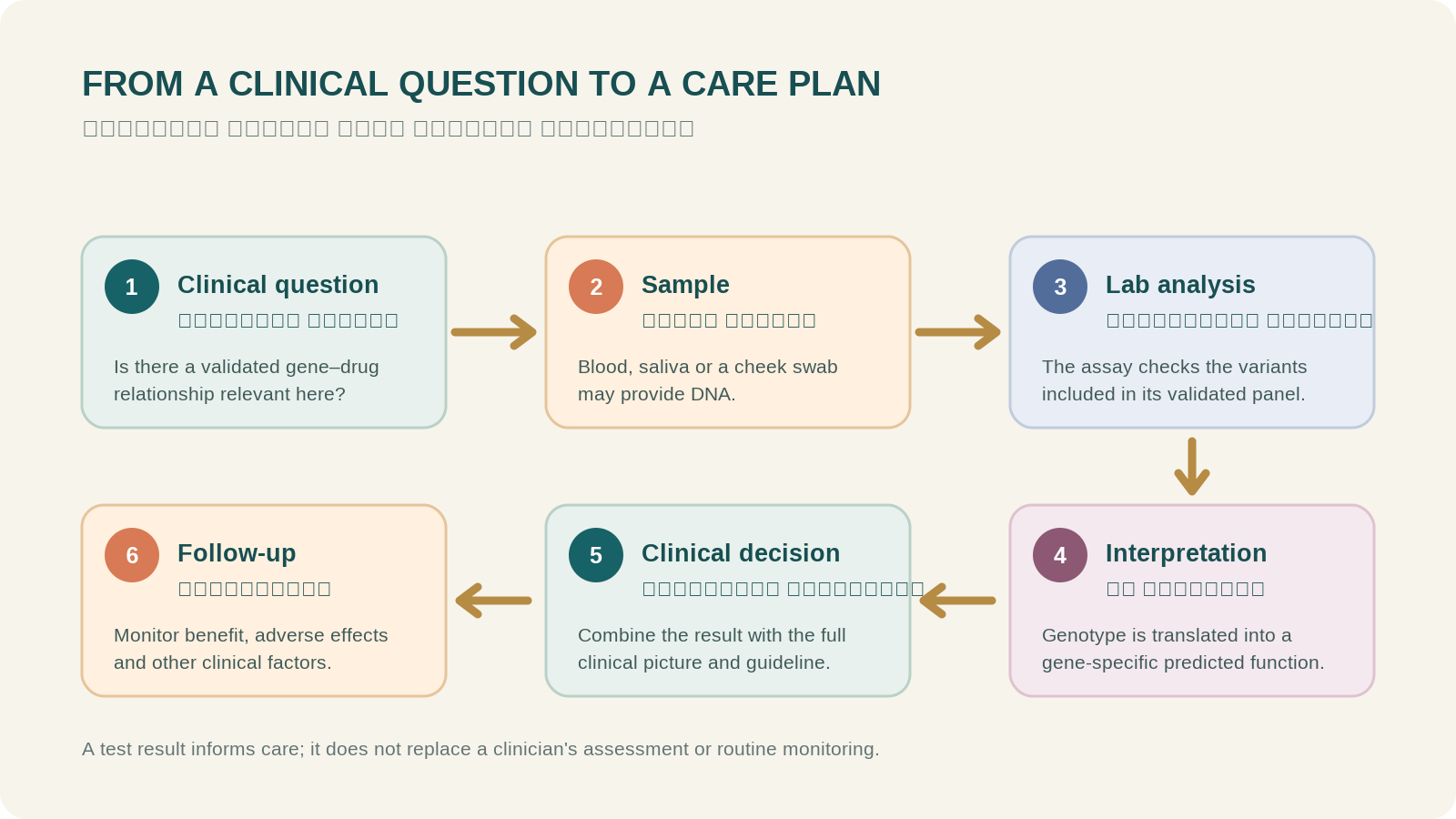
Genetic testing does not tell you whether you have a disease, and it cannot predict every adverse effect. It also cannot replace information about current medicines, dose, kidney or liver function, the condition being treated, allergies, pregnancy status where relevant, or how the person has responded so far.
6. How should results be used in healthcare?
Some tests are ordered before a medicine is prescribed; others are considered after an unexpected response or adverse effect. Whether testing is worthwhile depends on the drug, the clinical situation, the evidence, the test's coverage and whether the result would change care.

The CPIC guidelines are designed mainly to explain how to use a genetic result when it is already available, rather than to decide whether every patient should be tested. The FDA also explains that listing a gene–drug association in its table does not automatically mean it recommends testing before every prescription. Some associations support a therapeutic-management recommendation; others indicate a potential safety or response effect, or a pharmacokinetic effect only.
In practice, a clinician or pharmacist should interpret the report with the current guideline and the whole patient context. A result may support a different medicine, dose or monitoring plan in selected situations. It does not replace routine monitoring or shared decision-making.
7. Practical questions in Bangladesh
Pharmacogenetics is an international research and clinical field. This article does not claim that a particular test is routinely available nationwide in Bangladesh or that testing is required for every medicine. If a test is being considered, ask the treating clinician and laboratory:

- Which exact gene–drug question is the test intended to answer?
- Which variants does the laboratory assay include, and which important variants might it miss?
- How is the result translated into a predicted phenotype, and which current guideline supports the interpretation?
- Who will explain the result, protect the genetic information and connect it to the treatment plan?
Be cautious with broad consumer reports that list many gene–drug associations without explaining evidence strength, clinical relevance or the limits of the test. A genetic report should never be used on its own to start, stop or change a prescription.
Key takeaways
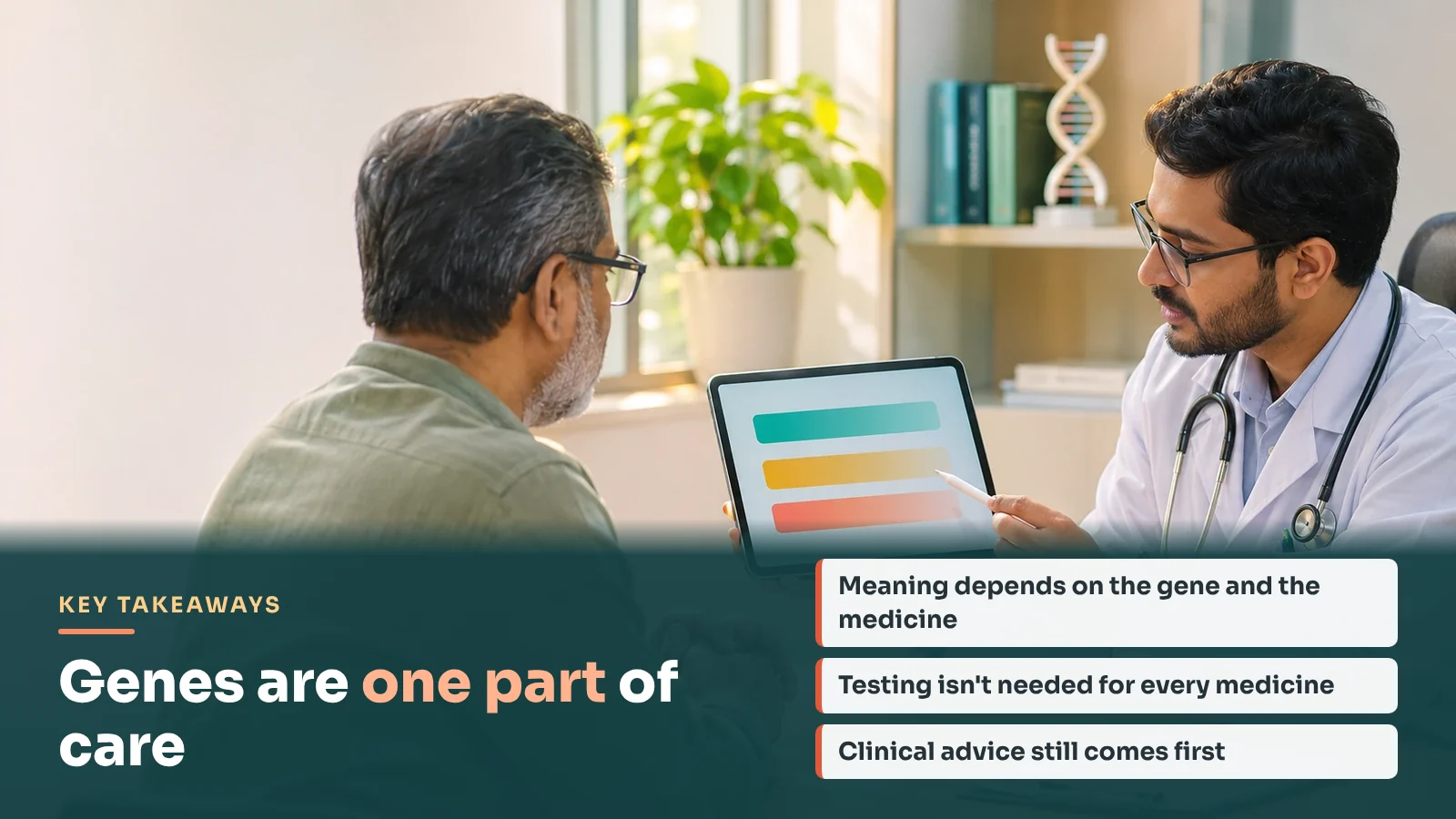
- Genes can influence drug metabolism, transport, targets and the risk of selected immune reactions.
- The meaning of a genetic result is specific to the gene and medicine; “poor metaboliser” does not always mean more drug effect.
- Some gene–drug pairs have strong clinical guidance, while others show only a pharmacokinetic association or remain uncertain.
- Testing is not needed for every medicine. A validated test and correct interpretation are essential.
- Genetic information is one part of care. Clinical assessment, monitoring and professional advice remain necessary.
Frequently asked questions
What is pharmacogenetics in simple words?
Pharmacogenetics studies how inherited differences in particular genes can change the way a person responds to certain medicines. A gene variant may affect drug metabolism, transport, a drug target or the risk of a specific reaction.
Are pharmacogenetics and pharmacogenomics the same?
The terms are often used interchangeably. Pharmacogenetics traditionally focuses on individual gene–drug relationships, while pharmacogenomics can describe a broader view of many genes or the genome. Usage varies between organisations.
Does everyone need a pharmacogenetic test before taking medicine?
No. Testing is relevant only for selected gene–drug pairs where the evidence and clinical context support using the result. A test is not a routine requirement for every medicine or every patient.
What does a poor metabolizer result mean?
For a particular drug-metabolising enzyme, it usually means the predicted enzyme activity is very low. That may cause a parent drug to remain in the body longer, or it may reduce activation of a prodrug. The direction depends on the medicine.
Can genes affect proton pump inhibitors such as rabeprazole?
CYP2C19 variation can affect the exposure of several proton pump inhibitors. The 2020 CPIC guideline gives recommendations for omeprazole, lansoprazole, pantoprazole and dexlansoprazole; it does not provide a rabeprazole dosing recommendation. Small rabeprazole studies have reported pharmacokinetic differences without consistent changes in acid suppression.
Are pharmacogenetic results permanent?
The inherited DNA variants tested are generally lifelong. However, laboratory panels, scientific evidence and prescribing guidelines can change, and a result may not cover every relevant variant or every medicine.
Should I change or stop a medicine after receiving a genetic report?
No. Do not change, stop or start a medicine based only on a report. A qualified prescriber or pharmacist should interpret the result with your diagnosis, other medicines, organ function, treatment response and current guidance.
References and further reading
- MedlinePlus Genetics. What is pharmacogenomics?
- MedlinePlus. Pharmacogenetic Tests.
- U.S. Food and Drug Administration. Table of Pharmacogenetic Associations.
- Lee CR et al. CPIC Guideline for CYP2C19 Genotype and Clopidogrel Therapy: 2022 Update. Clinical Pharmacology & Therapeutics.
- Maillard M et al. CPIC Guideline for Thiopurine Dosing Based on TPMT and NUDT15 Genotypes: 2025 Update. Clinical Pharmacology & Therapeutics.
- Lima JJ et al. CPIC Guideline for CYP2C19 and Proton Pump Inhibitor Dosing. Clinical Pharmacology & Therapeutics, 2021.
- Hu YM et al. Pharmacodynamic and kinetic effect of rabeprazole on serum gastrin level in relation to CYP2C19 polymorphism in Chinese Hans. World Journal of Gastroenterology, 2006;12(29):4750–4753.
- Centers for Disease Control and Prevention. Pharmacogenomics.
- PharmVar. Pharmacogene Variation Consortium database.

Sayedul Abrar
A Grade Pharmacist · Registration Code: A-22040
Product Executive, Product Management Department (PMD) · Opsonin Pharma Ltd.