Sayedul Abrar
Quick answer: how to take iron tablets
Iron tablets are usually absorbed best on an empty stomach, but many people take them with or after food when their stomach is upset. Vitamin C may help absorption, while tea, coffee, eggs, dairy and calcium can reduce it. Follow your doctor’s dose and your product’s leaflet.
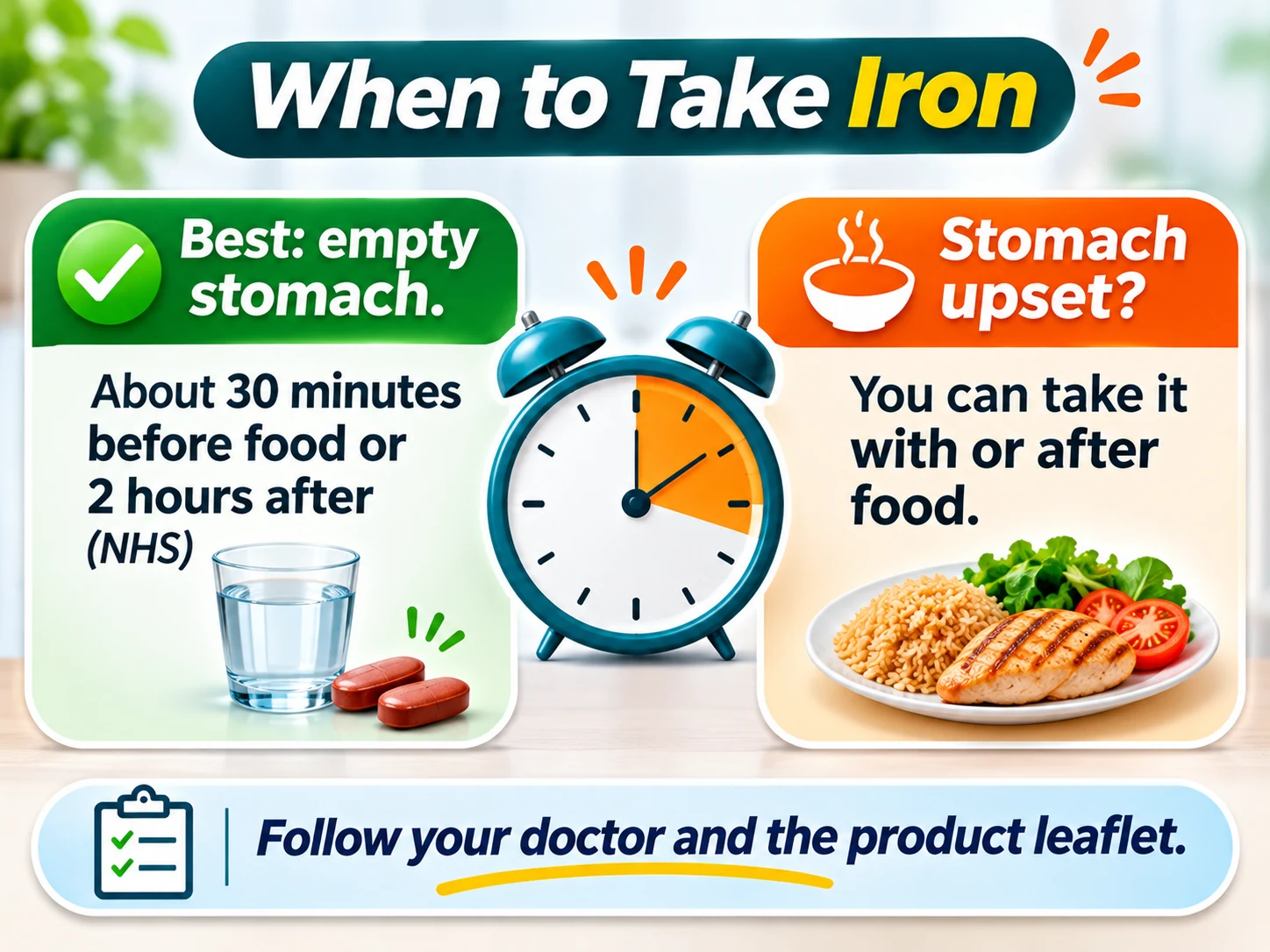
- Timing: the NHS says ferrous sulfate works best on an empty stomach, ideally 30 minutes before food or 2 hours after.
- Upset stomach: you can take it with or after food. A little less absorption is better than stopping altogether.
- Swallow whole with water. Do not chew or suck the tablet.
- Keep a gap from tea, coffee, eggs and dairy, and ask about calcium and other medicines.
When is the best time to take iron tablets?
According to the NHS page on ferrous sulfate, iron “works best” when taken on an empty stomach. Its suggested window is about 30 minutes before eating or 2 hours after a meal. The same page says that if the tablet upsets your stomach, you can take it with or after food.
The NHS also notes that if side effects appear, a doctor may suggest taking the tablet on alternate days. That is a decision for your doctor, so do not change the schedule on your own. Different iron products (ferrous sulfate, ferrous fumarate, ferric maltol and others) come with different leaflets, so the leaflet and your prescriber come first. This article describes general advice, not the instructions for any one brand.
How to swallow an iron tablet
- Swallow the tablet whole with a drink of water.
- Do not suck, chew or hold it in your mouth. The NHS says this can cause mouth ulcers or stain your teeth.
- For drops or liquid, use the syringe or dropper that comes with the product, not a kitchen spoon.
What helps and what gets in the way
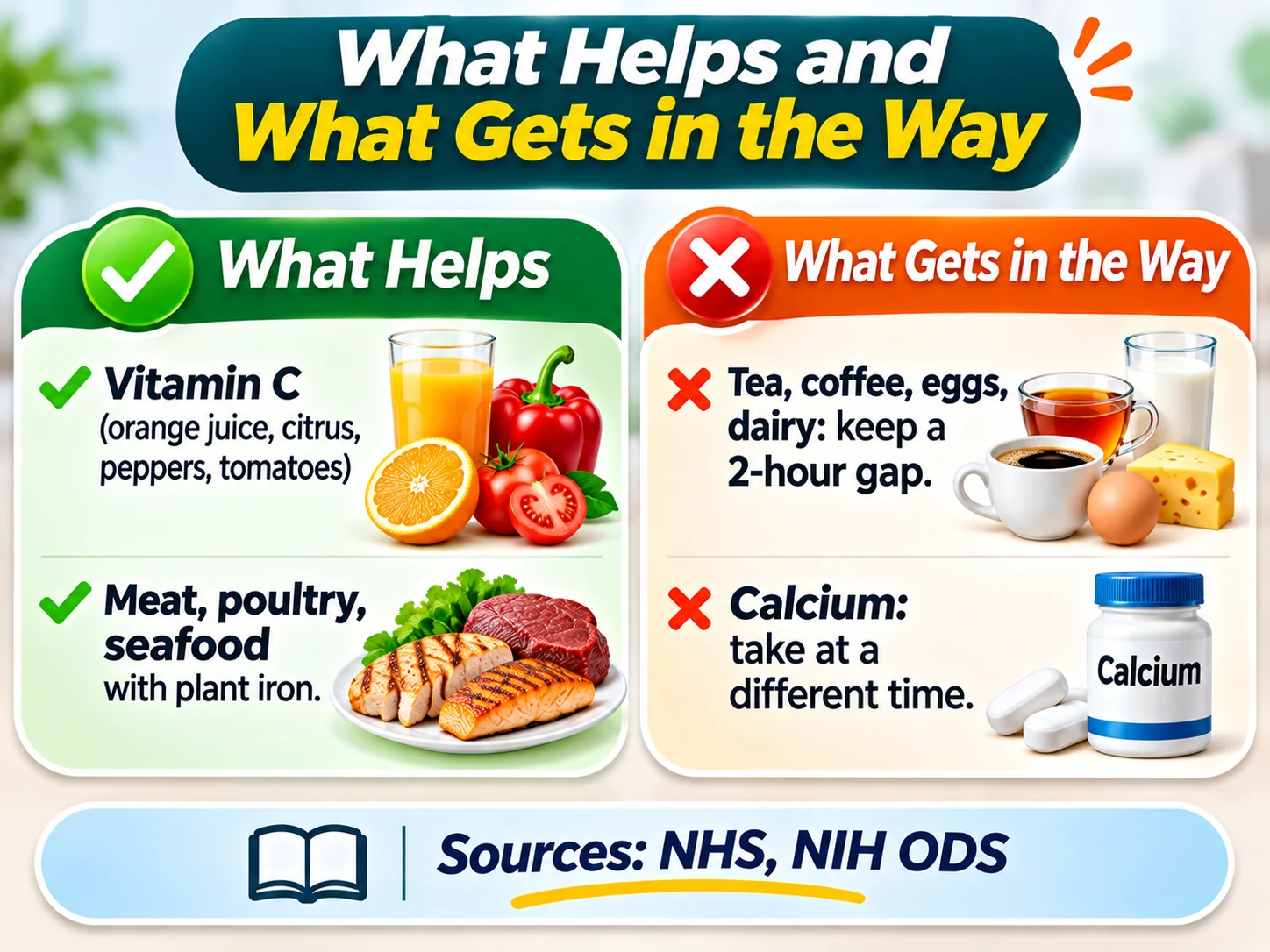
Some foods, drinks and medicines change how much iron the body absorbs. This table pulls together what the NHS and the US National Institutes of Health (NIH) Office of Dietary Supplements say.
| Item | Effect | Practical note |
|---|---|---|
| Vitamin C (orange juice, citrus, peppers, tomatoes) | May help absorption | The NHS says a doctor or pharmacist may suggest orange juice or a vitamin C supplement with the tablet. |
| Meat, poultry, seafood | Help absorption of plant iron | NIH says the body absorbs iron from plant sources better when eaten with these foods. |
| Tea, coffee, eggs, dairy | Can reduce absorption | The NHS says not to take iron with these and to leave a 2-hour gap before or after. |
| Calcium supplements | May interfere | NIH suggests taking calcium and iron at different times of the day. |
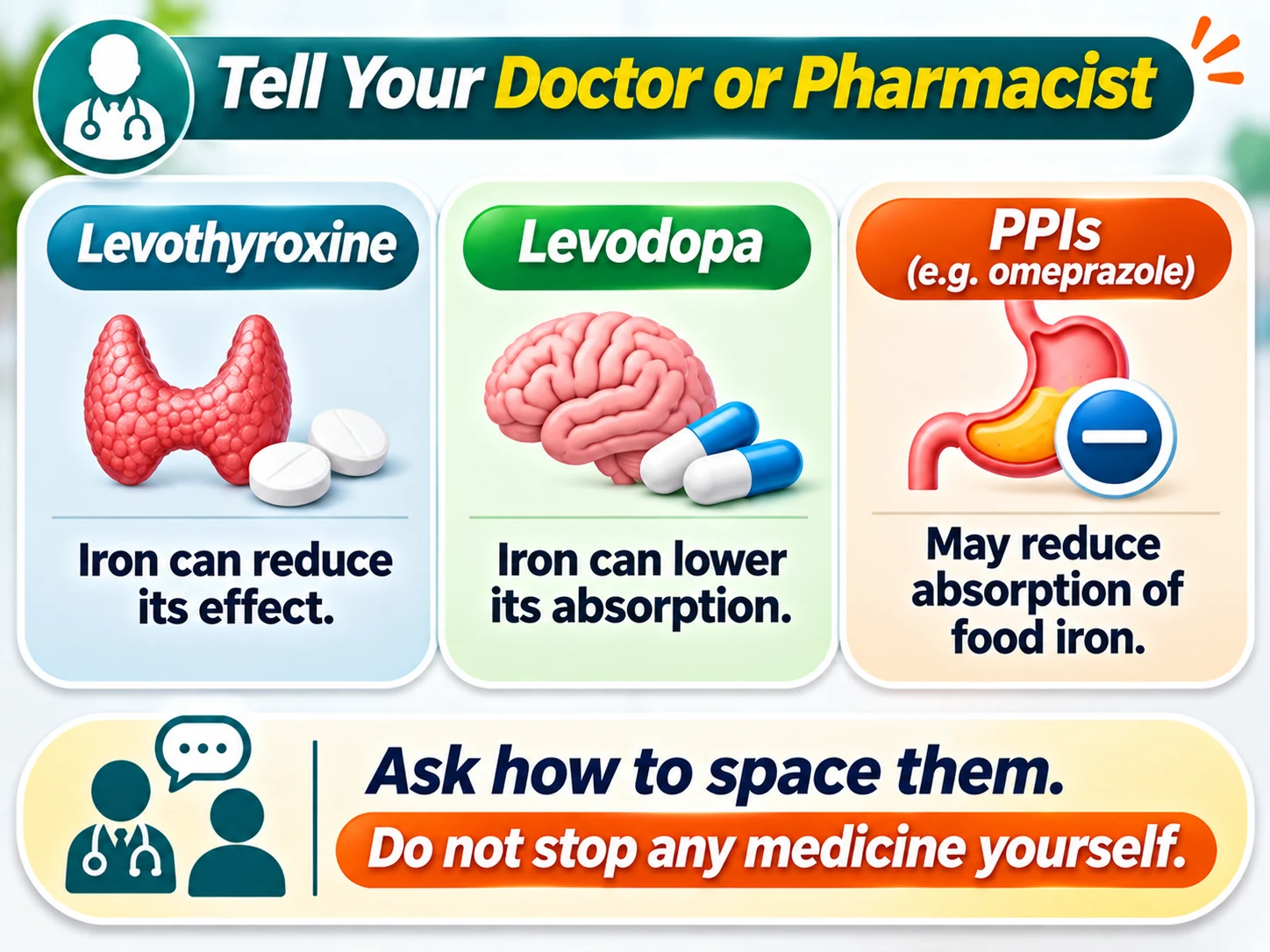
| Levothyroxine | Iron can reduce its effect | Ask your doctor or pharmacist how to space them. |
| Levodopa | Iron can lower its absorption | Tell your prescriber you take iron. |
| Acid-lowering medicines (PPIs such as omeprazole) | May reduce absorption of food iron | NIH lists PPIs as lowering stomach acid. Do not stop a PPI yourself; ask your doctor. |
Medicines and supplements to mention
NIH advises telling your doctor or pharmacist about every supplement and medicine you take. It specifically names levothyroxine and levodopa, which iron can affect, and PPIs, which lower stomach acid and may reduce iron absorption from food.
The pages I read for this article do not give a clear rule for antacids or for specific antibiotics. If you take either, ask a pharmacist how to space them from your iron rather than guessing. For the same reason, I am not giving a number of hours for levothyroxine here; your prescriber should set that plan.
Common side effects and what to do
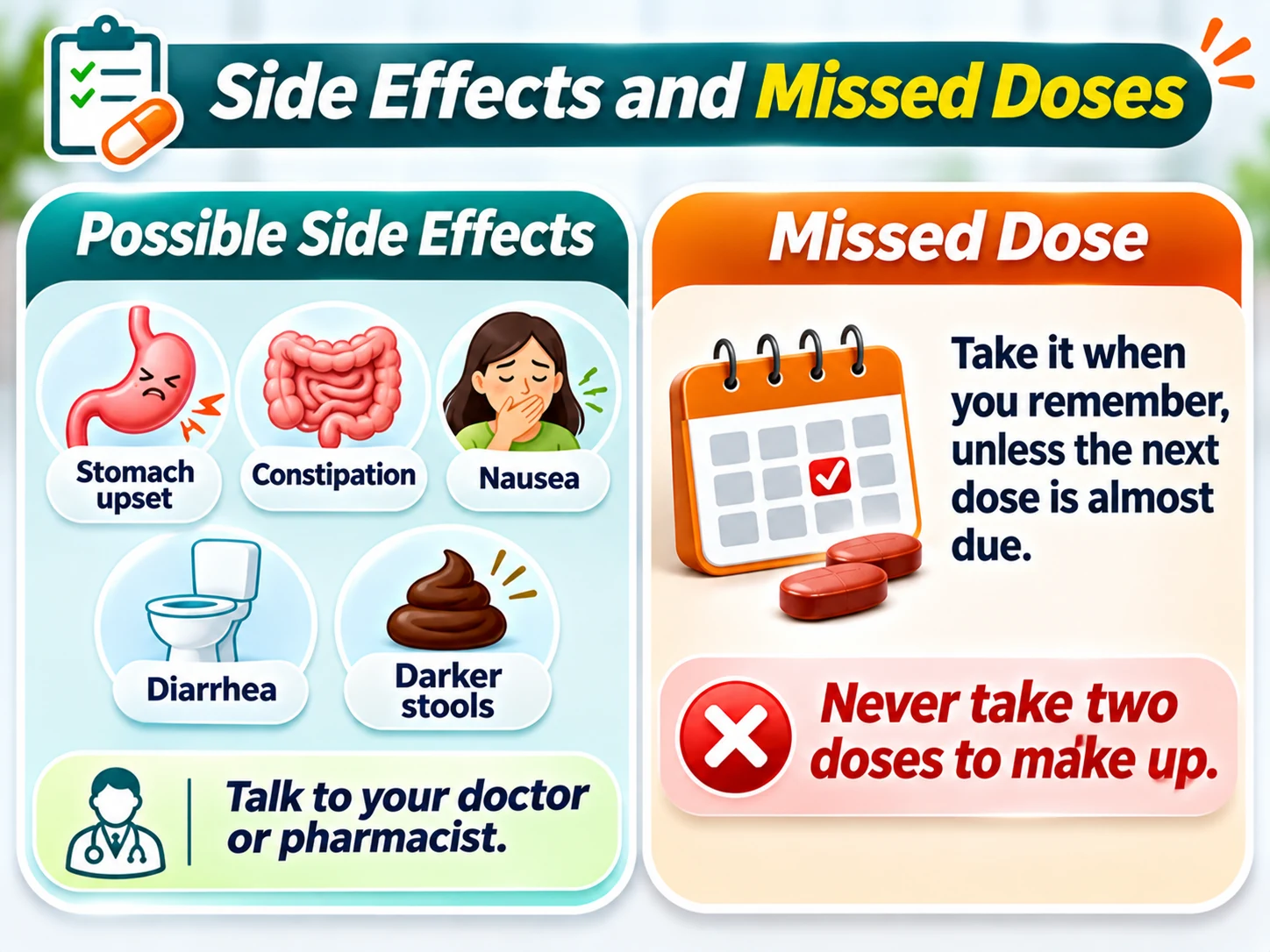
NIH says high iron doses, especially on an empty stomach, can cause upset stomach, constipation, nausea, abdominal pain, vomiting and diarrhea. Darker stools are also a known effect of iron tablets. If side effects bother you, talk to your doctor or pharmacist. Options such as taking the tablet with food or changing the schedule are theirs to decide with you. Stopping treatment without advice can leave the deficiency uncorrected.
Missed dose and too much iron
- Missed dose: the NHS says take it as soon as you remember, unless it is nearly time for the next dose. In that case skip the missed one. Never take two doses to make up.
- Too much: taking more than advised can cause vomiting, stomach pain or diarrhea, and in serious cases vomiting blood, seizures or loss of consciousness. Seek urgent medical help and take the packet with you.
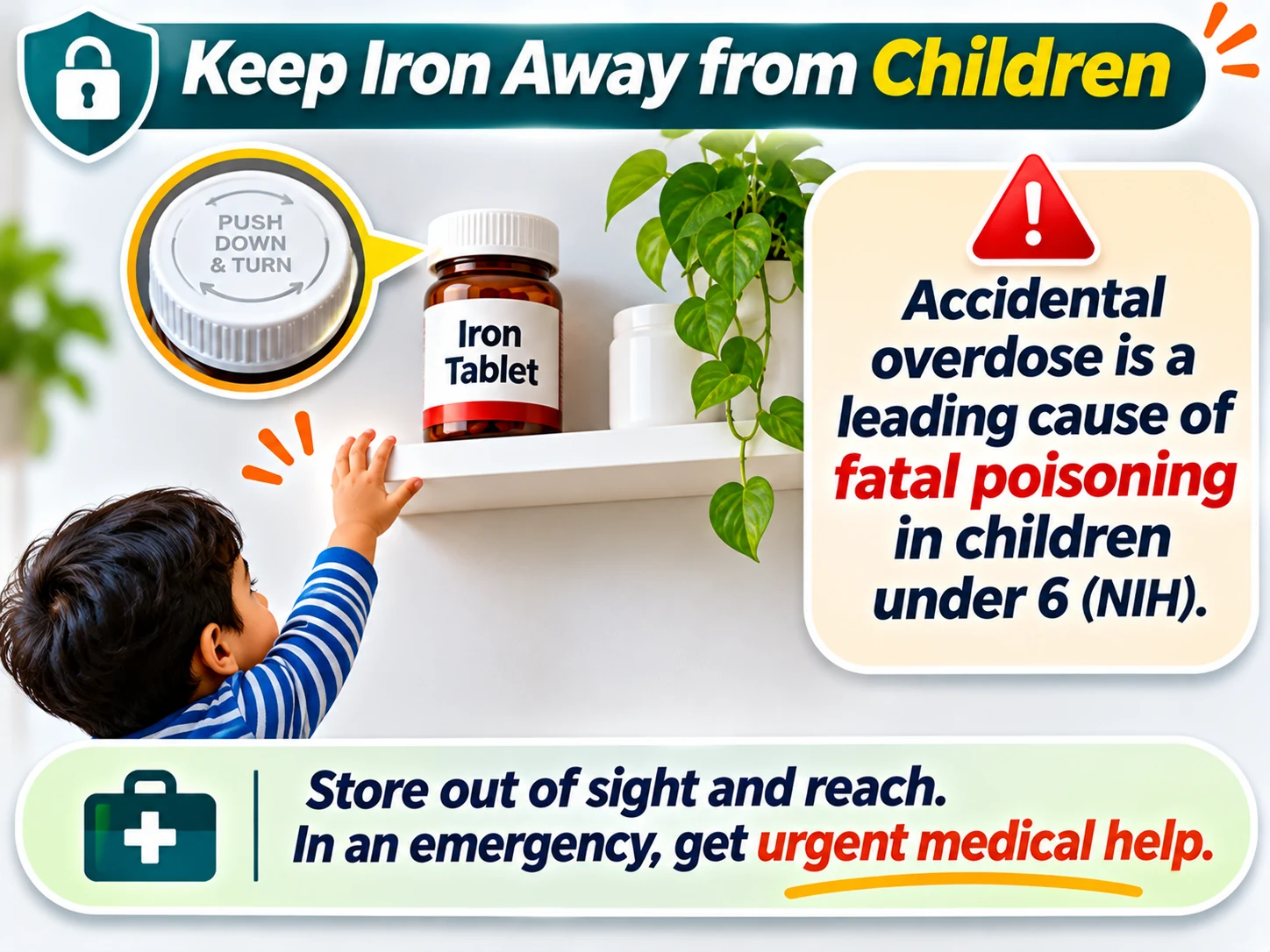
- Children: NIH says accidental overdose of iron-containing products is a leading cause of fatal poisoning in children under 6. Store iron out of sight and reach, in its child-resistant packaging.
How long do you keep taking it?
For treating deficiency, the NHS says this usually takes several months, and doctors often advise continuing for some months after blood levels improve so that iron stores can rebuild. Your own plan depends on your tests and cause, so follow your doctor’s advice and do not stop as soon as you feel better.
Who should be careful
- Anyone who has not been tested: iron is best started after a blood test and a look at the cause. See Iron Deficiency vs Anemia.
- Pregnancy: NIH advises talking with your health care provider and taking an iron supplement if recommended.
- Hereditary hemochromatosis: NIH says people with this condition should avoid iron and vitamin C supplements.
- Total intake: NIH lists 45 mg a day as the adult upper limit from food, drinks and supplements together, but notes that a doctor may prescribe more for a limited time to treat deficiency. Do not exceed what you are prescribed.
Iron from food
NIH explains that food iron comes as heme iron (animal foods) and nonheme iron (plant foods and fortified foods), and that nonheme iron is absorbed less well. It says vegetarians may need almost twice as much iron as the standard table figures. Pairing plant iron with vitamin C-rich foods or with meat, poultry or seafood helps absorption.
When to talk to a doctor or pharmacist
Speak to them if side effects are hard to tolerate, if your tiredness or other symptoms are not improving, if you take any of the medicines above, if you are pregnant, or if you see black or bloody stools or have severe stomach pain. Seek urgent help for suspected overdose, especially in a child.
Frequently asked questions
1. What is the best time to take iron tablets?
The NHS says ferrous sulfate works best on an empty stomach, ideally 30 minutes before eating or 2 hours after. If it upsets your stomach, you can take it with or after food.
2. Can I take iron tablets with food?
Yes, if an empty stomach causes nausea or pain. Avoid taking it with tea, coffee, eggs or dairy, which the NHS says can reduce absorption.
3. Should I take iron with vitamin C?
The NHS says a doctor or pharmacist may suggest it, since vitamin C is believed to increase the iron absorbed. Ask first, especially if you have a condition such as hemochromatosis.
4. Can I drink tea or coffee after taking iron?
The NHS advises a 2-hour gap before or after iron for tea, coffee, eggs and dairy.
5. Can iron tablets affect my other medicines?
Yes. NIH names levothyroxine and levodopa, and notes that PPIs may reduce iron absorption from food. Tell your doctor or pharmacist about everything you take.
6. What if I forget a dose?
Take it when you remember unless the next dose is almost due, then skip it. Never double up.
7. How long should I take iron tablets?
For deficiency, usually several months, and often for some months after levels improve. Your doctor decides based on your tests.
8. Why are my stools dark?
Darker stools are a known effect of iron tablets. Black, tarry or bloody stools with stomach pain or dizziness should be checked by a doctor promptly.
Key takeaway
Take iron exactly as prescribed, usually on an empty stomach if you can tolerate it, otherwise with food. Keep a gap from tea, coffee, eggs and dairy, tell your pharmacist about your other medicines, and do not stop early.