Sayedul Abrar
Quick answer: iron deficiency vs anemia
Iron deficiency means the body does not have enough iron. Anemia means the blood has too few healthy red blood cells or too little hemoglobin. Iron deficiency is a common cause of anemia, but stored iron can run low before anemia appears, and anemia can have other causes.
- Iron deficiency: a shortage of iron, the mineral your body needs to make hemoglobin.
- Anemia: low hemoglobin or red blood cells, a result that can come from many causes.
- Iron deficiency anemia: anemia caused by low iron.
Iron deficiency vs anemia: the simple picture
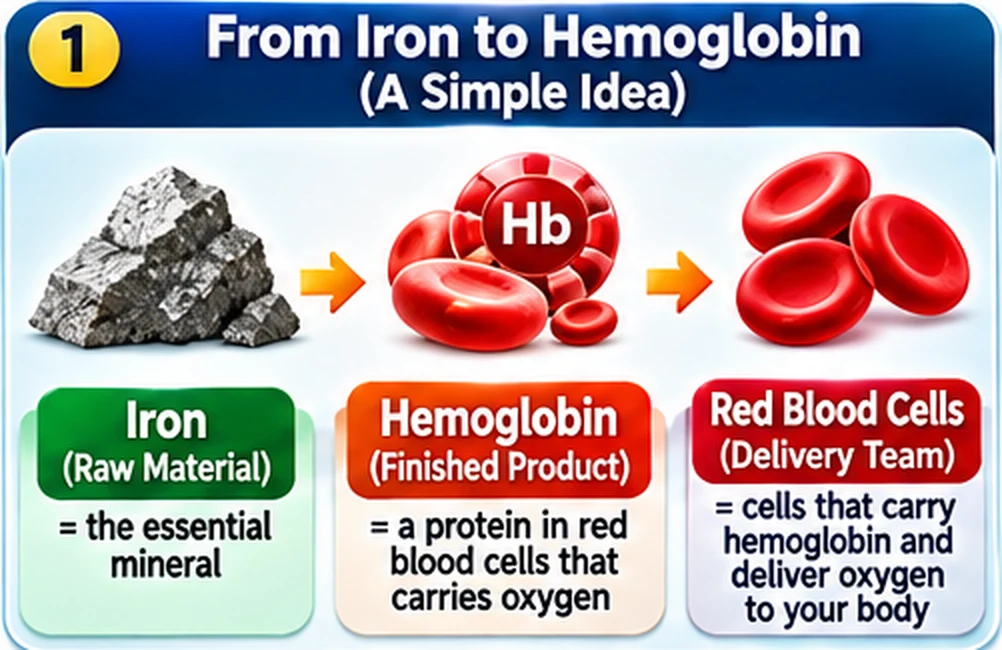
Think of iron as the raw material and red blood cells as the finished product. Hemoglobin, the protein inside red blood cells, carries oxygen around the body, and iron is needed to build it. If the raw material runs short for long enough, the finished product drops too. That drop is anemia.
So the two terms describe different things. Iron deficiency describes what is missing. Anemia describes what the blood count shows. The World Health Organization describes anemia as a condition in which red blood cell count or hemoglobin concentration is below normal, with cut-offs that vary by age, sex and physiological status such as pregnancy. It also notes that anemia is best seen as a sign of an underlying condition, not a disease on its own.
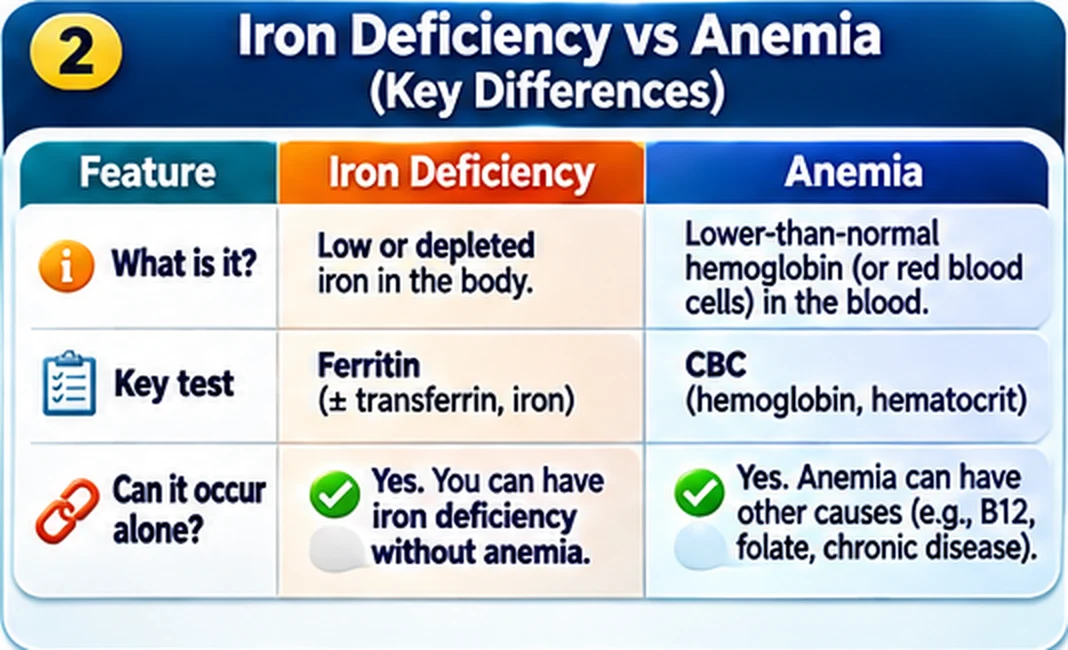
| Aspect | Iron deficiency | Anemia |
|---|---|---|
| What it means | Low iron in the body (low stores) | Low hemoglobin or red blood cells |
| Main test | Ferritin (stored iron) and other iron tests | Complete blood count (CBC) with hemoglobin |
| Can it occur alone? | Yes, stores can fall before hemoglobin drops | Yes, from causes other than iron |
| Typical cause | Low intake, blood loss, poor absorption | Iron deficiency, B12 or folate lack, chronic disease, inherited disorders |
| Fix | Treat the cause and replace iron | Depends on the type, so find the cause first |
Symptoms of iron deficiency anemia
According to the NHS, the common symptoms are tiredness and low energy, breathlessness, noticeable heartbeats (palpitations), paler skin than usual and headaches. Less common symptoms include a sore tongue, hair loss, painful cracks at the corners of the mouth, spoon-shaped nails, restless legs and cravings for non-food items such as ice or paper (pica).
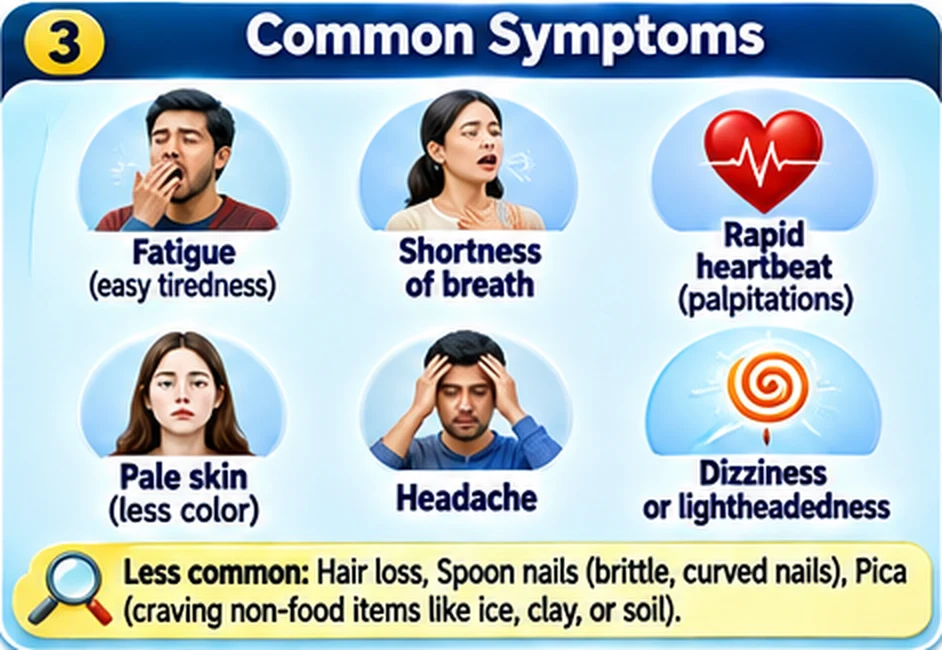
Many of these symptoms are not specific. Tiredness and headaches have many causes, so symptoms alone cannot tell you whether you are iron deficient. A blood test can.
What causes low iron?
The NHS lists these as the usual causes of iron deficiency anemia:
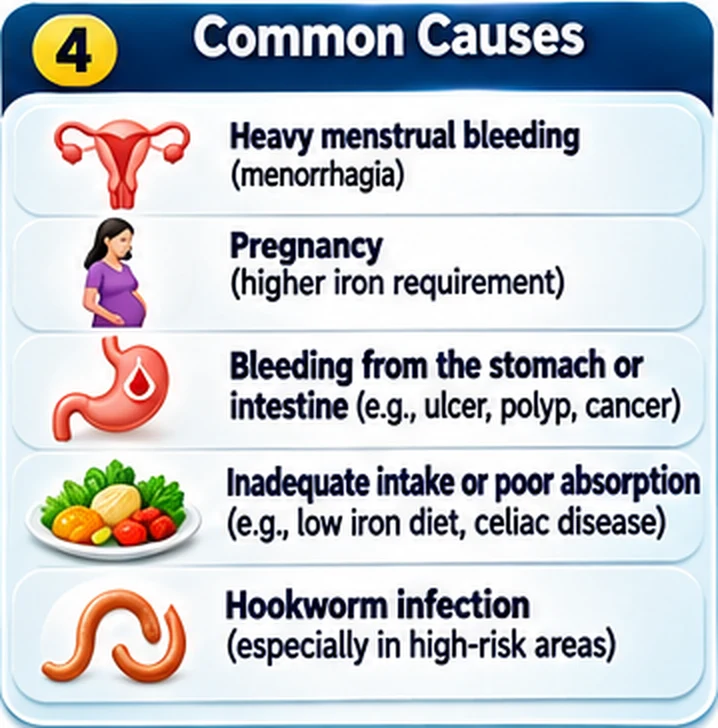
- Heavy periods: a very common cause.
- Pregnancy: the body needs more iron, and in pregnancy the cause is most often too little iron in the diet.
- Bleeding in the stomach or gut: for example from stomach ulcers, piles, inflammation of the food pipe or bowel, or regular use of anti-inflammatory painkillers such as ibuprofen or aspirin. Less commonly, tumors of the bowel or stomach.
- Poor absorption or low intake: MedlinePlus also lists eating too little iron and reduced absorption of iron from food, medicines or vitamins.
The WHO adds that infections such as hookworm and other parasitic infections, and chronic disease, are important causes of anemia in many parts of the world, with South-East Asia among the regions with the highest burden. Because bleeding can be the hidden cause, doctors look for the reason behind low iron and do not simply replace it.
How is it diagnosed?
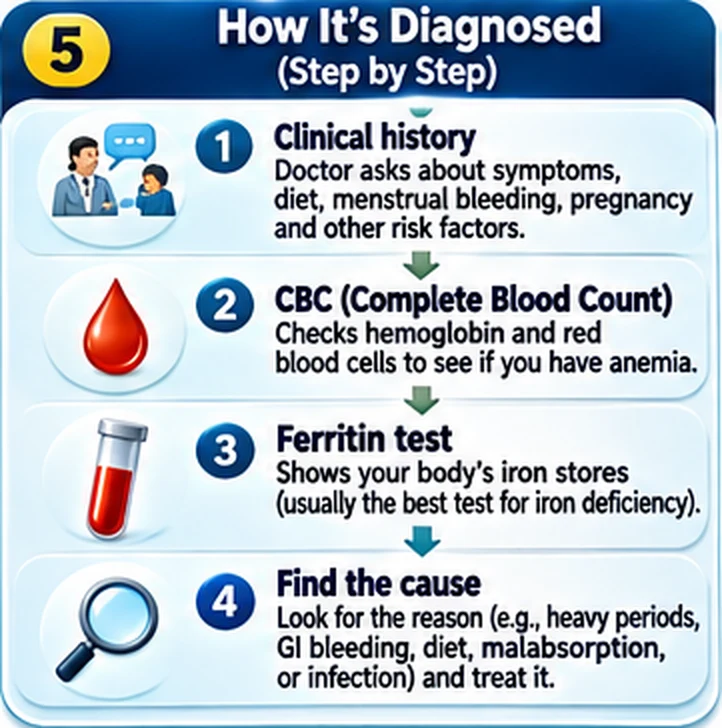
- History and examination: your doctor asks about periods, diet, medicines, and stomach or bowel symptoms.
- Complete blood count (CBC/FBC): shows whether hemoglobin and red blood cells are low.
- Ferritin test: ferritin is a protein that stores iron, so a low level suggests low iron stores. MedlinePlus gives typical reference ranges of about 30–400 ng/mL for men and 13–150 ng/mL for women, but ranges differ between laboratories, so always use the range printed on your own report.
- Tests for the cause: if the cause is unclear, your doctor may check for hidden blood in the stool or refer you to a specialist.
A high ferritin result does not always mean high iron. Inflammation, liver disease and other conditions can raise ferritin, so the number is read together with your symptoms and other tests.
How is iron deficiency anemia treated?
Treatment has two parts: replace the iron and treat the cause. The NHS describes iron tablets as the usual treatment, taken for around six months in many cases so that stores are rebuilt, with repeat blood tests to check recovery. The exact medicine and dose are decided by your doctor, based on your tests.
- Iron tablets can cause constipation or diarrhea, stomach pain, heartburn, nausea and darker stools. Taking them with or soon after food can reduce side effects.
- Do not stop early just because you feel better. Hemoglobin often recovers before stores do.
- Tea, coffee, milk and dairy, and foods high in phytates such as whole grains, can reduce iron absorption when taken in large amounts. Vitamin C-rich foods or a glass of orange juice can help.
- Keep iron tablets out of the reach of children. An iron overdose in a young child can be fatal.
If the tablet your doctor writes has a different brand on the shelf, see generic and brand names. The same active ingredient can be sold under several brands.
Iron-rich foods
The NHS suggests dark-green leafy vegetables, pulses, meat, dried fruit such as apricots and raisins, and iron-fortified cereals and bread. Food alone is often not enough to correct a real deficiency, which is why tests come first.
Should I take iron tablets without a test?
It is better not to. If your symptoms come from another cause, iron will not fix them and can delay the right diagnosis. If low iron is caused by hidden bleeding, taking iron can hide the problem. Iron is also unsuitable for some people: product information for oral iron preparations lists iron-overload conditions such as hemochromatosis as a contraindication. Get a blood test first.
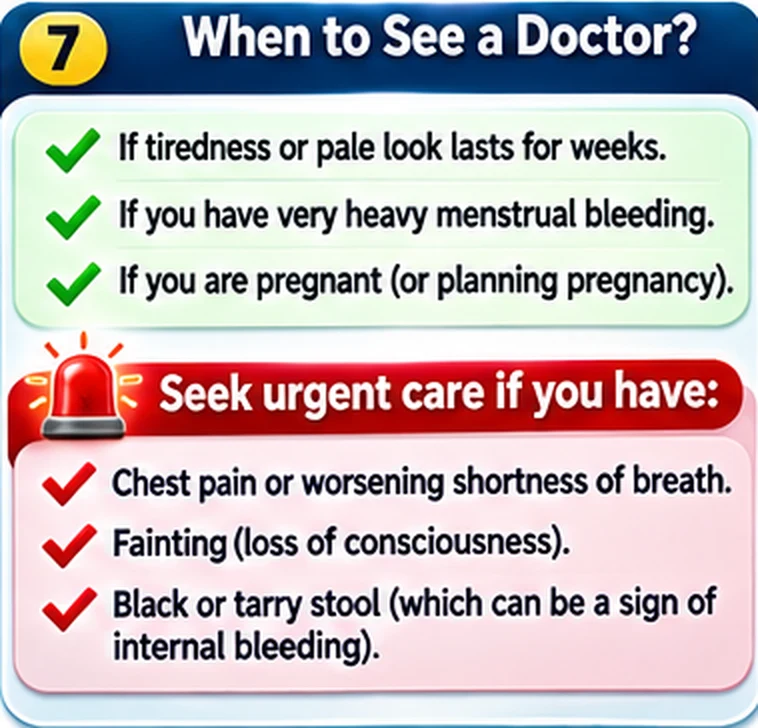
When to see a doctor
Book a visit if you have ongoing tiredness, paler skin, breathlessness, palpitations, very heavy periods, or you are pregnant or planning a pregnancy. Get urgent medical help for chest pain, severe breathlessness, fainting, or black stools or visible blood in the stool.
Frequently asked questions
1. Is iron deficiency the same as anemia?
No. Iron deficiency means low iron in the body. Anemia means low hemoglobin or red blood cells. Iron deficiency is a common cause of anemia, but stores can run low before anemia appears, and anemia can come from other causes.
2. Can I have iron deficiency without anemia?
Yes. Ferritin, which reflects stored iron, can be low while hemoglobin is still in the normal range. A doctor interprets this with your symptoms and other tests.
3. Which blood tests show iron deficiency and anemia?
A complete blood count shows hemoglobin and red blood cells (anemia). A ferritin test estimates stored iron (iron deficiency). Your doctor may add other iron tests depending on the situation.
4. What are the symptoms of iron deficiency anemia?
Common symptoms are tiredness, breathlessness, palpitations, paler skin and headaches. These are not specific, so a blood test is needed to confirm the cause.
5. How long does treatment take?
The NHS describes iron tablets for around six months in many cases to rebuild stores, with repeat tests. Your doctor decides the duration for you.
6. Can I just buy iron and take it?
It is safer to test first. Iron can hide bleeding or be unsuitable in iron overload conditions. Ask a doctor or registered pharmacist which iron product and dose fits you.
Key takeaway
Iron deficiency is the shortage; anemia is what the blood count shows. Test first with a CBC and ferritin, find out why iron is low, treat the cause, and take iron as your doctor advises.