 Sayedul Abrar
This article explains an important pharmacology concept in clear, beginner-friendly language.
1. The simple meaning
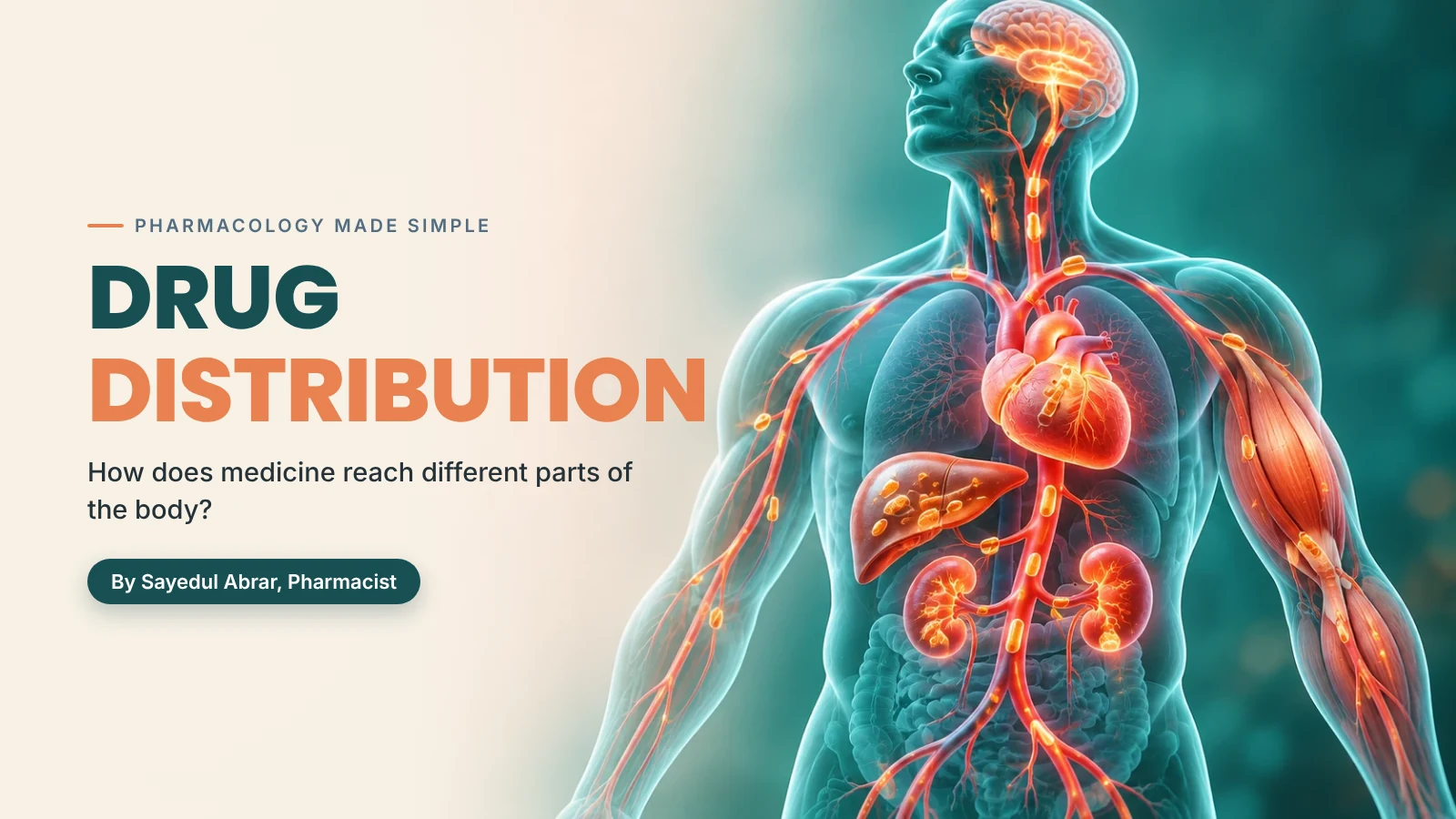
Drug distribution is the reversible movement of a medicine from the bloodstream into body fluids and tissues. After a medicine is absorbed—or administered directly into a vein—it travels with the blood. Some reaches the target tissue, while some remains in the circulation or moves into other organs.
2. How does a medicine travel?
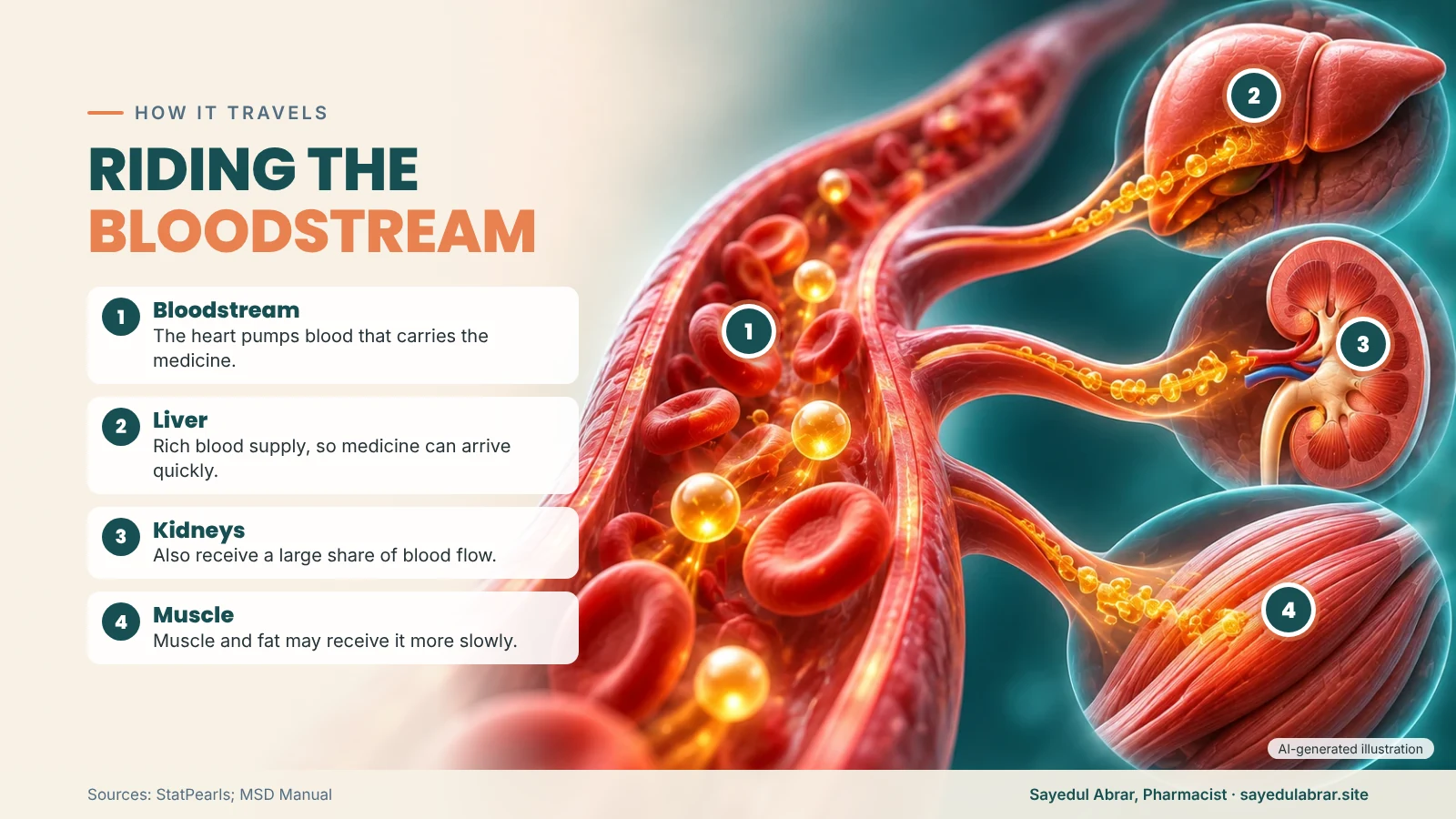
The heart pumps blood through the body. Organs with a rich blood supply, such as the liver, kidneys, brain and heart, may receive a medicine quickly. Other tissues, including fat and muscle, may receive it more slowly. Blood flow is only one part of the story: the medicine must also cross the barriers around blood vessels and cells.
3. Why do medicines distribute differently?
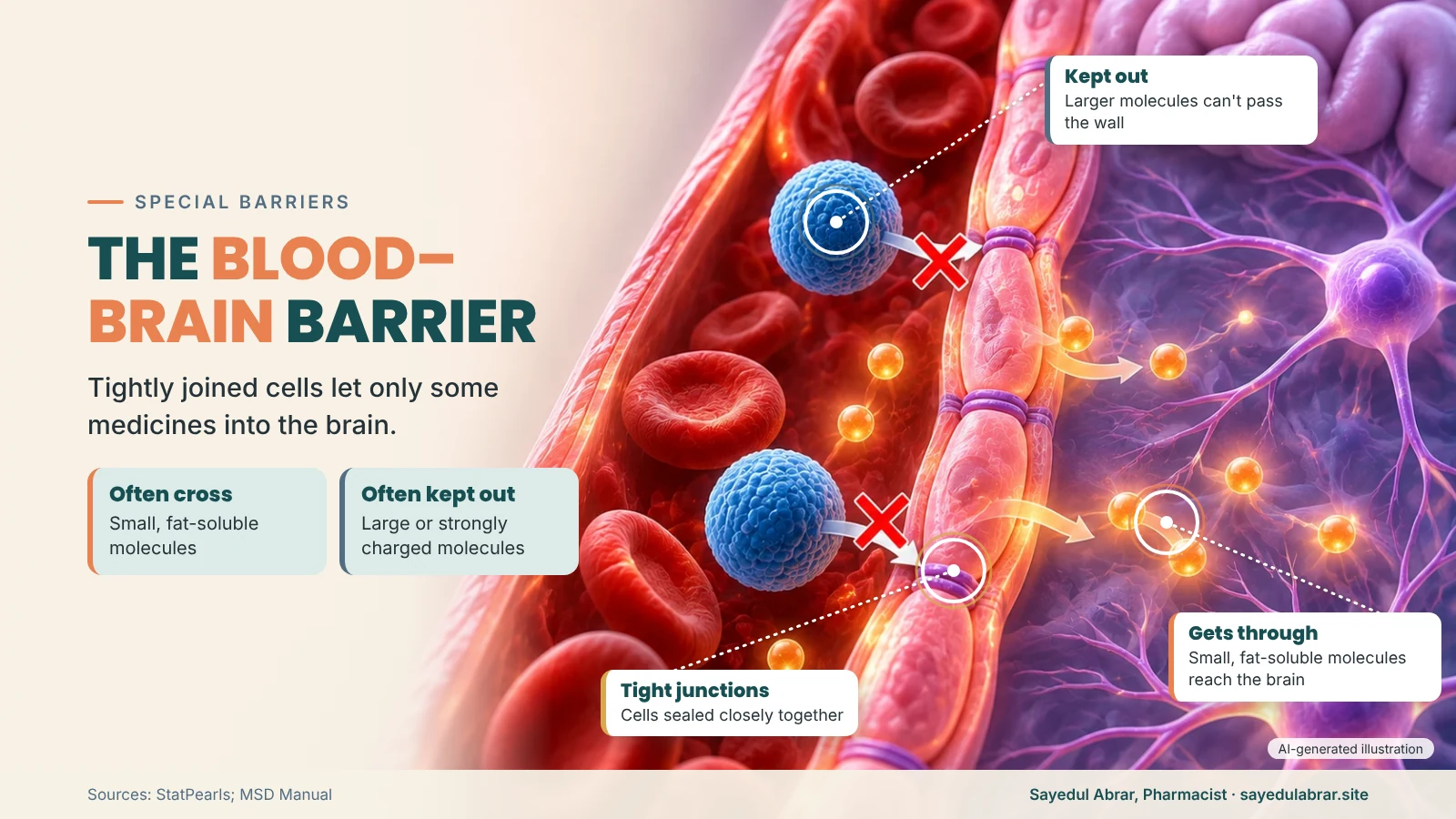
Molecules differ in size, charge and fat or water solubility. Small, lipid-soluble molecules may cross some cell membranes more readily. Highly water-soluble or strongly charged molecules may remain mainly in blood or extracellular fluid. Special barriers, such as the blood–brain barrier, restrict the entry of many medicines into the brain.
4. What is plasma protein binding?
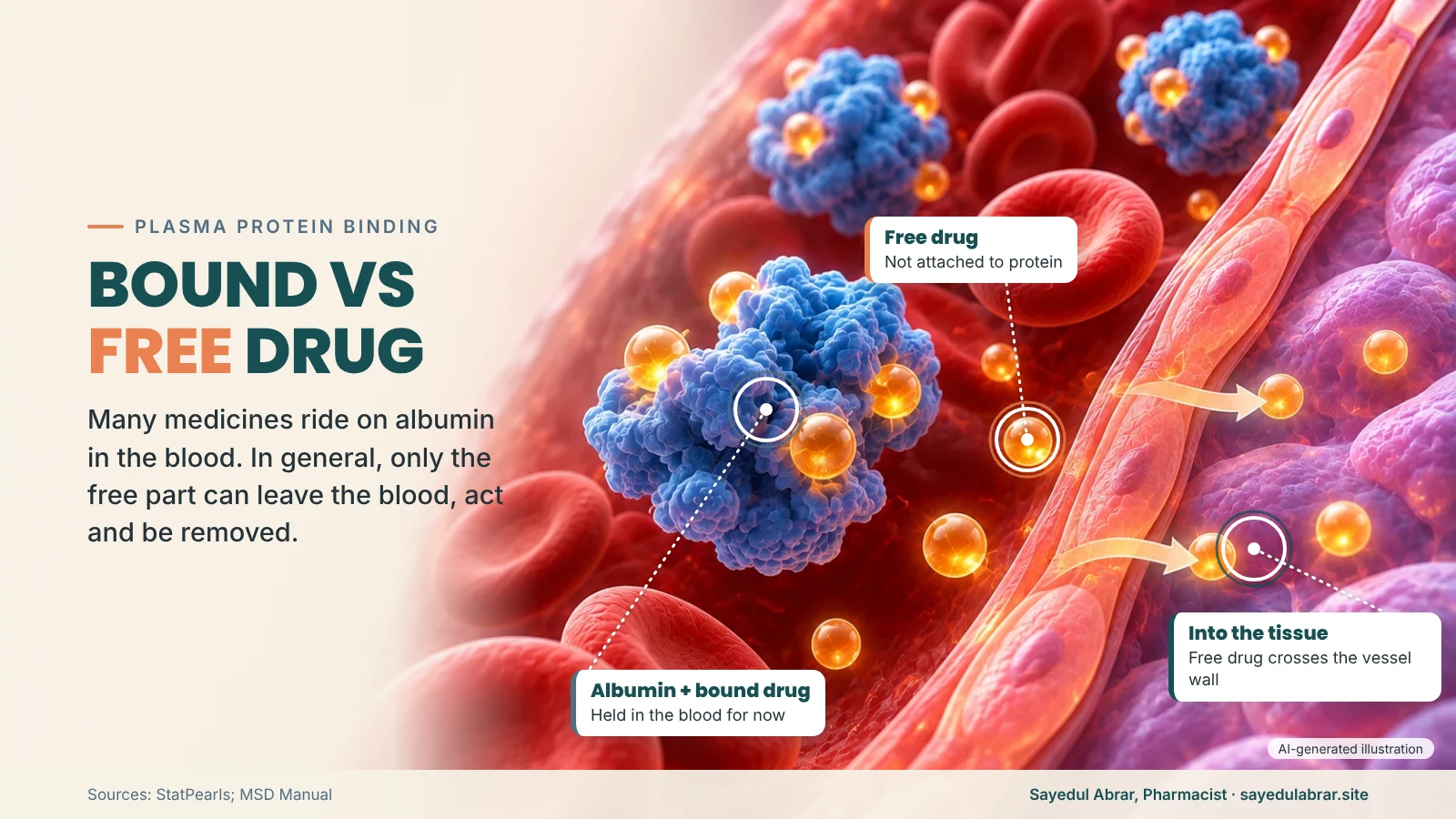
Some medicines attach reversibly to proteins in blood, especially albumin. The portion attached to protein is called bound drug; the portion not attached is called free or unbound drug. In general, the free fraction is available to cross membranes, reach targets and be eliminated. Binding is dynamic: drug can detach as free drug leaves the circulation.
5. What is volume of distribution?
The apparent volume of distribution (Vd) is a pharmacokinetic measure relating the amount of drug in the body to its concentration in plasma. It is not necessarily a real anatomical space. A low Vd often suggests that much of the drug remains in the blood; a high Vd suggests more extensive distribution into tissues.
6. Why does this matter in practice?
Distribution can influence how quickly a medicine reaches its site of action, how long it remains in the body and whether it enters particular tissues. Age, body composition, pregnancy, illness, fluid balance and changes in blood proteins may alter distribution. These are reasons clinicians consider patient factors when selecting and monitoring medicines.
7. Key takeaways
Distribution describes movement between blood and tissues. Blood flow, membrane permeability, drug properties and protein binding all matter. The apparent volume of distribution helps describe where a medicine is found, but it is not a literal body-space measurement.
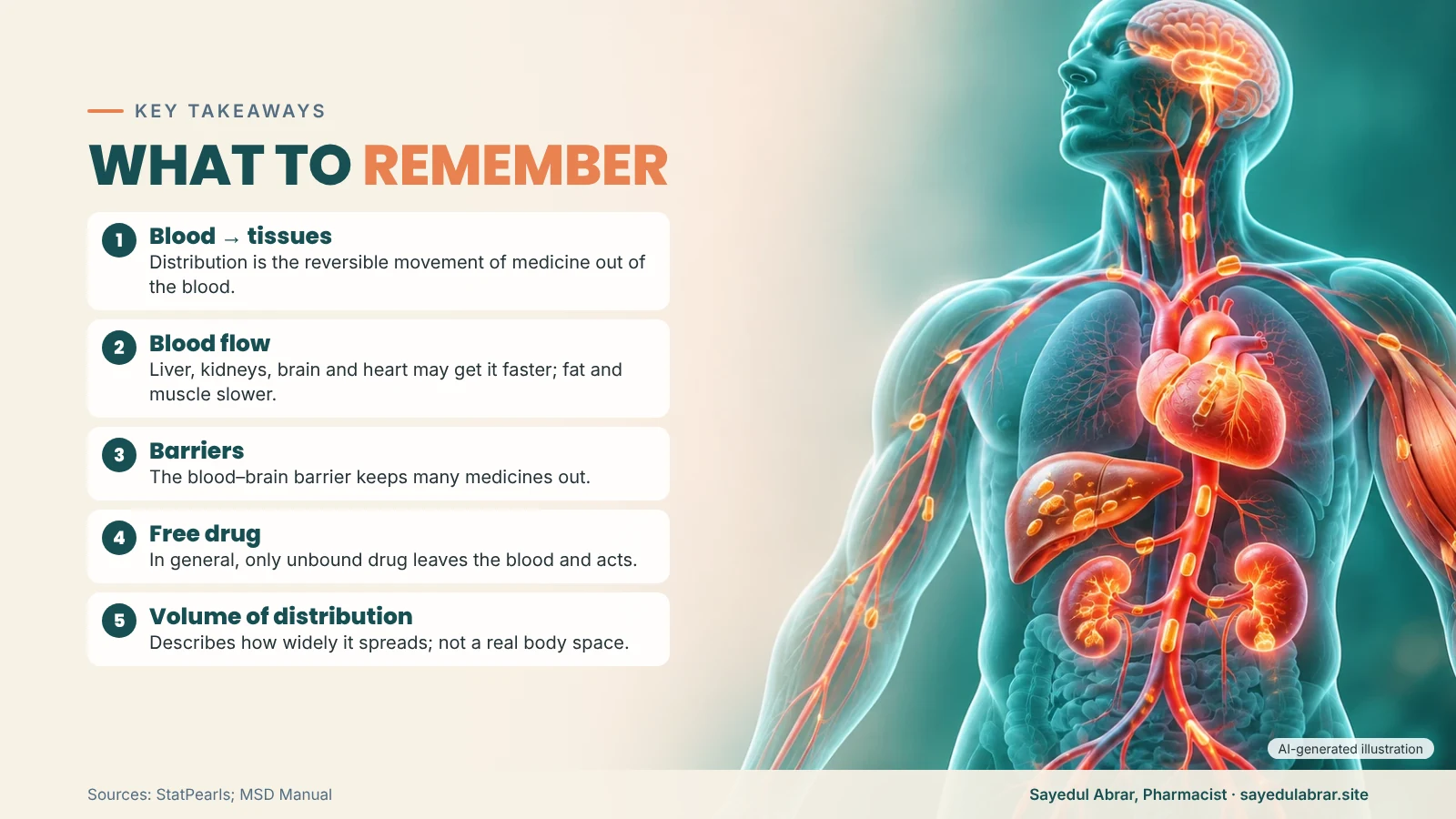
- Drug distribution is the reversible movement of a medicine from the bloodstream into body fluids and tissues.
- Organs with a rich blood supply, such as the liver, kidneys, brain and heart, may receive a medicine quickly; fat and muscle may receive it more slowly.
- Special barriers, such as the blood–brain barrier, restrict the entry of many medicines into some tissues.
- In general, only the free (unbound) part of a medicine can leave the blood, reach its target and be eliminated.
- Volume of distribution describes how widely a medicine spreads; it is not a real body space.
Frequently asked questions
How long does a medicine take to leave the body?
It varies with the drug, dose, metabolism, kidney function and individual factors. There is no single time that applies to every medicine.
Do the kidneys remove every medicine?
No. Some medicines are eliminated mainly through the liver and bile, while others use more than one route.
Can I drink extra water to flush out a medicine?
No. Excessive water intake can be harmful and is not a reliable way to speed up drug elimination.
Continue learning: How do medicines work in the body? explains how distribution fits into ADME and how drug exposure relates to pharmacological response.
References and further reading
- Brunton LL, Hilal-Dandan R, Knollmann BC, editors. Goodman & Gilman's The Pharmacological Basis of Therapeutics. McGraw Hill.
- StatPearls. Pharmacokinetics. NCBI Bookshelf. NCBI Bookshelf.
- Merck Manual Professional Edition. Overview of Pharmacokinetics. Merck Manual.
Editorial note: This is a general educational explanation. Consult approved product information for medicine-specific details.

Sayedul Abrar
A Grade Pharmacist · Registration Code: A-22040
Product Executive, Product Management Department (PMD) · Opsonin Pharma Ltd.