 Sayedul Abrar
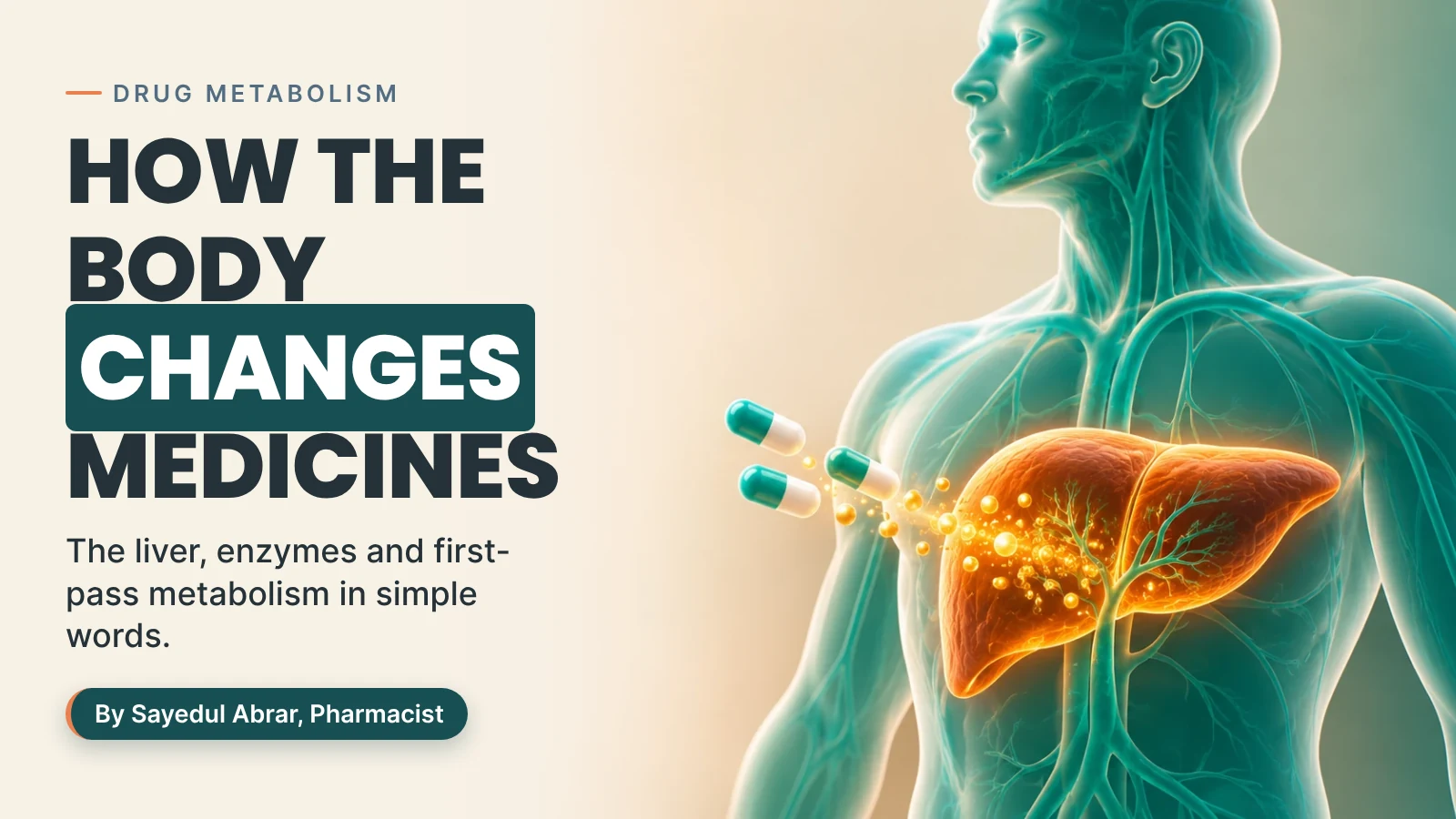
This article explains an important pharmacology concept in clear, beginner-friendly language.
1. The simple meaning
Drug metabolism is the chemical alteration of a medicine by the body. It is also called biotransformation. The process often makes a drug easier to eliminate, but metabolism does not always switch a medicine off: some medicines become active only after they are metabolised, and some metabolites remain active.
2. Why is the liver important?
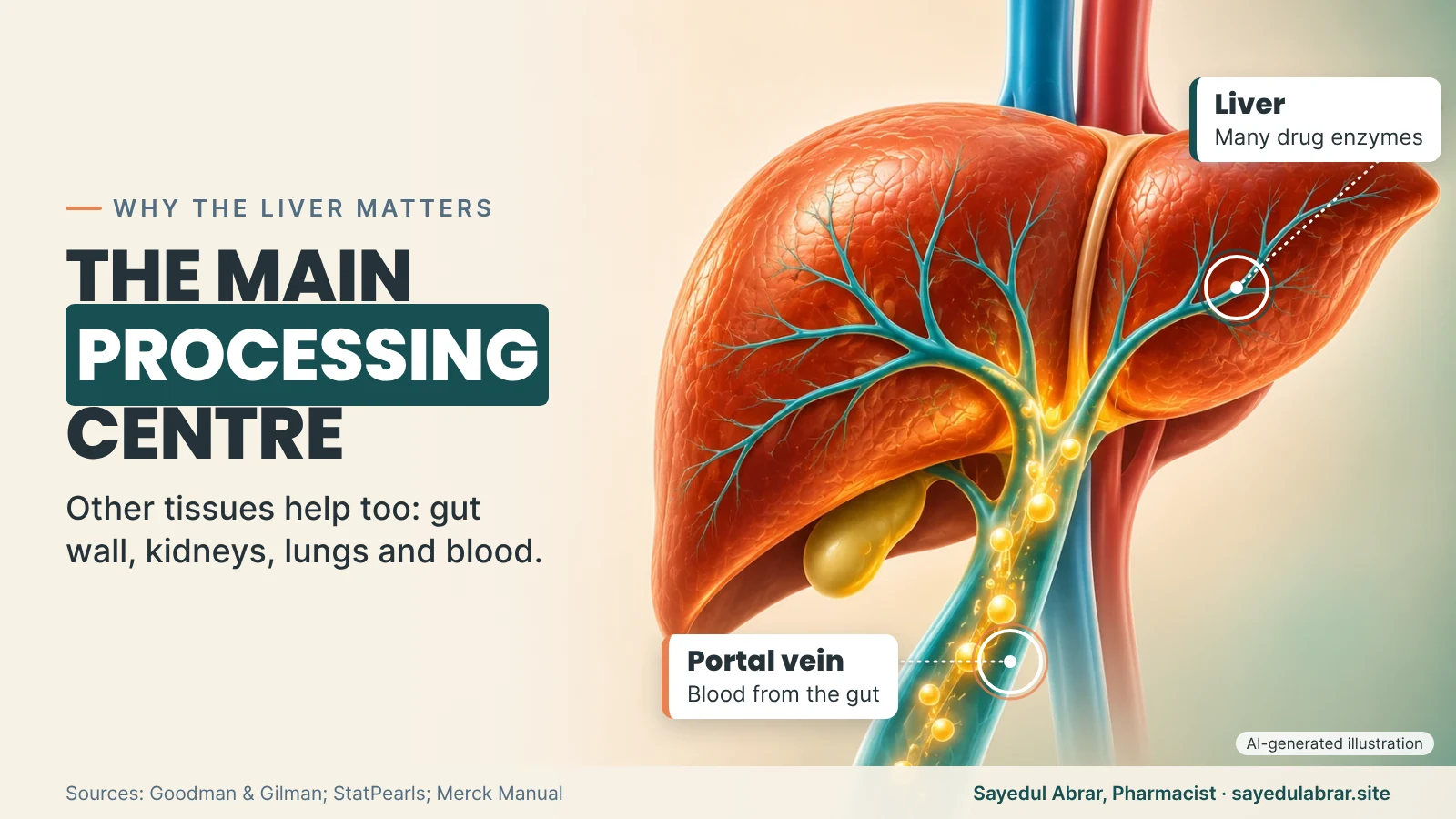
The liver contains many enzymes that process medicines and other chemicals. It receives blood from the digestive tract and has a major role in first-pass metabolism after many oral medicines. However, metabolism can also occur in the intestinal wall, kidneys, lungs, blood and other tissues.
3. What are drug-metabolising enzymes?
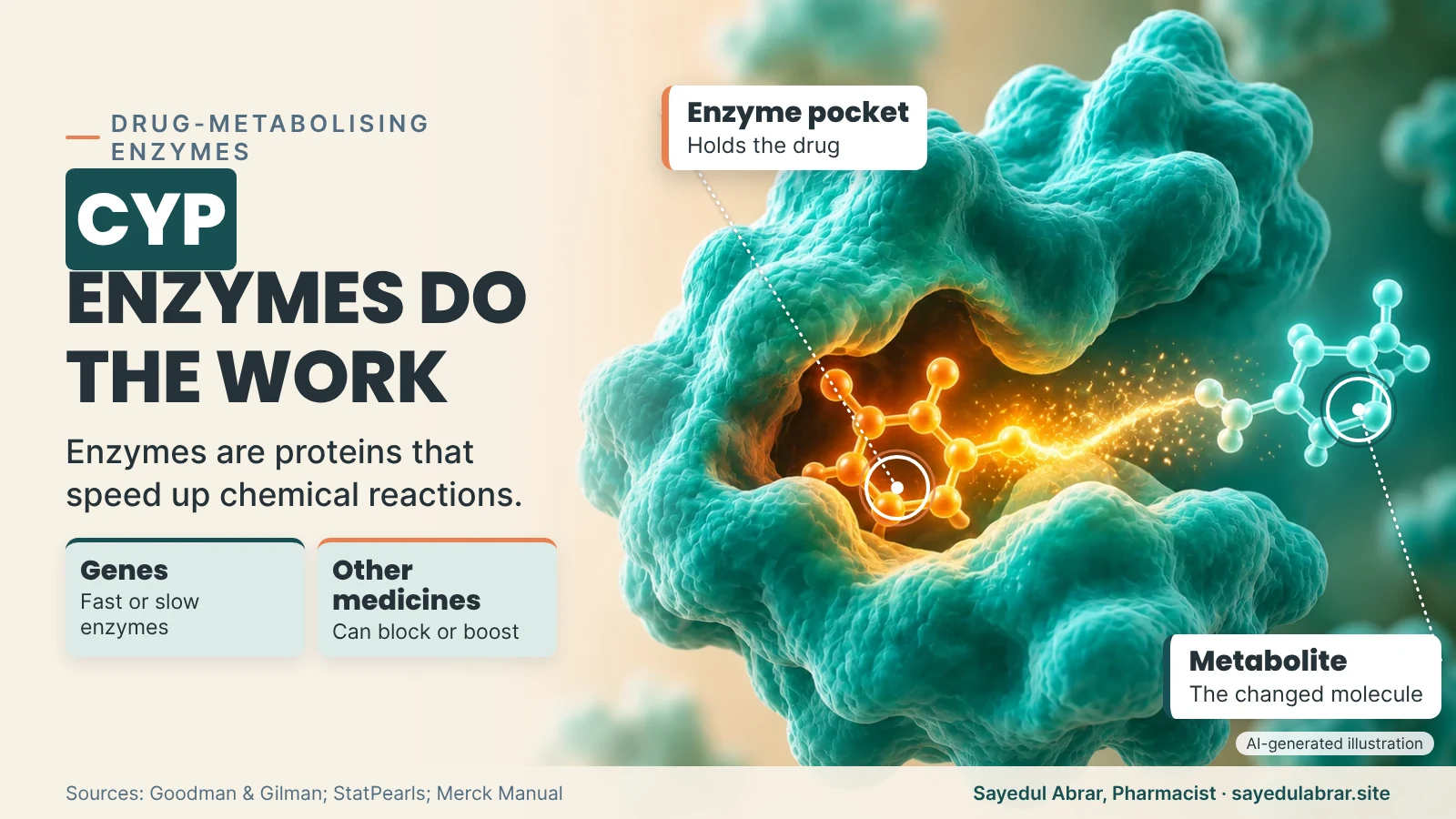
Enzymes are proteins that speed up chemical reactions. The cytochrome P450 (CYP) family is especially important for the metabolism of many medicines. Different CYP enzymes act on different drugs. Enzyme activity can be affected by genetics, age, illness, food and other medicines.
4. Phase I and Phase II reactions
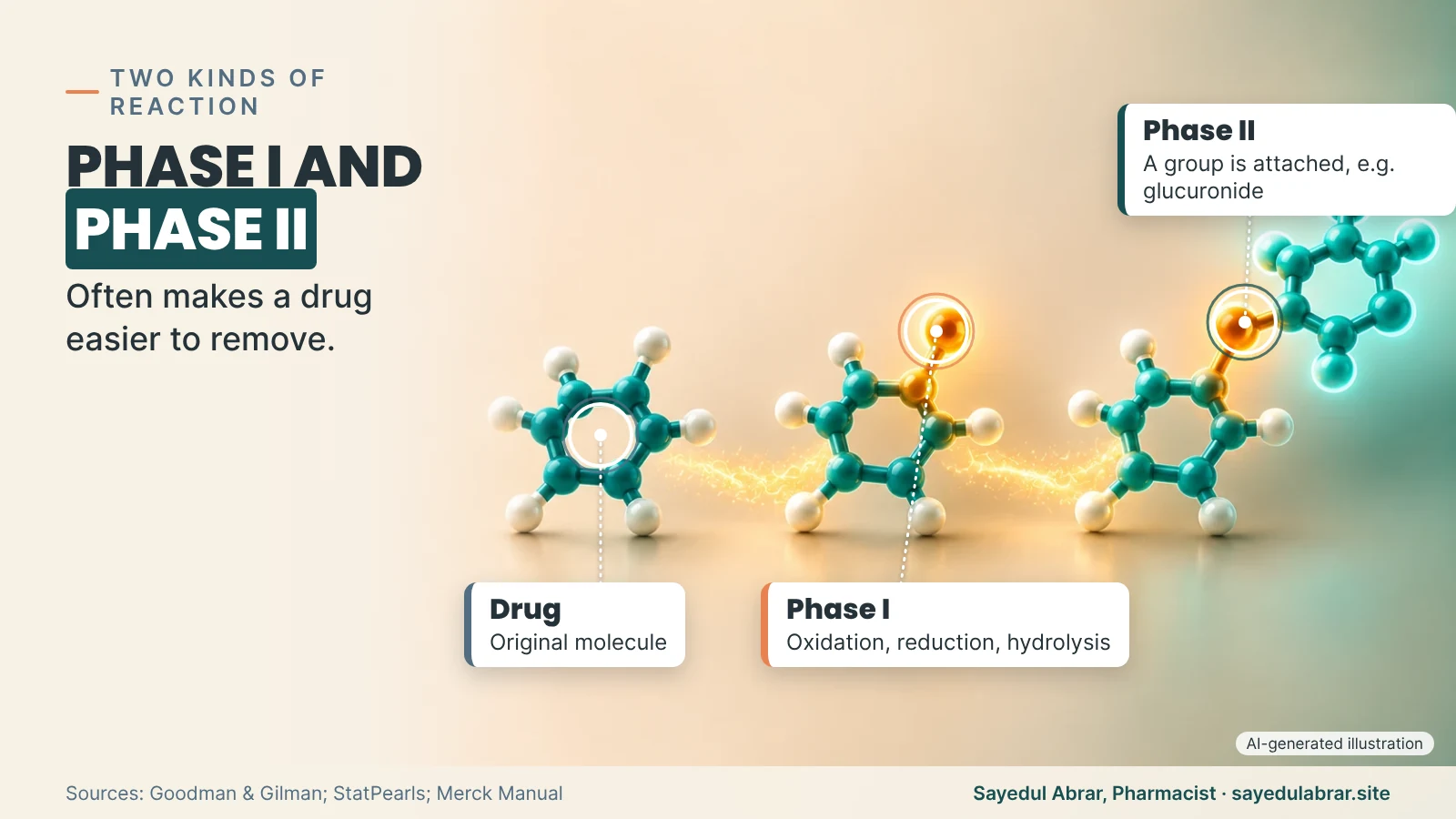
Phase I reactions include oxidation, reduction and hydrolysis. They may introduce or expose a chemical group on the drug molecule. Phase II reactions attach another group to the drug or its Phase I product; examples include glucuronidation and sulfation. These labels are useful teaching categories, but real pathways can be more complex and do not always occur in a fixed sequence.
5. What is first-pass metabolism?
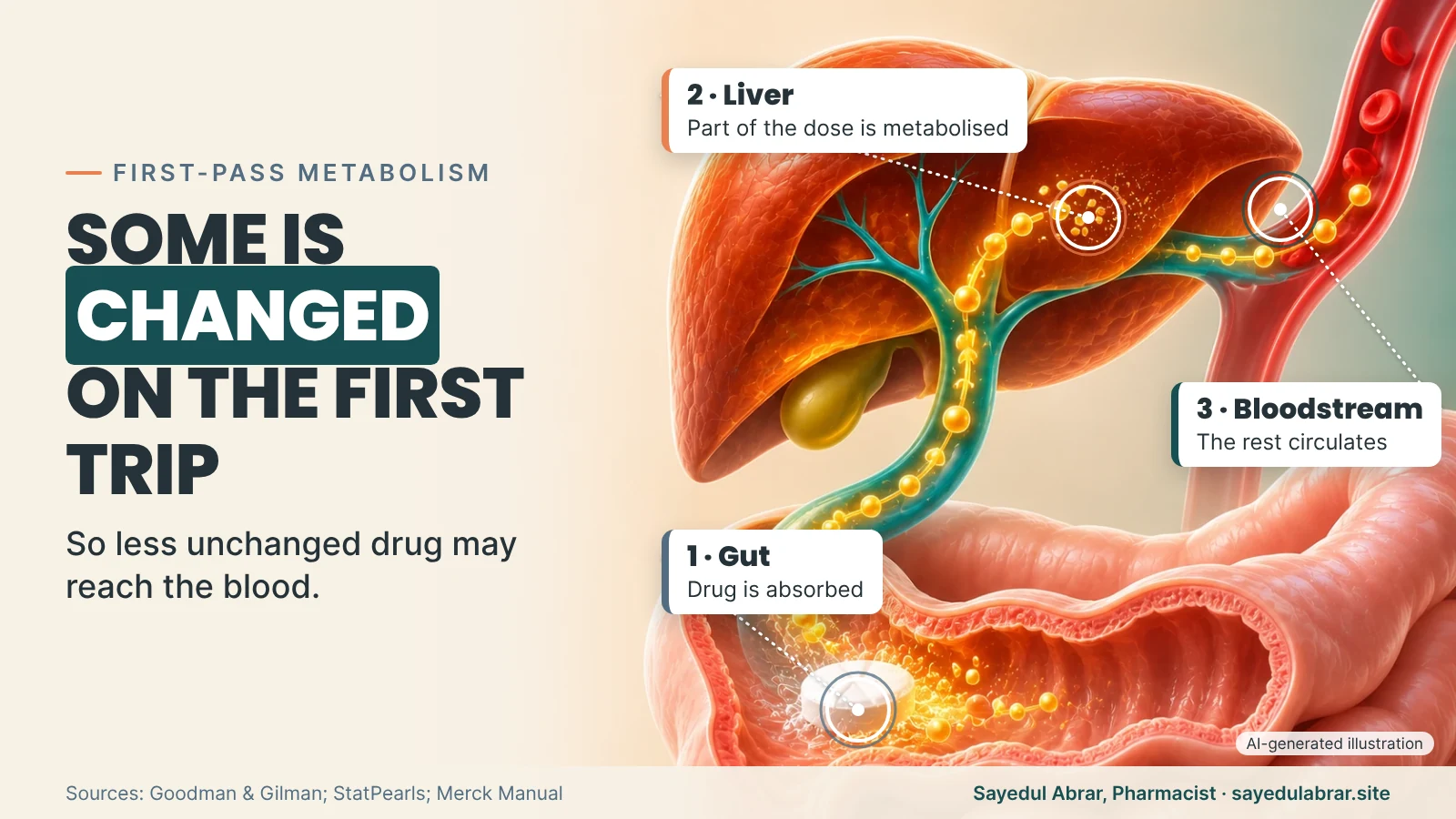
After an oral medicine is absorbed from the gut, blood usually travels through the portal vein to the liver before reaching the general circulation. Enzymes in the gut wall and liver may metabolise part of the dose during this first passage. As a result, less unchanged drug may reach systemic circulation. This can reduce oral bioavailability.
6. Can metabolism activate a medicine?
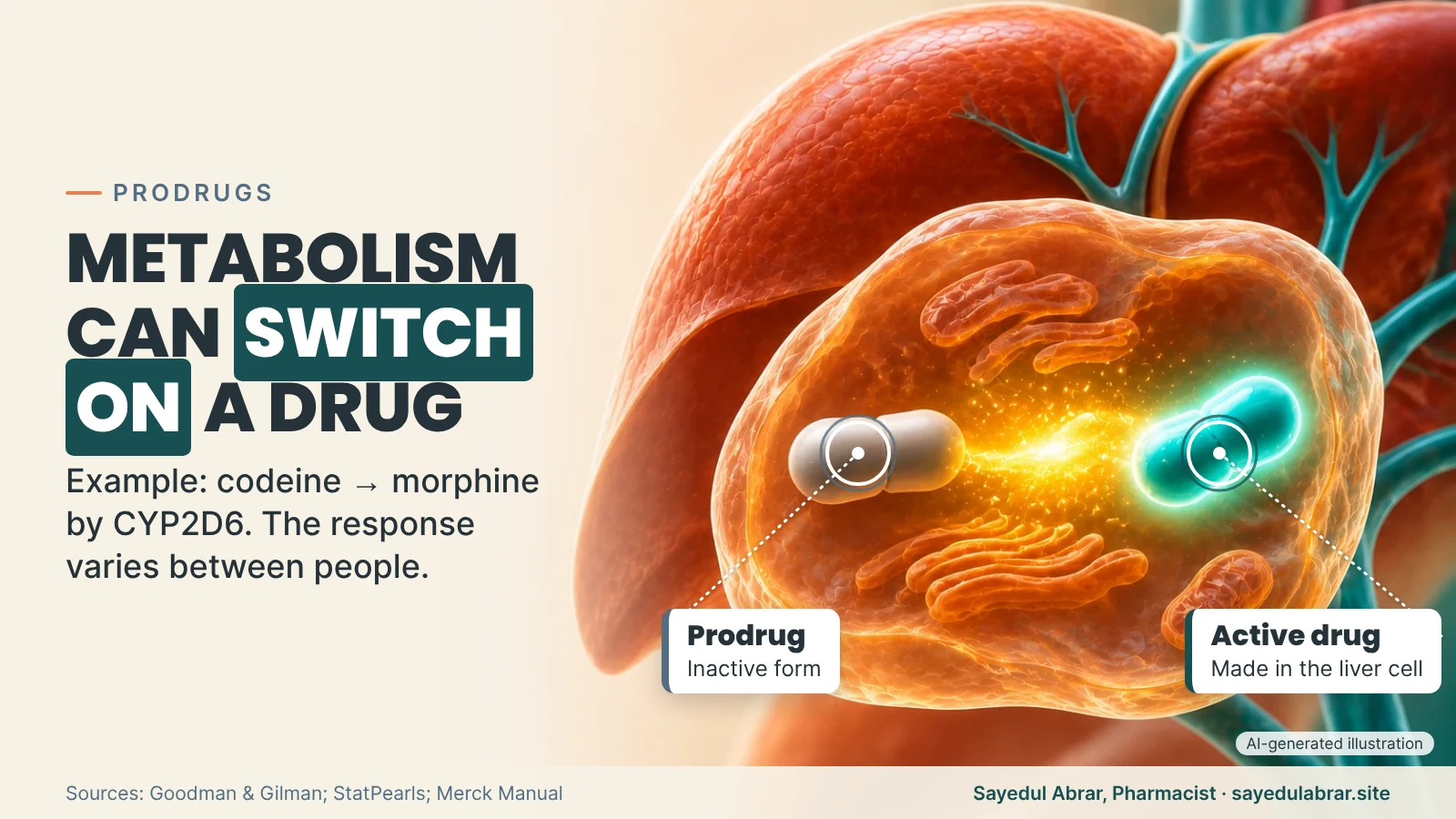
Yes. A prodrug is given in a form that needs conversion in the body to produce its intended active medicine. Codeine conversion to morphine by CYP2D6 is one well-known example, although the response varies between people. Other medicines form active metabolites that contribute to their effects.
7. Why do interactions happen?
One medicine may inhibit an enzyme and slow the metabolism of another medicine, potentially increasing its concentration. Another may induce an enzyme and speed up metabolism, potentially lowering the concentration of a susceptible medicine. The clinical effect depends on the specific drugs and pathway; do not start or stop medicines without professional advice.
8. Key takeaways
Metabolism changes a medicine chemically and often involves the liver, but it can happen in other tissues too. Enzymes such as CYPs matter. Metabolism can inactivate, activate or create active metabolites, and it is one reason medicines can interact.
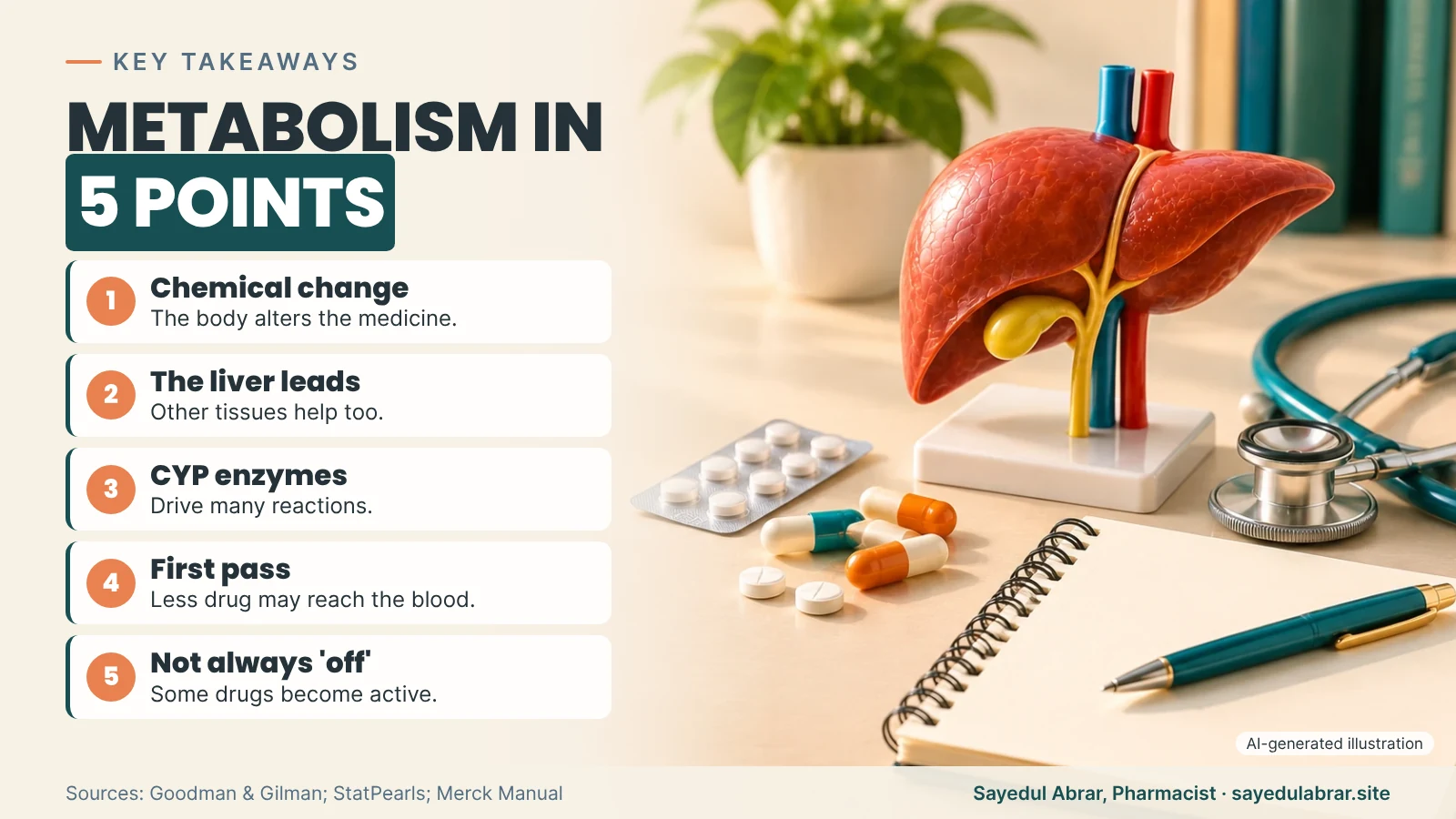
- Drug metabolism is the chemical change of a medicine by the body.
- The liver is the main site, but the gut wall and other tissues also take part.
- CYP enzymes process many medicines; genes, age, illness, food and other medicines can change their activity.
- First-pass metabolism can lower how much of an oral dose reaches the blood.
- Metabolism can switch a medicine off, switch a prodrug on, or form active metabolites.
- Enzyme changes are a common reason for drug interactions, so ask before starting or stopping a medicine.
Next in series: Drug Excretion: How Do Medicines Leave the Body?
Frequently asked questions
Is drug metabolism the same as digestion?
No. Digestion breaks food down into smaller components that the body can absorb. Drug metabolism is the chemical modification of a medicine by the body, mainly in the liver, although it can also occur in the intestine and other tissues.
Why do some medicines interact with each other?
Some medicines can increase or decrease the activity of drug-metabolising enzymes, such as cytochrome P450 (CYP) enzymes. Enzyme induction may reduce the blood concentration of certain medicines, while enzyme inhibition may increase their concentration and the risk of side effects. The outcome depends on the medicines involved.
Does liver disease affect how medicines work?
Yes. Liver disease can change how certain medicines are metabolised and eliminated. Some may remain in the body longer and increase the risk of adverse effects. The impact depends on the medicine and the severity of liver impairment, so a healthcare professional may need to review the dose or treatment.
Why do two people react differently to the same dose?
People can process medicines differently because of genetic variation, age, liver and kidney function, illness, diet, smoking and other medicines. These factors can influence drug metabolism, blood concentrations and treatment response. Alcohol can also affect the metabolism or effects of certain medicines.
Continue learning: How do medicines work in the body? connects metabolism with the full ADME process and explains pharmacokinetics versus pharmacodynamics.
References and further reading
- Brunton LL, Hilal-Dandan R, Knollmann BC, editors. Goodman & Gilman's The Pharmacological Basis of Therapeutics. McGraw Hill.
- StatPearls. Pharmacokinetics. NCBI Bookshelf. NCBI Bookshelf.
- Merck Manual Professional Edition. Overview of Pharmacokinetics. Merck Manual.
Editorial note: This is a general educational explanation. Consult approved product information for medicine-specific details.

Sayedul Abrar
A Grade Pharmacist · Registration Code: A-22040
Product Executive, Product Management Department (PMD) · Opsonin Pharma Ltd.