 Sayedul Abrar
This article explains an important pharmacology concept in clear, beginner-friendly language.
1. The simple meaning
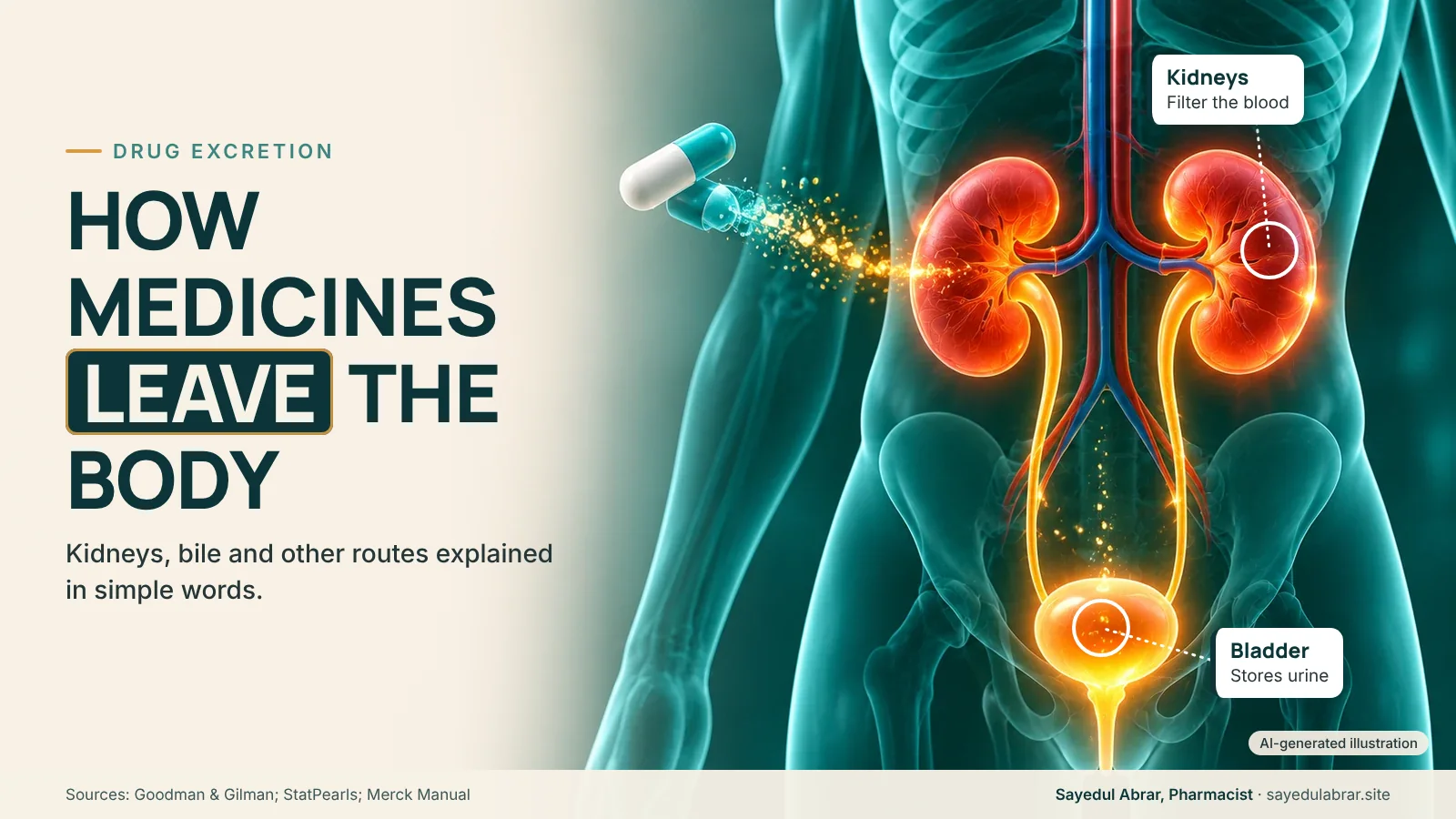
Drug excretion is the removal of a medicine or its metabolites from the body. It is the final step in the journey of many medicines, although some drugs can leave the body without being metabolised first. Excretion is different from metabolism: metabolism changes a drug chemically, while excretion removes it.
2. The kidneys: the main route for many medicines
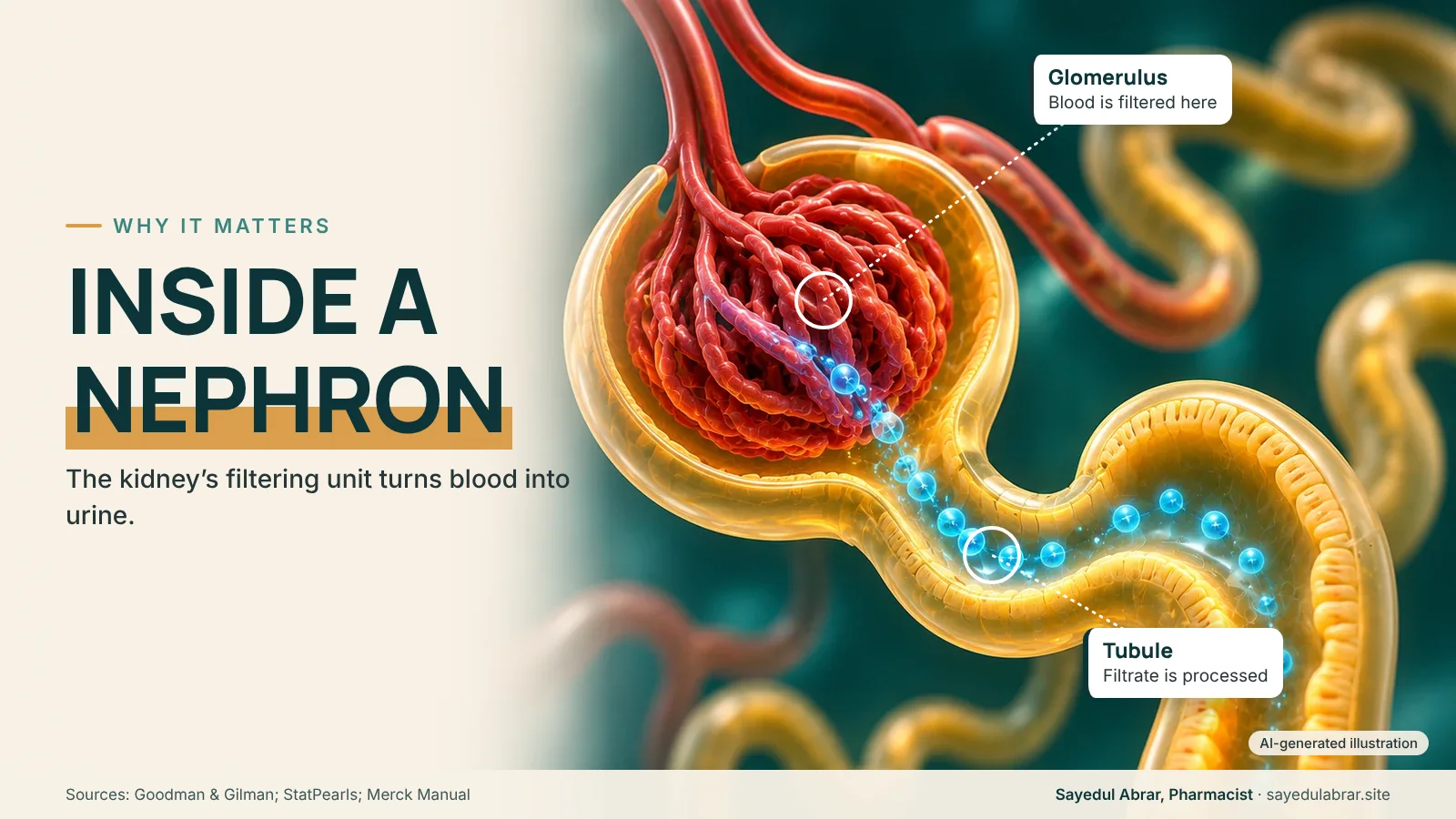
The kidneys filter blood and produce urine. Small molecules that are not strongly bound to plasma proteins may pass through the glomerular filter. Some drugs are also actively secreted from blood into the kidney tubules. As urine forms, some substances may be reabsorbed back into the blood, depending on their properties and urine conditions.
3. Three renal processes
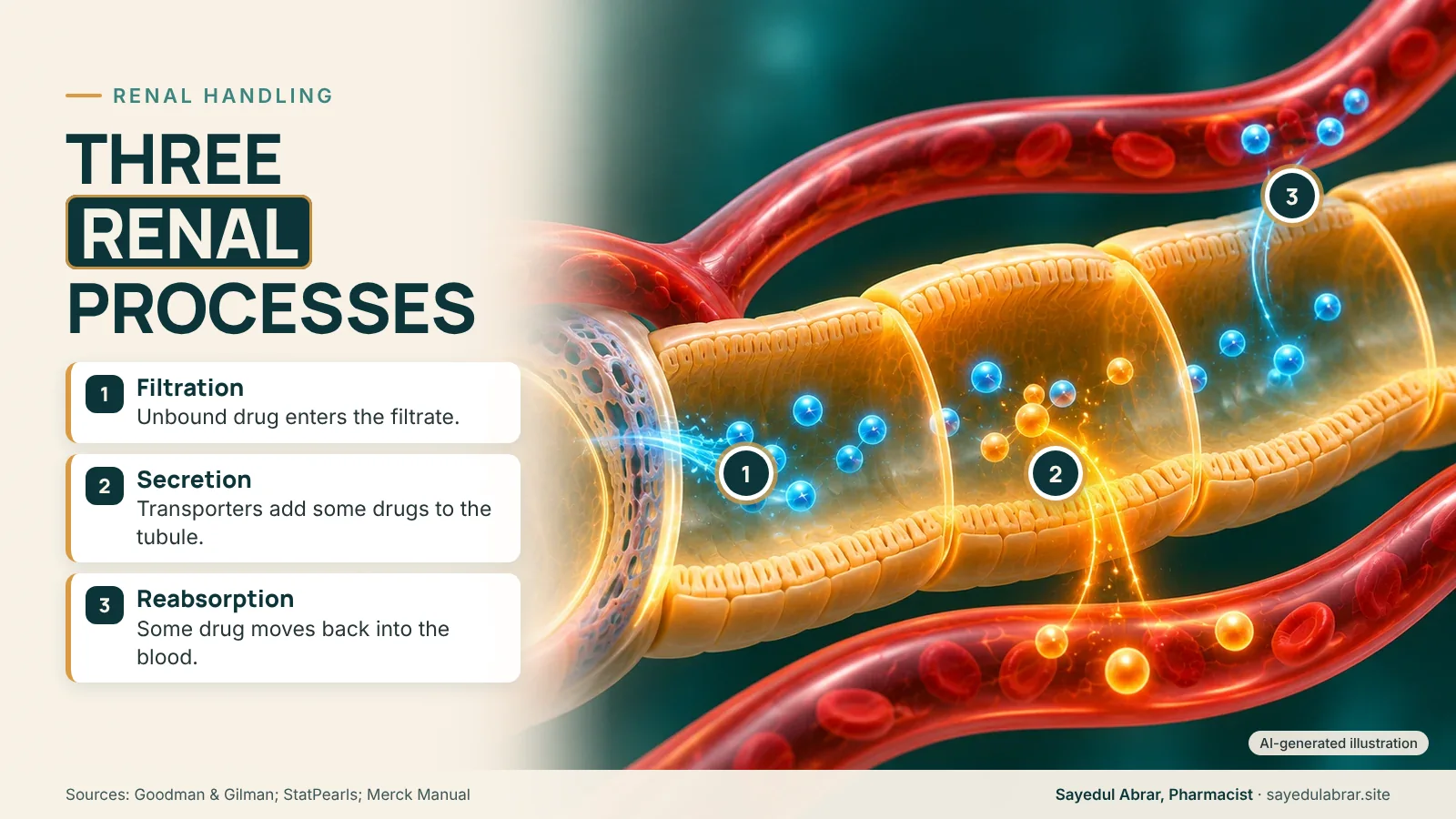
Glomerular filtration moves unbound drug from blood into the filtrate. Tubular secretion uses transport proteins to move certain drugs from blood into the tubule. Tubular reabsorption allows some drug molecules to move from the tubule back into the circulation. The balance of these processes determines how much drug leaves in urine.
4. Other routes of excretion
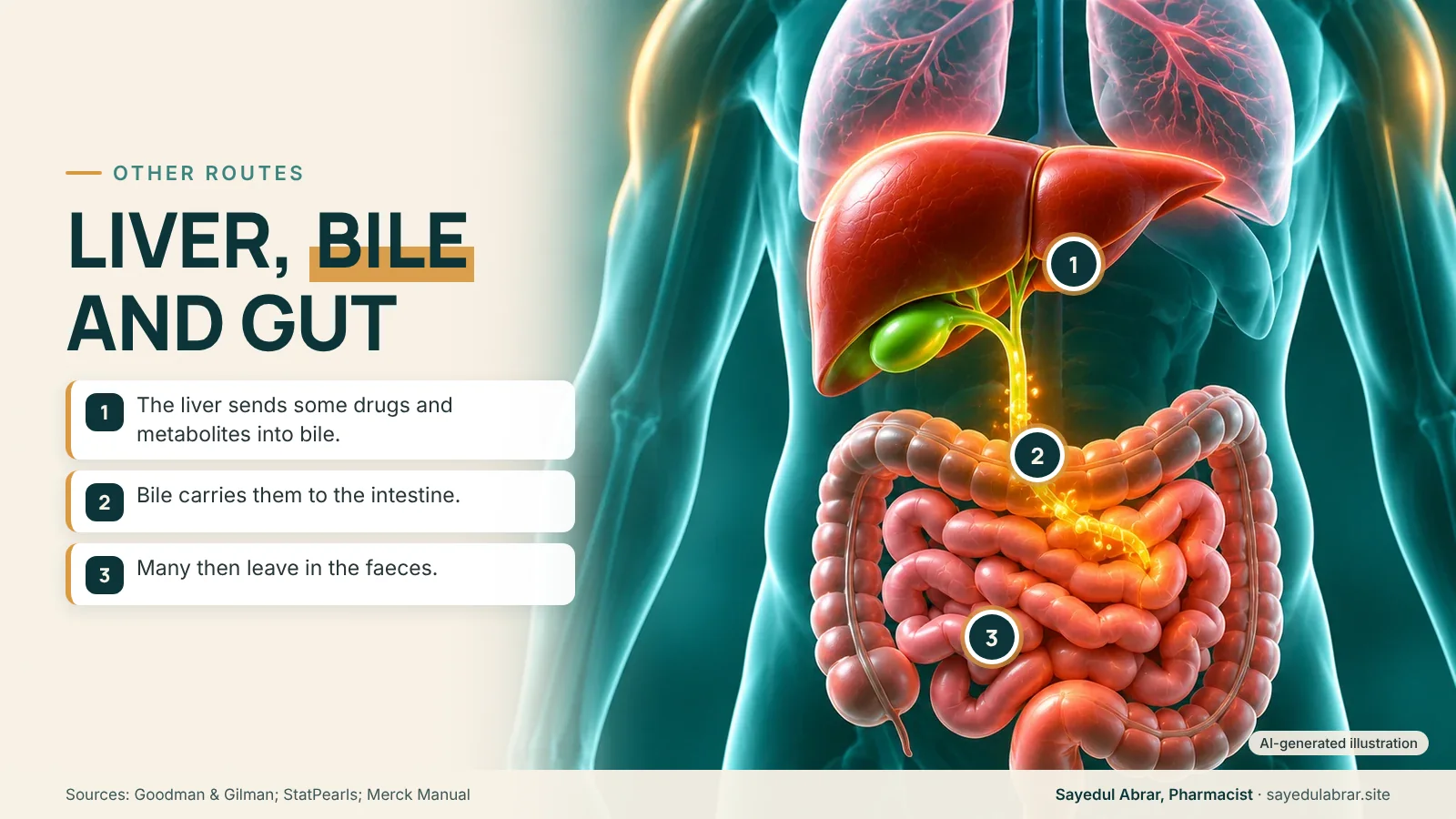
Some medicines or metabolites leave through bile and faeces. Small amounts may leave through sweat, saliva, tears, breast milk or exhaled air. The importance of each route depends on the medicine. For most drugs, the kidneys and liver/biliary system are the most important organs involved in elimination.
5. What is clearance?
Clearance describes the volume of plasma from which a drug is completely removed per unit of time. It is a measure of the body's ability to eliminate a medicine, not the amount of drug itself. Renal clearance is the part of total clearance attributable to the kidneys.
6. Why does kidney function matter?
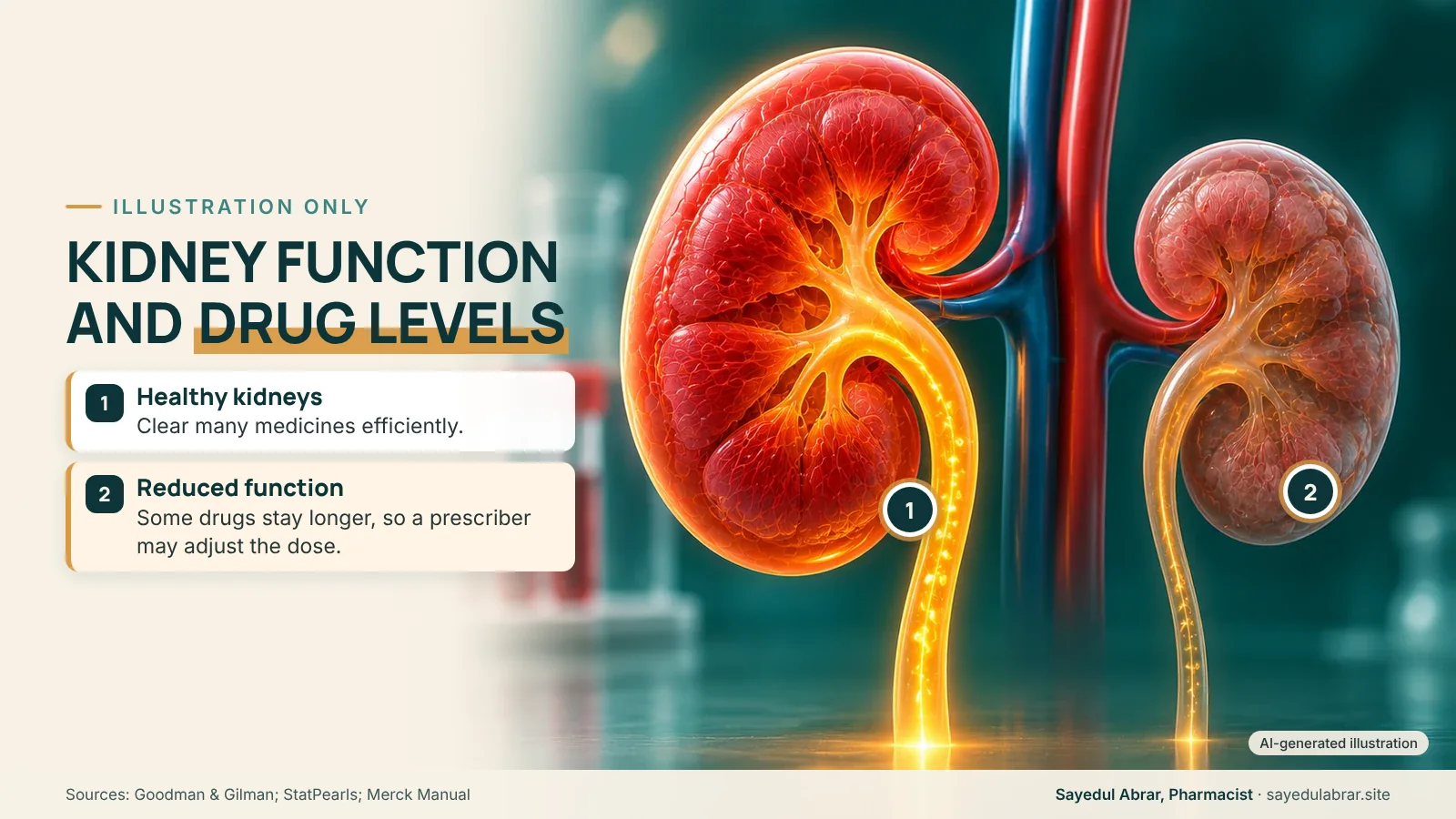
If kidney function is reduced, a medicine that relies heavily on renal excretion may remain in the body longer and reach higher concentrations. A prescriber may need to adjust the dose or interval based on the specific medicine, kidney function and clinical situation. Never change a dose yourself.
7. Two details that change how fast a drug leaves
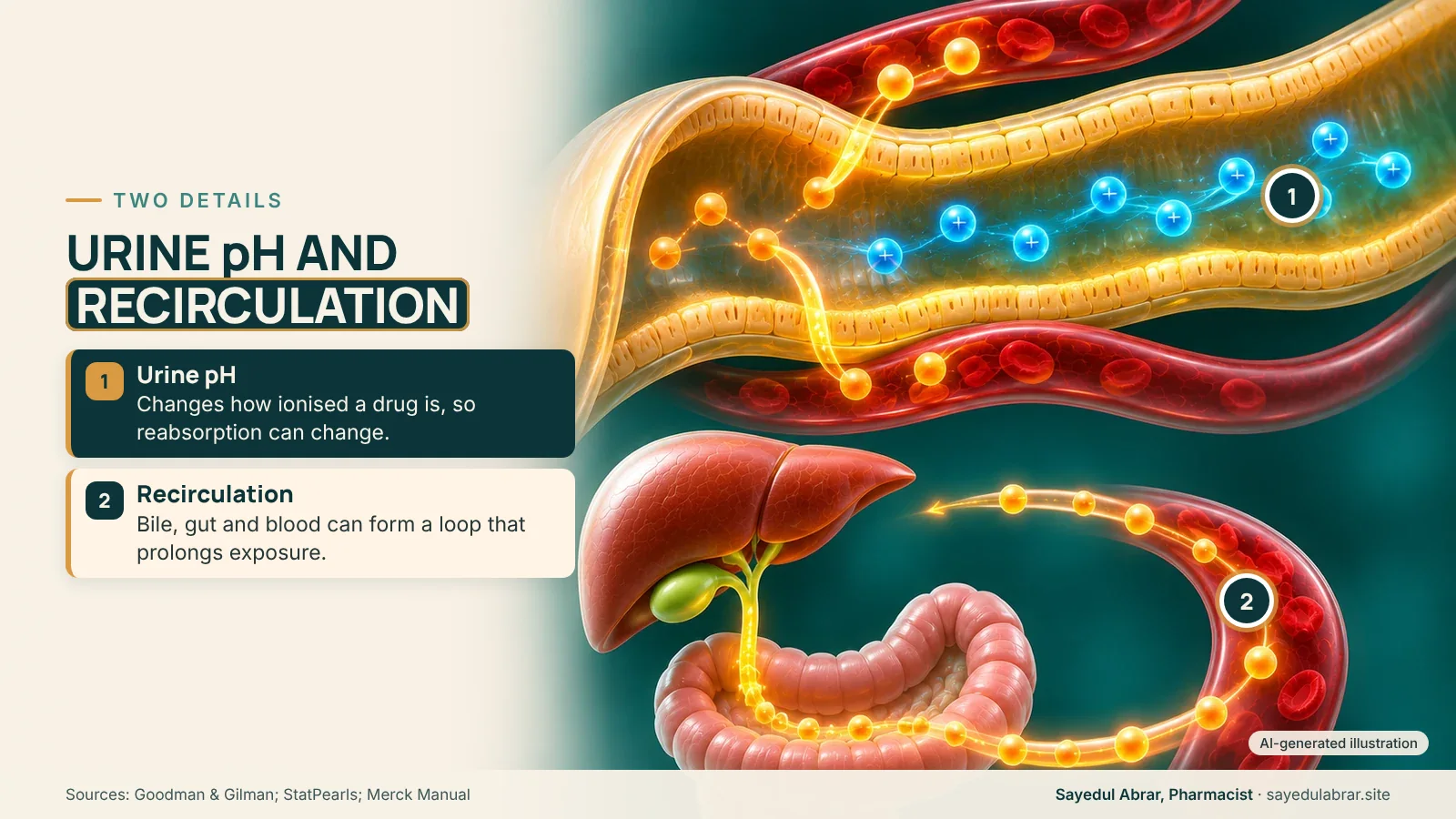
Two well-known factors can change how quickly some medicines are excreted. First, urine pH: many medicines are weak acids or weak bases, and a drug that is more ionised in the urine is reabsorbed less, so more of it can leave. Second, enterohepatic recirculation: some drugs or their conjugates pass into bile, are changed again by gut bacteria and are reabsorbed, which can keep the drug in the body longer. These are general principles; their importance depends on the specific medicine.
8. Does drinking extra water flush medicines out?
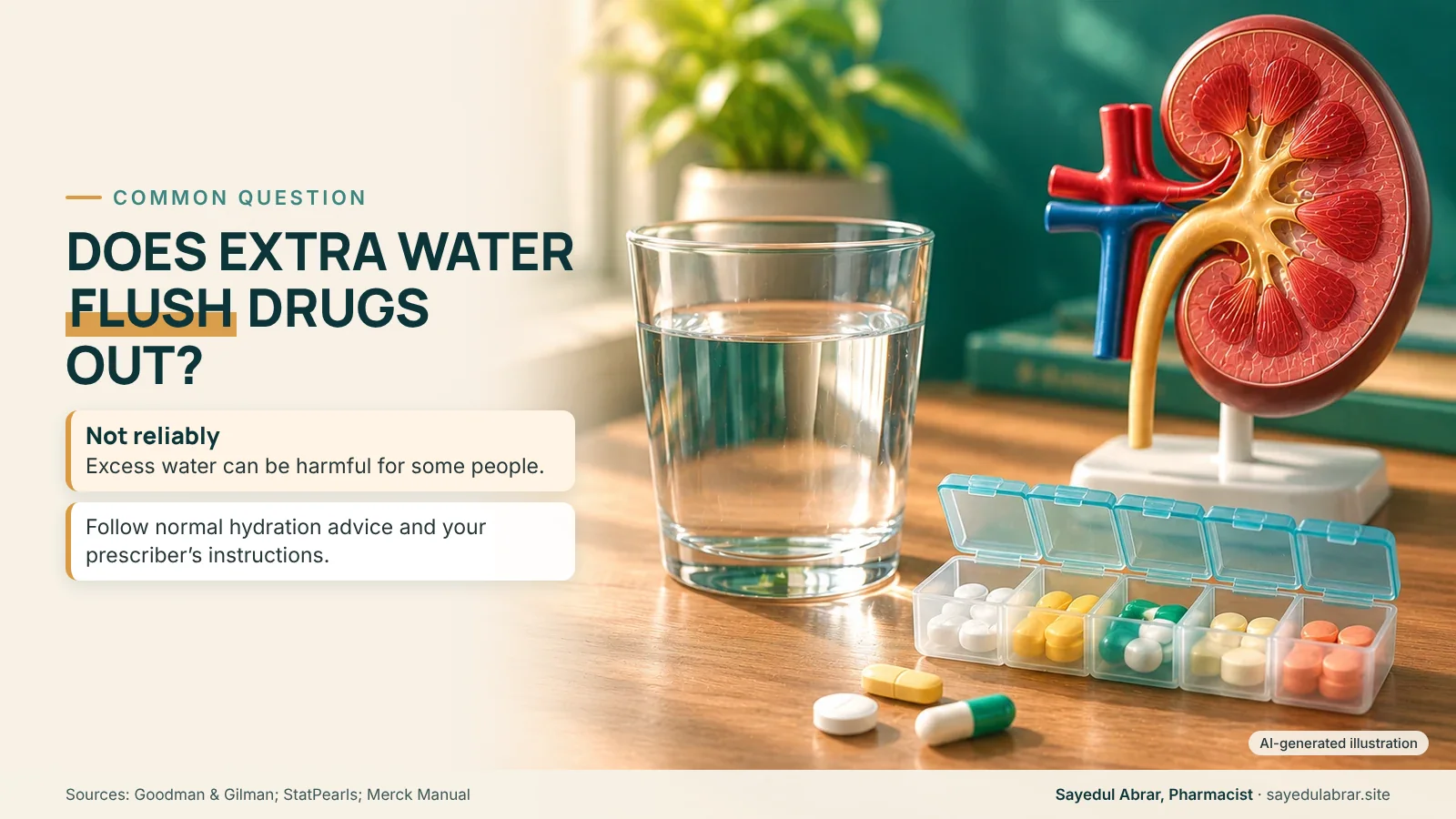
Not necessarily. Drinking excessive water does not reliably remove medicines faster and can be harmful for some people. Follow normal hydration advice and the instructions from your healthcare professional. Do not try to speed up drug elimination at home.
9. Key takeaways
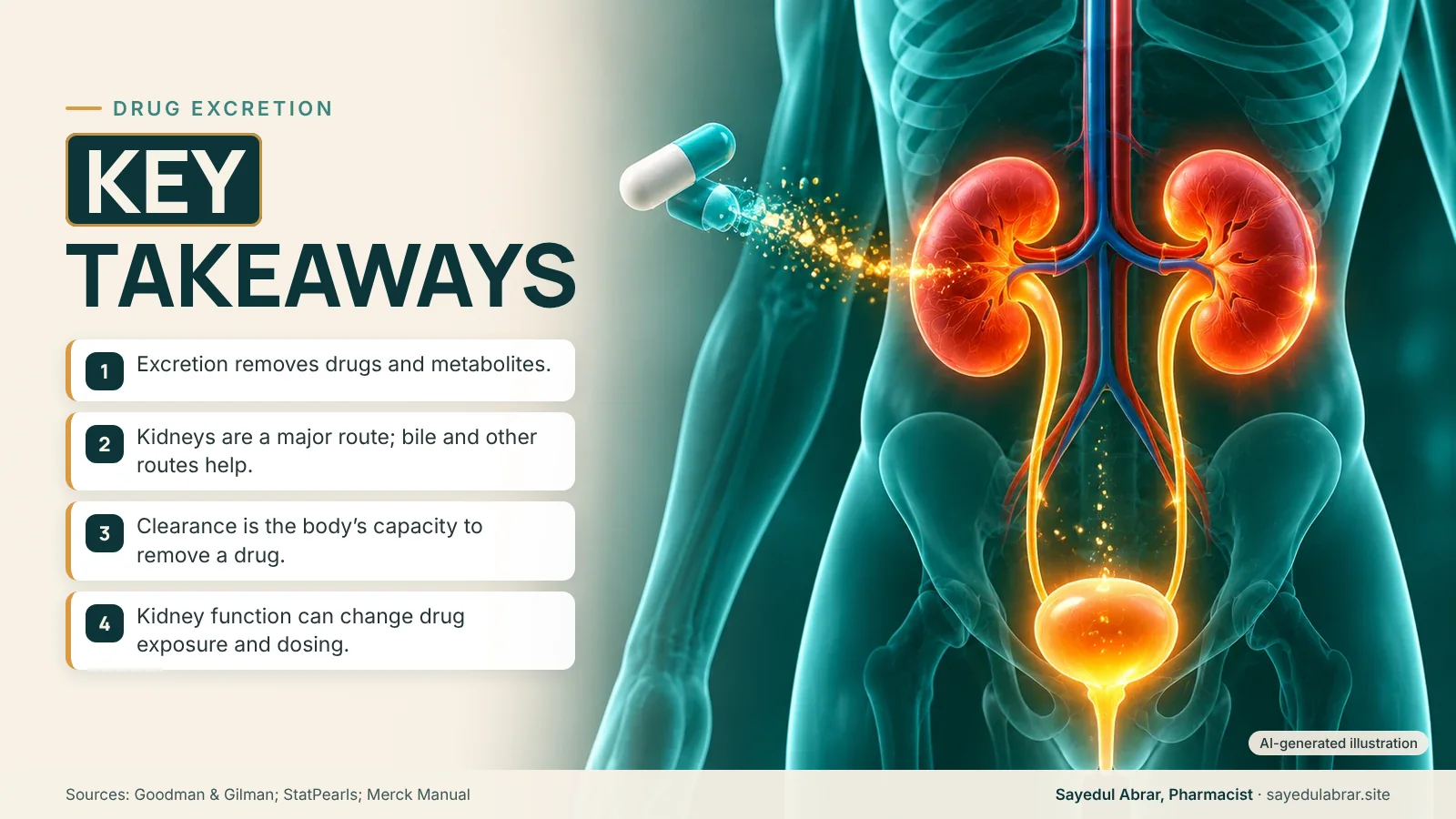
Excretion removes drugs and metabolites from the body. The kidneys are a major route for many medicines, but bile and other routes can contribute. Clearance describes the body's capacity to remove a drug. Kidney function can affect drug exposure and dosing.
Key takeaways
- Drug excretion is the removal of a medicine or its metabolites from the body.
- The kidneys filter blood and produce urine.
- Glomerular filtration moves unbound drug from blood into the filtrate.
- Some medicines or metabolites leave through bile and faeces.
Part of the series “How Medicines Work in the Body”. Read also: Drug Metabolism · Drug Distribution · Drug Absorption
Next in series: Drug Half-Life: How Long Does a Medicine Stay in the Body?
Frequently asked questions
How long does a medicine take to leave the body?
It varies with the drug, dose, metabolism, kidney function and individual factors. There is no single time that applies to every medicine.
Do the kidneys remove every medicine?
No. Some medicines are eliminated mainly through the liver and bile, while others use more than one route.
Can I drink extra water to flush out a medicine?
No. Excessive water intake can be harmful and is not a reliable way to speed up drug elimination.
Continue learning: How do medicines work in the body? places excretion in the wider ADME process and explains how drug exposure relates to response.
References and further reading
- Brunton LL, Hilal-Dandan R, Knollmann BC, editors. Goodman & Gilman's The Pharmacological Basis of Therapeutics. McGraw Hill.
- StatPearls. Pharmacokinetics. NCBI Bookshelf. NCBI Bookshelf.
- Merck Manual Professional Edition. Overview of Pharmacokinetics. Merck Manual.
Editorial note: This is a general educational explanation. Consult approved product information for medicine-specific details.

Sayedul Abrar
A Grade Pharmacist · Registration Code: A-22040
Product Executive, Product Management Department (PMD) · Opsonin Pharma Ltd.