 Sayedul Abrar
1. The numbers at a glance
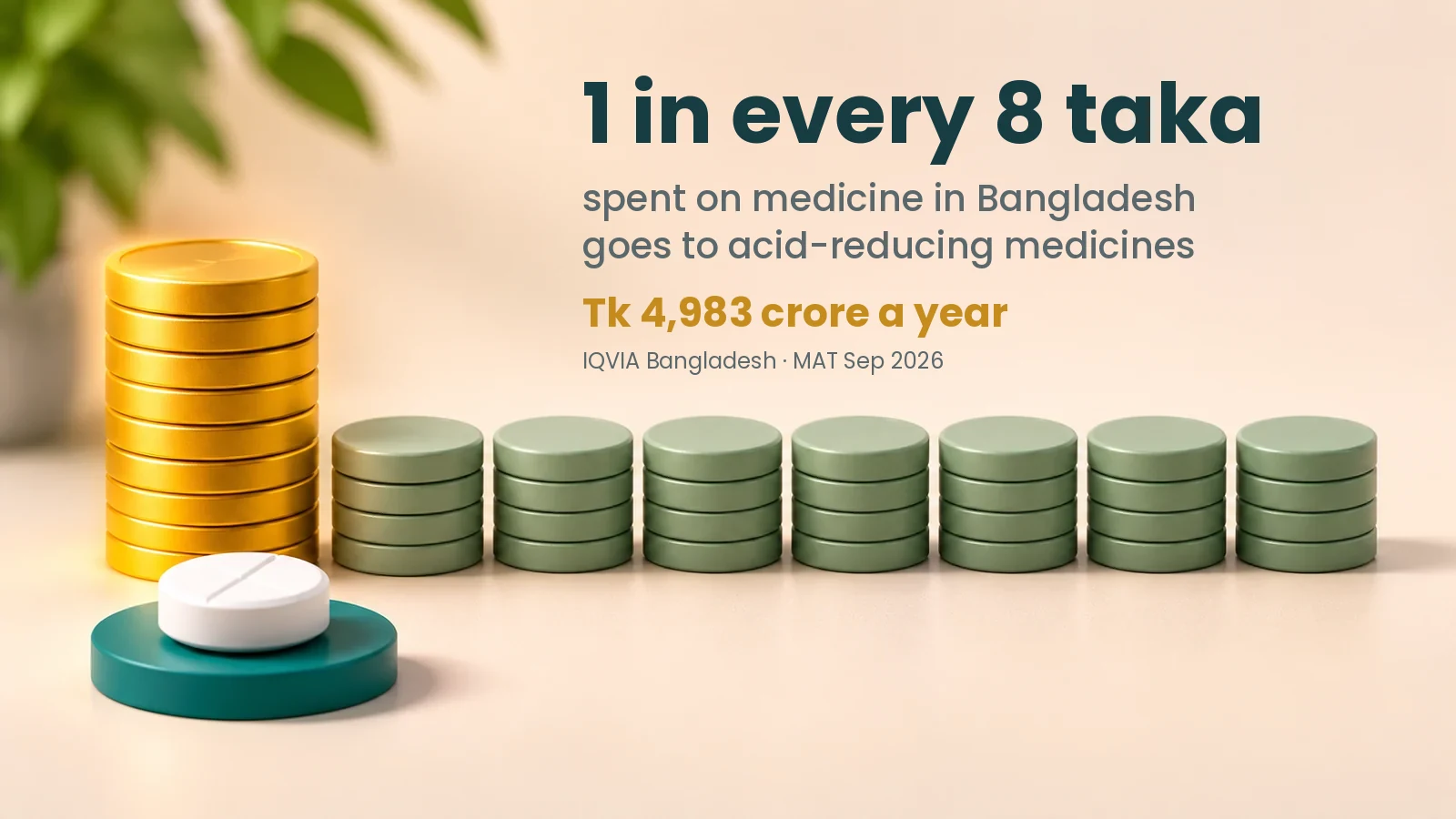
Of every 100 taka in the IQVIA-tracked medicine market in Bangladesh, about 12 taka in sales value comes from one group: acid-reducing medicines (PPIs), locally called “gastric medicine”.
2. What are PPIs?
PPIs (proton pump inhibitors) are medicines that lower the amount of acid the stomach produces. They work on the “proton pumps” in the stomach lining, the cells that release acid.
Doctors prescribe them for conditions such as acid reflux and heartburn, stomach ulcers and gastritis. They are also often prescribed alongside other medicines, such as some painkillers, that can irritate the stomach. If you want to know how acid problems differ, read Heartburn vs Acid Reflux vs GERD, and for correct use, When to Take a PPI.
3. Which acid-reducing medicines lead?
Five PPI molecules make up this market, and one of them takes most of it. Esomeprazole alone accounts for about 63% of PPI sales.
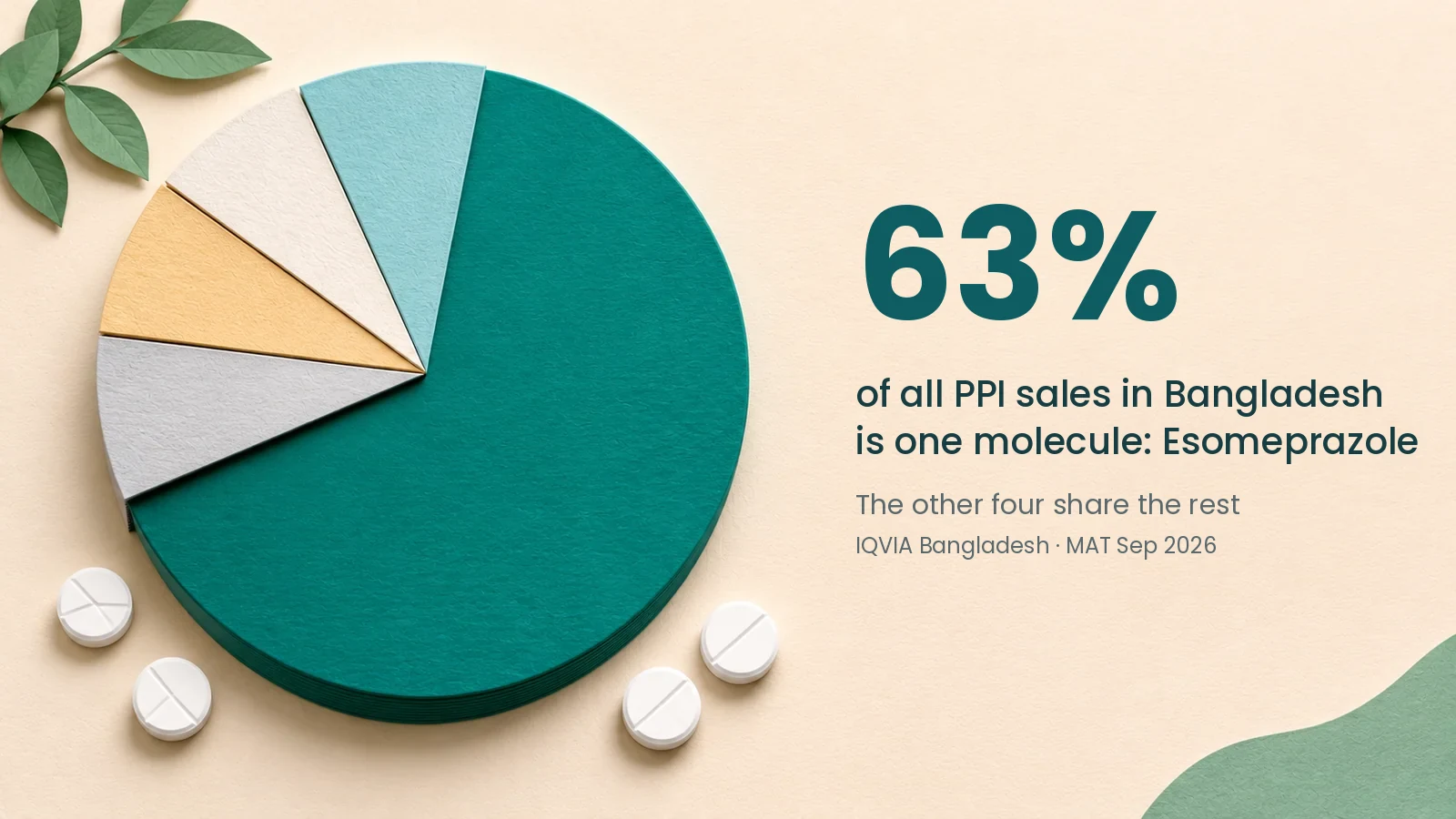
The smaller molecules are growing faster. Over the year, dexlansoprazole grew about 17% and pantoprazole about 17%, compared with about 4% for esomeprazole. The ranking is stable, but the gap is slowly narrowing.
4. Growing, but slower than the market
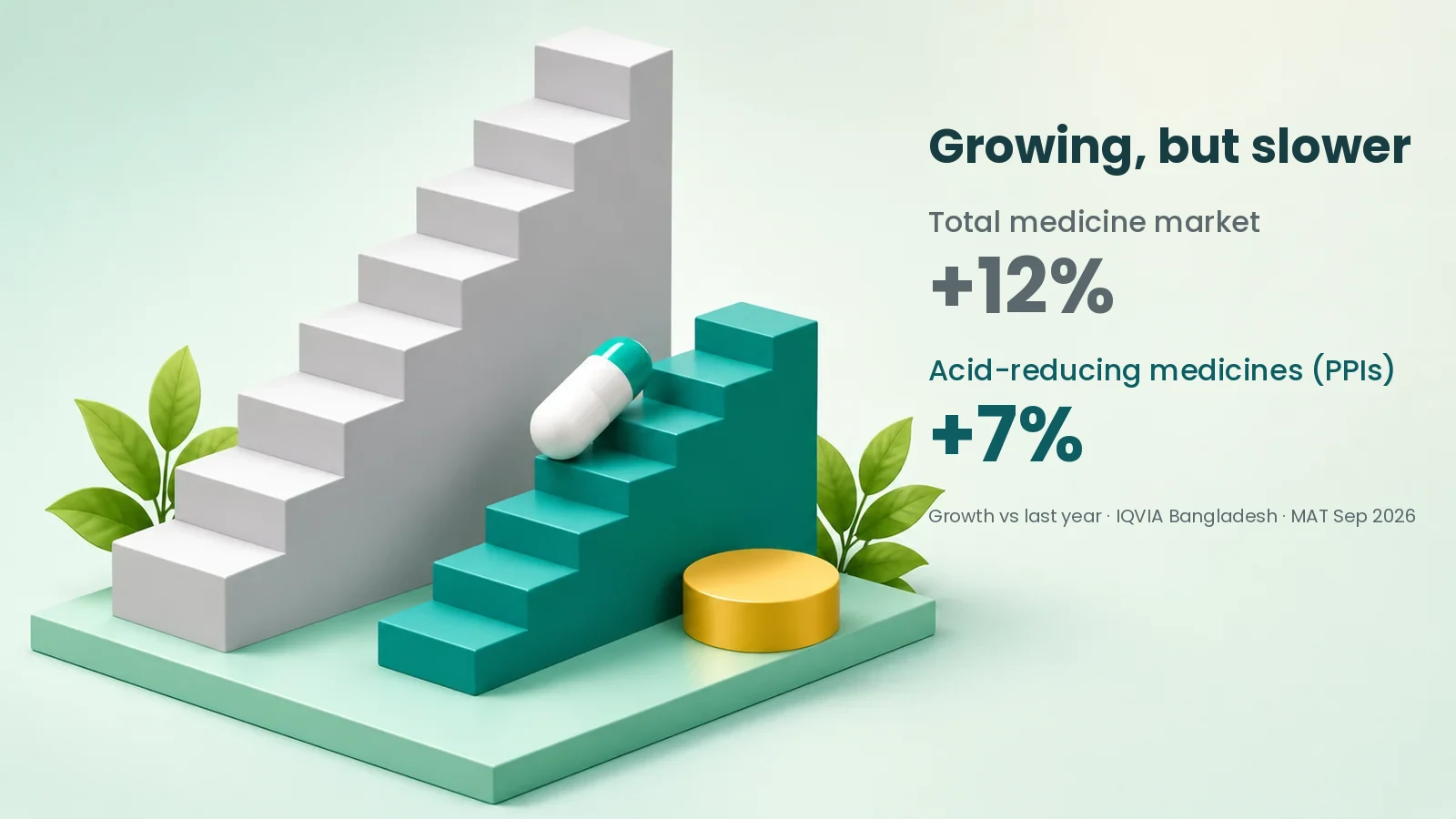
PPI sales grew by about 7% over the last year. The total medicine market grew faster, by about 12%. In other words, acid-reducing medicines are still growing in taka terms, but their share of total medicine sales is slowly getting smaller.
5. Why is demand so high?
Sales data shows how much is sold, not why. The following are likely contributing factors rather than measured findings:
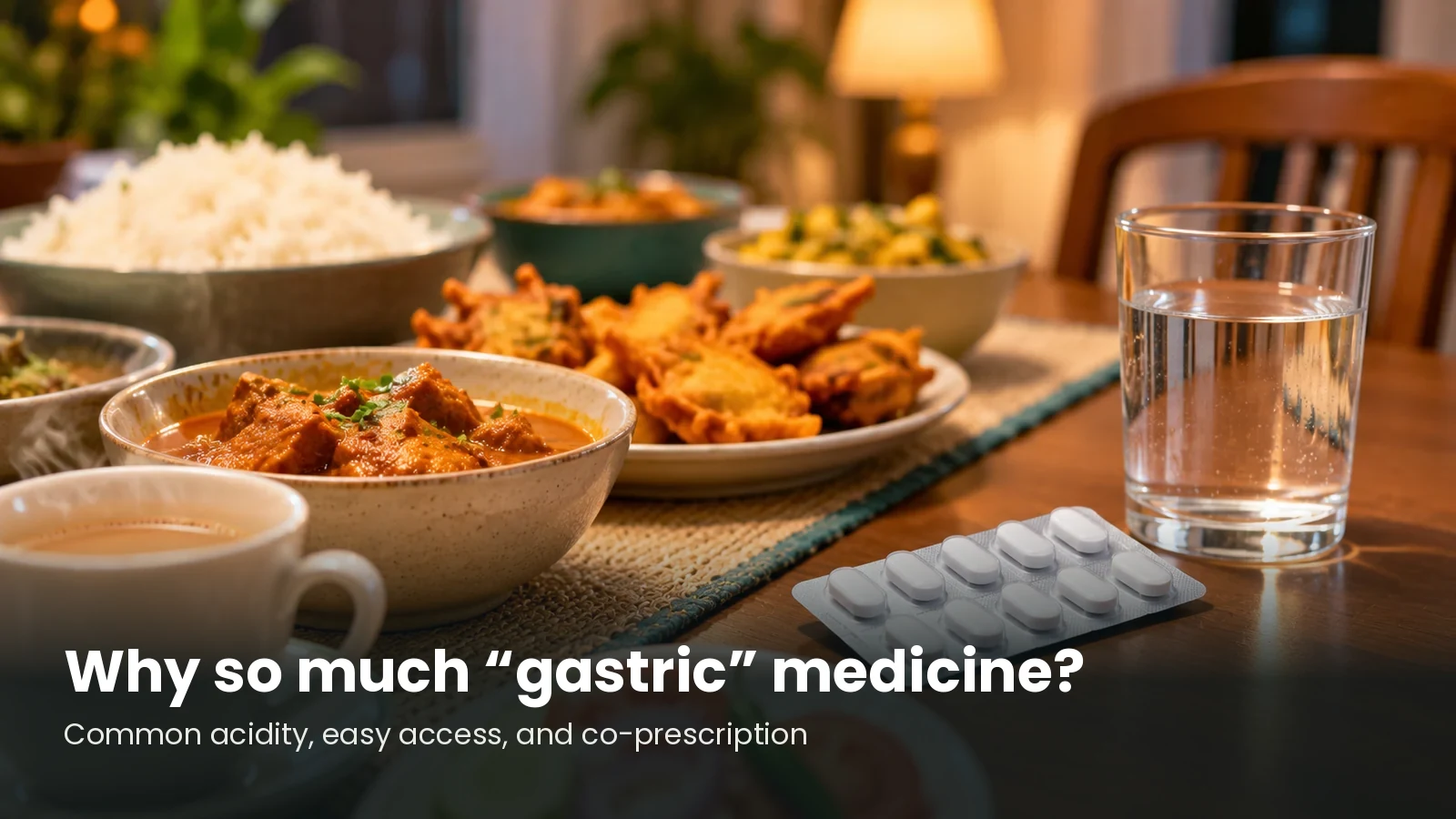
- Acidity is a common complaint. Many people consider “gastric” an everyday problem.
- Easy access. PPIs are available in almost every pharmacy, and they are sometimes bought without a prescription.
- Co-prescription. They are often prescribed together with other medicines to help protect the stomach.
6. What this means for patients and the industry
PPIs are useful medicines when a doctor prescribes them for the right reason. Like any medicine, they work best at the right dose and for the right length of time. Long-term use should be reviewed with a doctor rather than continued by habit.
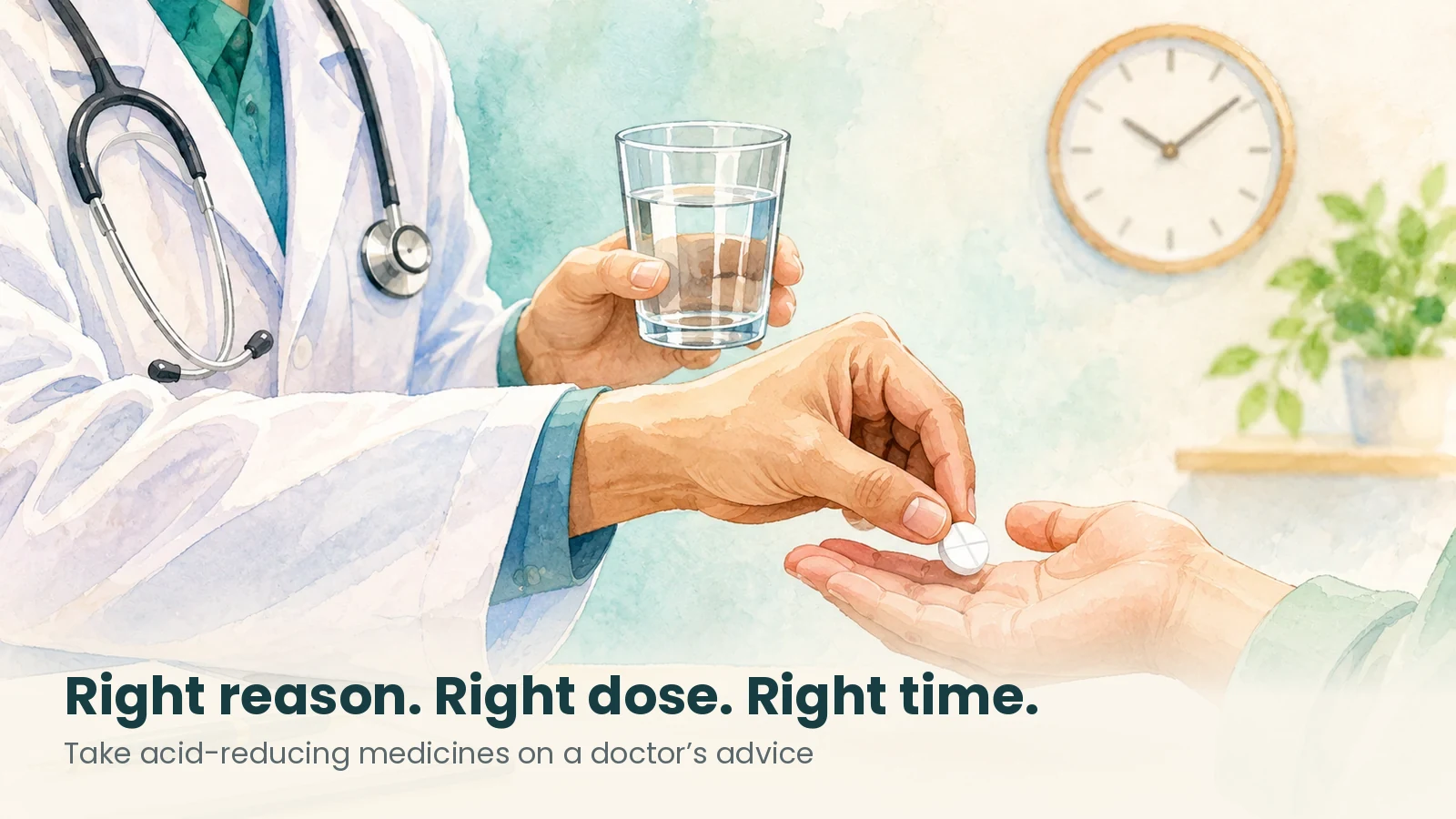
If acidity keeps coming back, it is better to see a doctor than to take a tablet every day without advice. Regular meal times and avoiding heavy meals late at night may also help some people.
For the pharmaceutical industry, a market of this size brings a responsibility: to promote correct, balanced use and to support patient education.
Key takeaways
- PPI sales in Bangladesh were about Tk 4,983 crore in the 12 months to September 2026, roughly 1 in every 8 taka of tracked medicine-market sales.
- Esomeprazole leads with about 63% of PPI sales; pantoprazole, omeprazole, dexlansoprazole and rabeprazole follow.
- PPI sales grew about 7%, slower than the total market at about 12%.
- These medicines work best when prescribed for the right reason, at the right dose and for the right duration.
Frequently asked questions
What does PPI mean?
PPI stands for proton pump inhibitor. It is a group of medicines that lowers the amount of acid the stomach makes. Many people call them “gastric medicine”.
What is the sales value of PPI medicines in Bangladesh?
About Tk 4,983 crore in the 12 months to September 2026, according to IQVIA data. That is close to 12% of the Tk 42,023 crore tracked medicine market.
Which PPI is used most in Bangladesh?
Esomeprazole, with about 63% of PPI sales. Pantoprazole, omeprazole, dexlansoprazole and rabeprazole make up the rest.
Is it safe to take gastric medicine every day?
Only take it every day if a doctor has advised it. If acidity keeps coming back, see a doctor rather than taking tablets daily on your own.
About the data
Figures are from IQVIA Bangladesh pharmaceutical market data, MAT (moving annual total: the 12 months to September 2026). Values are sales value in taka crore and are rounded. “PPI” here means the five PPI molecules listed in this article. Market growth for PPIs is calculated from IQVIA molecule-level growth and should be read as approximate. These are recorded market sales values, not a direct measure of household out-of-pocket spending or government expenditure.

Sayedul Abrar
Pharmacist · Product Executive, Product Management Department
Opsonin Pharma Ltd.