 Sayedul Abrar
1. What do Rx and OTC mean?
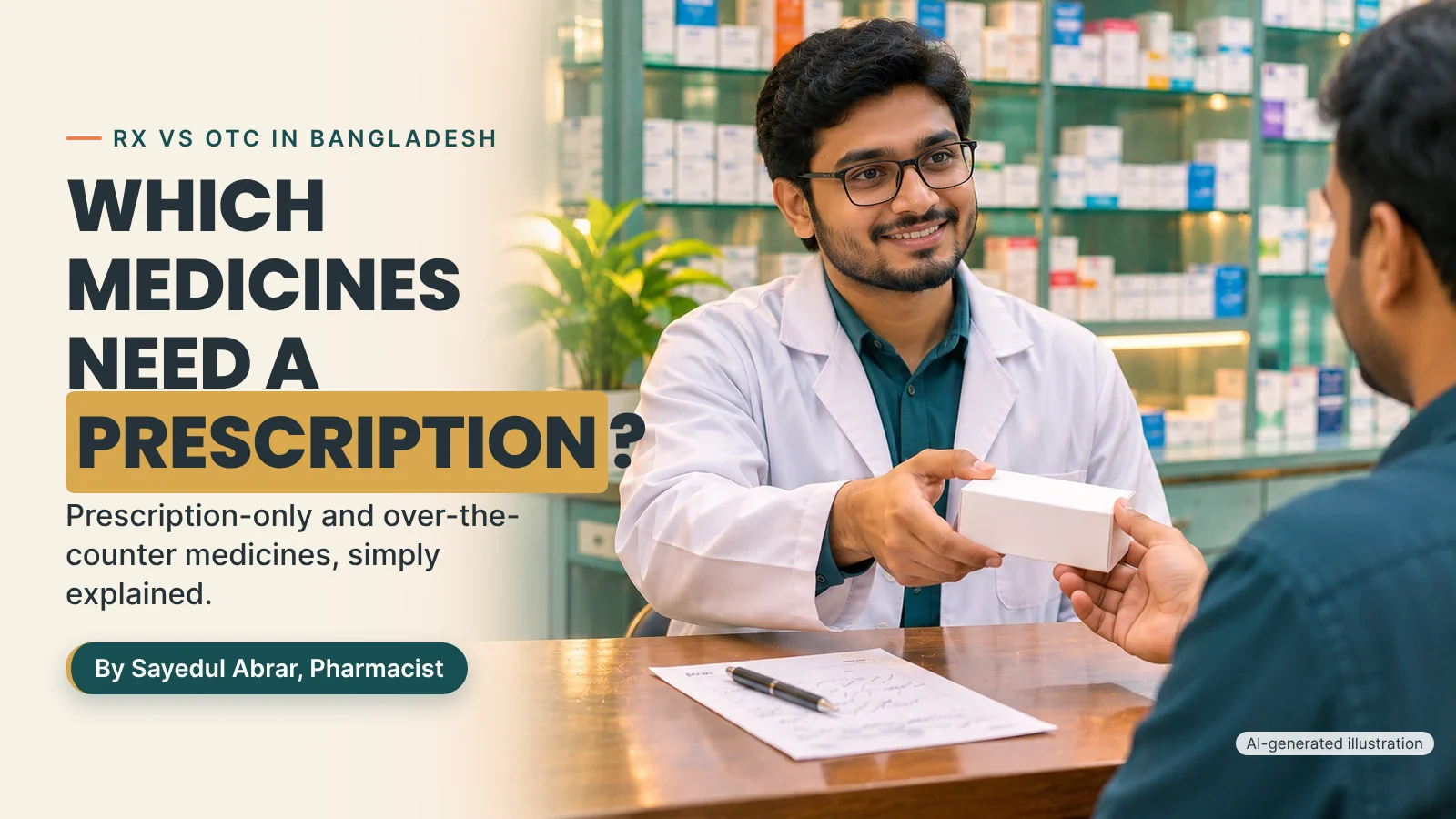
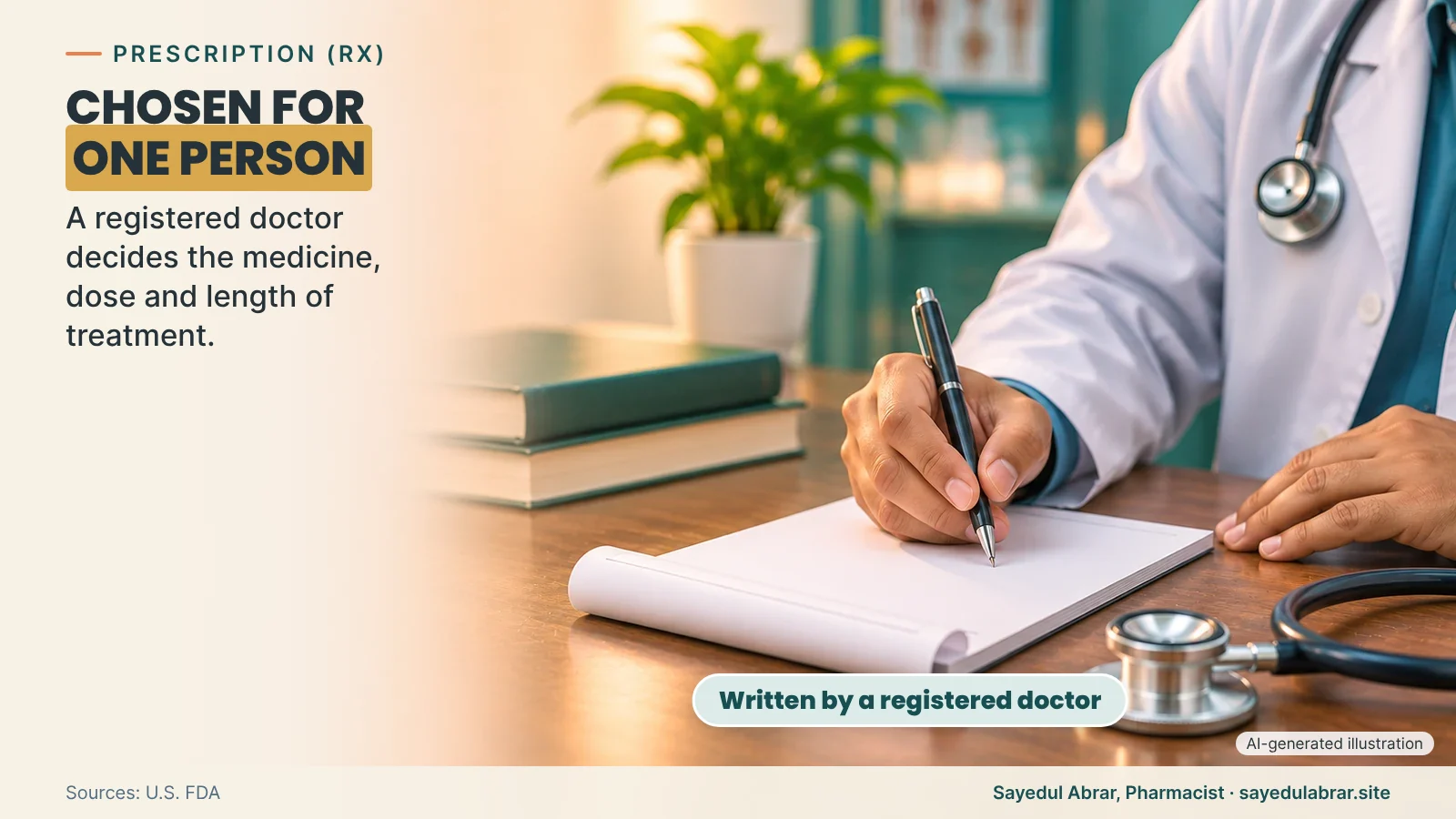
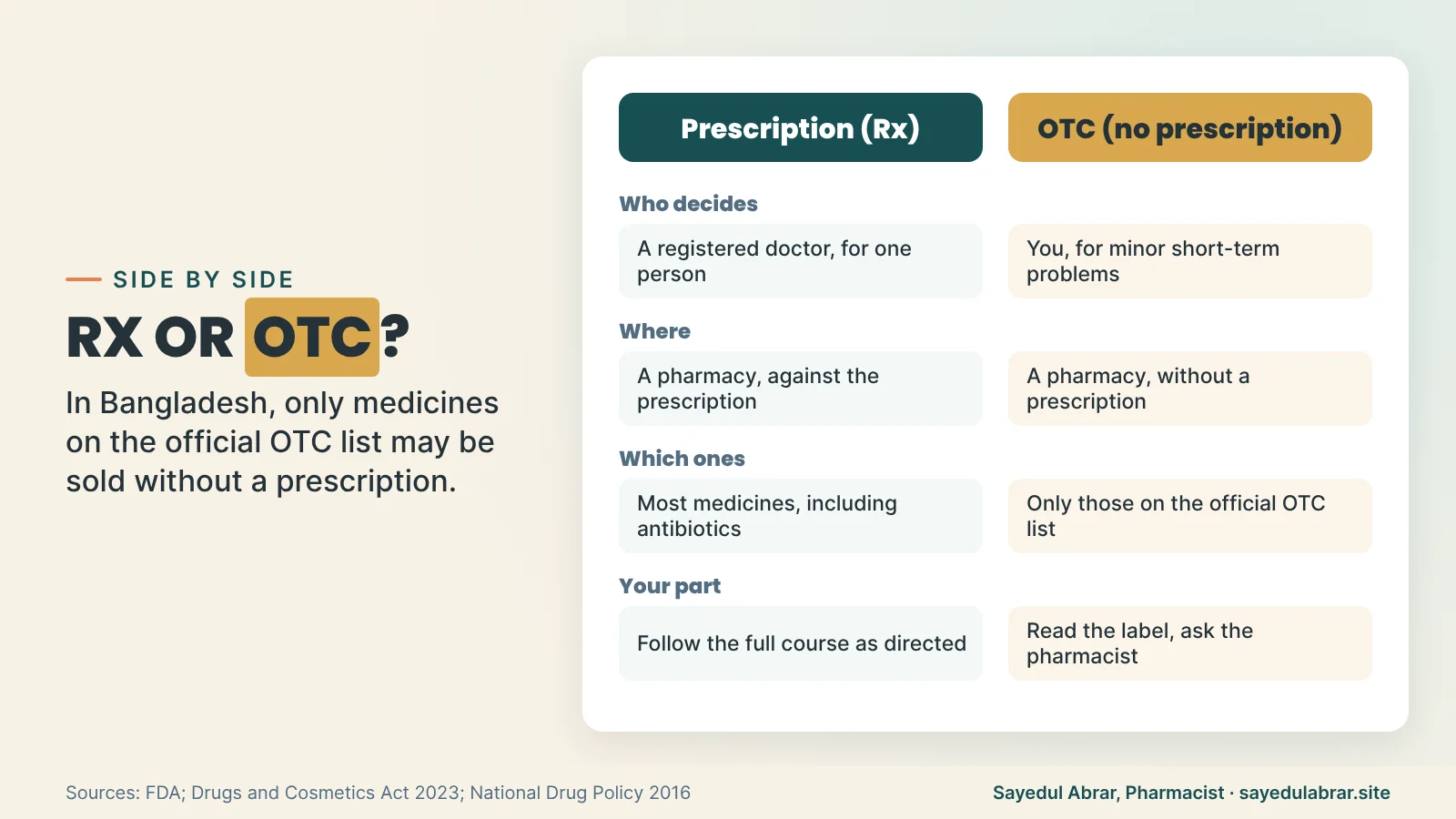
The U.S. FDA gives a simple description. Prescription medicines are prescribed by a doctor, bought at a pharmacy, and meant for one person. Over-the-counter (OTC) medicines do not need a doctor's prescription.
OTC does not mean "harmless". It means the medicine is considered suitable for self-care when the label is followed. Taking too much, taking it for too long, or mixing it with other medicines can still cause harm.
2. What the law says in Bangladesh
The Drugs and Cosmetics Act 2023 (ঔষধ ও কসমেটিকস আইন, ২০২৩), section 40, says that, apart from OTC medicines, no antibiotic or other medicine may be sold, stocked or displayed for sale without a registered physician's prescription. Section 45 says retail sale of allopathic medicine must be under the personal supervision of a pharmacist, diploma pharmacist or pharmacy technician. The Act's official Gazette schedule lists a fine of up to Tk 20,000 for the relevant violation of section 40(d).
Which medicines count as OTC? DGDA's National Guideline on Accreditation of Model Pharmacy and Model Medicine Shop in Bangladesh (2024) publishes an OTC list in Annex 5. It contains 39 listed entries, including metronidazole tablet/suspension, omeprazole capsules and paracetamol formulations. A medicine should not be treated as OTC simply because a shop sells it without asking for a prescription. Check the current DGDA list and the product's approved labelling.
3. Why antibiotics need a prescription
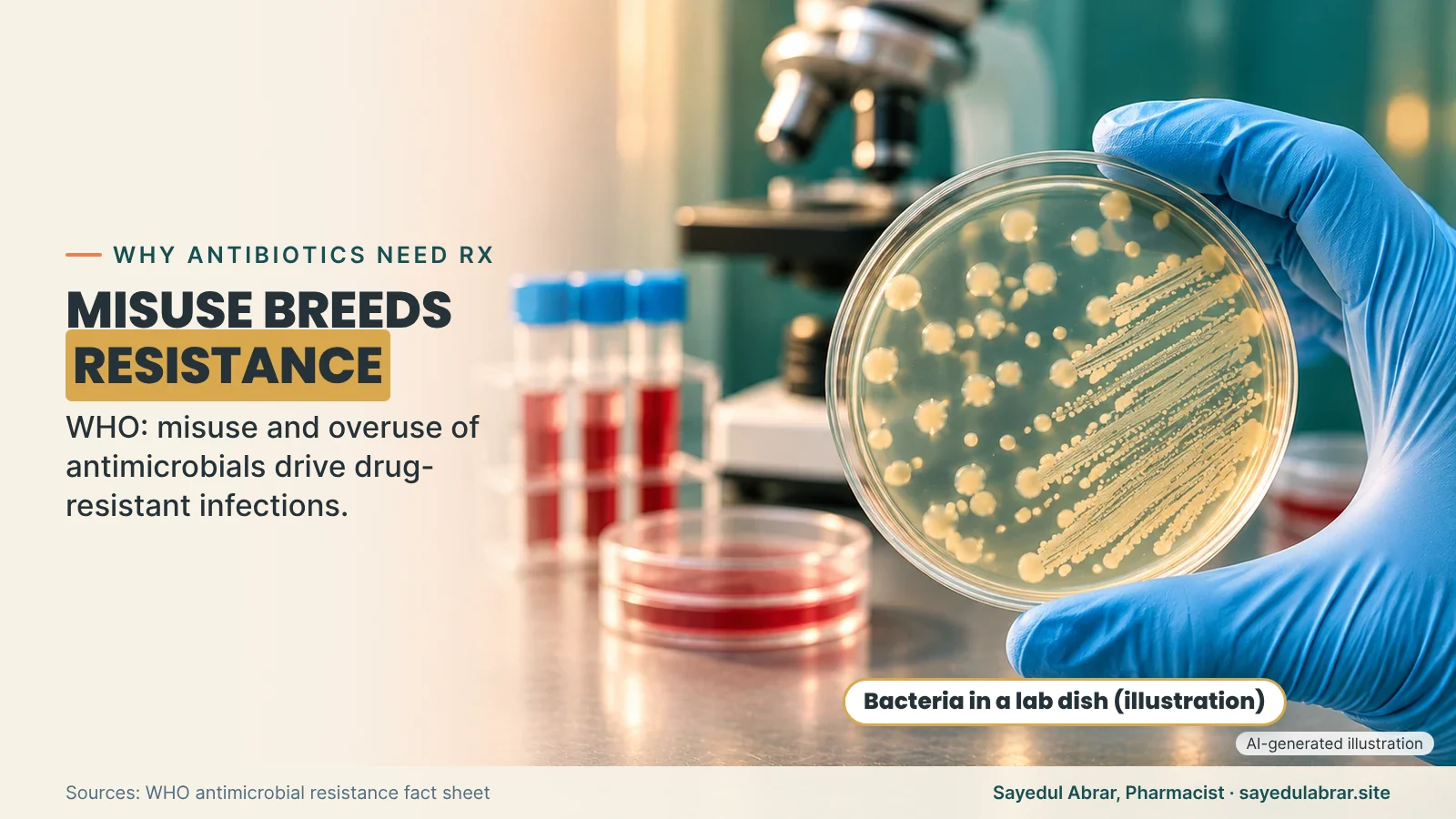
WHO says the misuse and overuse of antimicrobials drive drug-resistant infections, and bacterial resistance was associated with more than 4.7 million deaths in 2021. A doctor checks whether you need an antibiotic at all (most colds and flu are viral), and which one, at what dose and for how long. Most antibiotics should not be self-selected. The legal prescription rule has an OTC-list exception, and DGDA's Annex 5 includes metronidazole tablet/suspension; check the exact medicine's regulatory status rather than assuming every antibiotic has identical OTC status. Read more in Why You Must Complete an Antibiotic Course.
4. The red antibiotic label
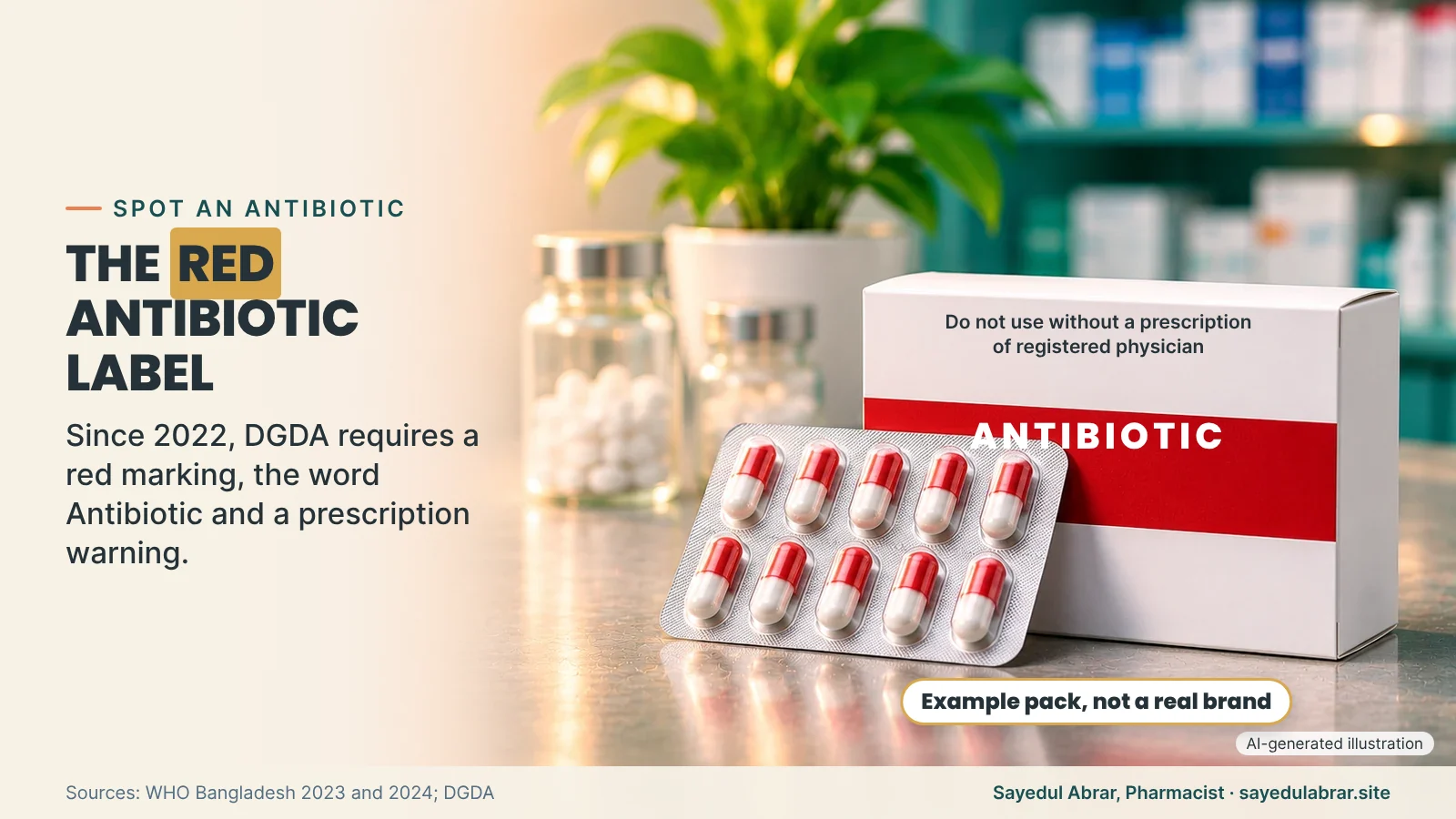
To help everyone spot antibiotics, Bangladesh's Directorate General of Drug Administration (DGDA) requires antibiotic packs to carry a red marking, the word "Antibiotic" and a warning not to use without the prescription of a registered physician. WHO Bangladesh reports that the rule was endorsed in March 2022, launched in November 2022 and enforced from December 2022, for both human and animal medicines. The red marking is a clear warning to follow the pack's prescription instruction. Do not use an antibiotic without the advice and direction of a registered physician.
5. Using OTC medicines safely
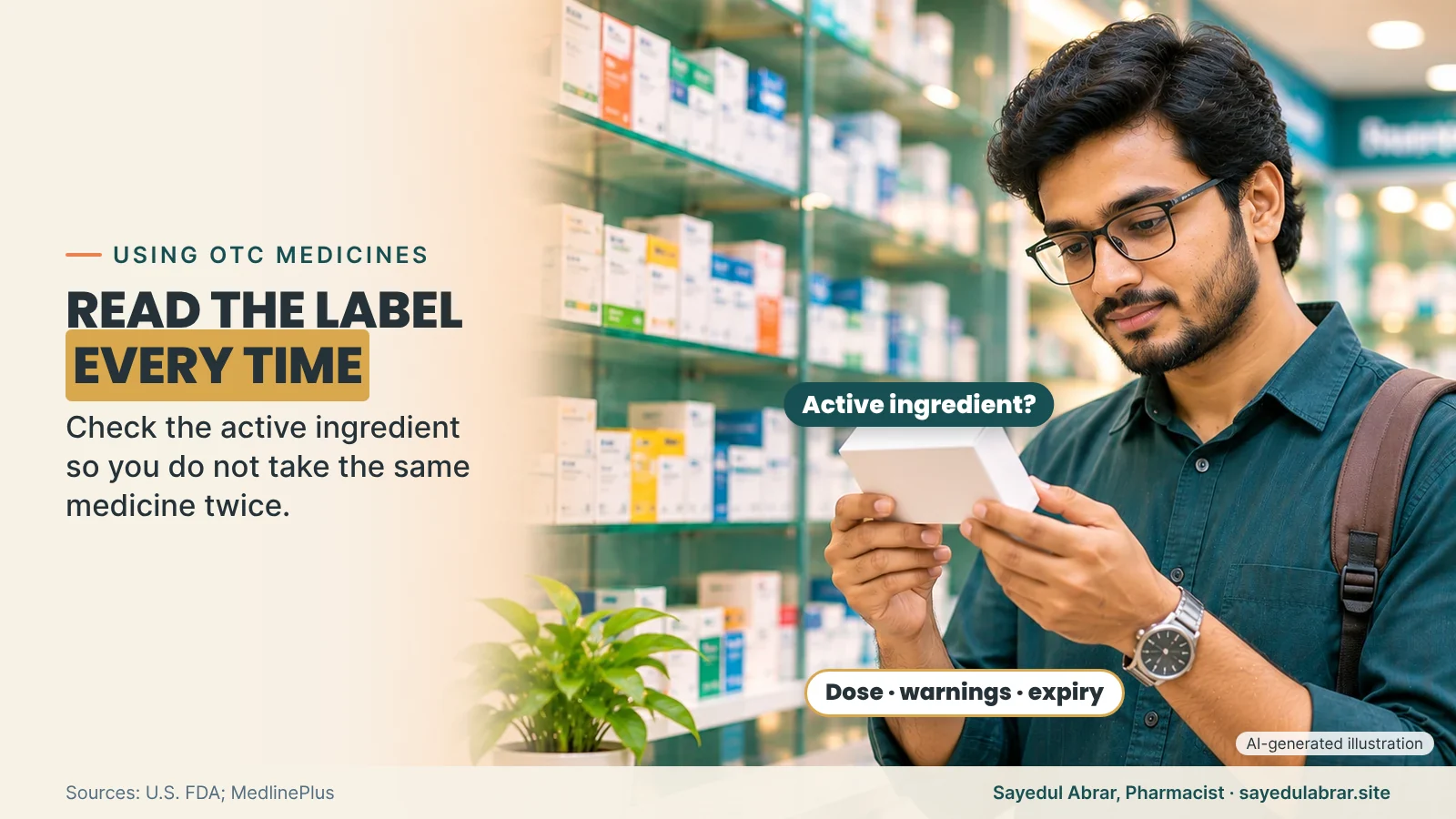
- Read the label every time. Products with similar names can contain different active ingredients (FDA).
- Check the active ingredient. Some prescription medicines contain the same ingredients as OTC medicines, so you could take more than you should (MedlinePlus). See Generic Name vs Brand Name.
- Do not take more, or for longer, than the label says. If symptoms continue, see a doctor.
- Do not guess a child's dose. Ask a doctor or pharmacist.
- Check the dates and storage. See Expiry Date vs Manufacturing Date.
6. How to ask your pharmacist
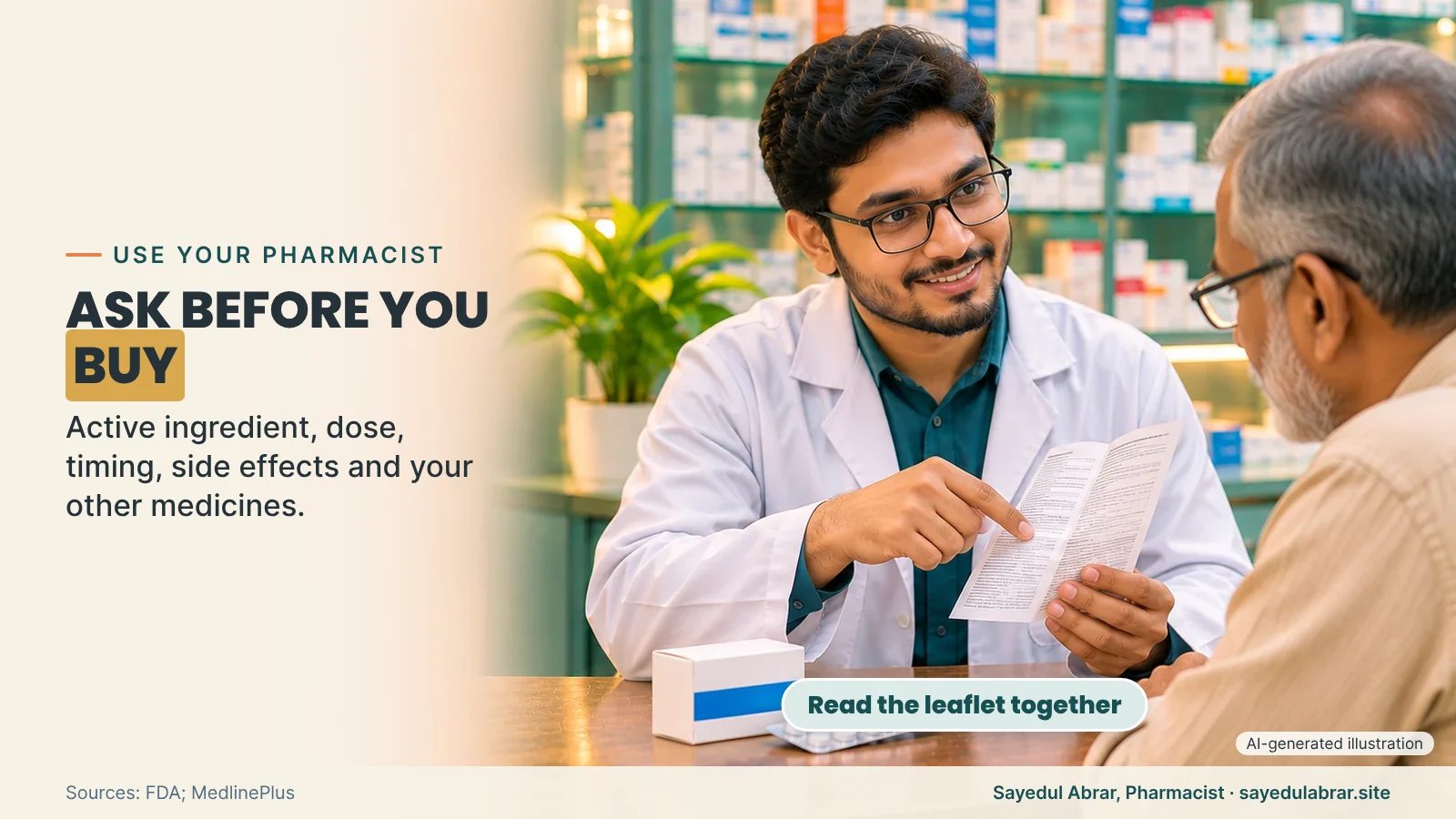
The pharmacist is the medicine expert you can reach without an appointment. Useful questions:
- Is this a prescription medicine or an OTC medicine?
- What is the active ingredient, and is it already in anything else I take?
- How much, how often, and before or after food?
- What side effects should make me stop and see a doctor?
- Is it safe for me if I am pregnant, breastfeeding, or have kidney, liver or heart problems?
Tell the pharmacist about every medicine, herbal product and supplement you take. DGDA's model pharmacy scheme, started in 2016, places graduate (A-grade) pharmacists in model pharmacies for this reason.
7. Key takeaways
DGDA's 2024 guideline Annex 5 lists 39 OTC entries; medicines outside the applicable OTC list require a registered physician's prescription under section 40. Do not self-select antibiotics: follow the pack warning and seek advice from a registered physician or pharmacist.
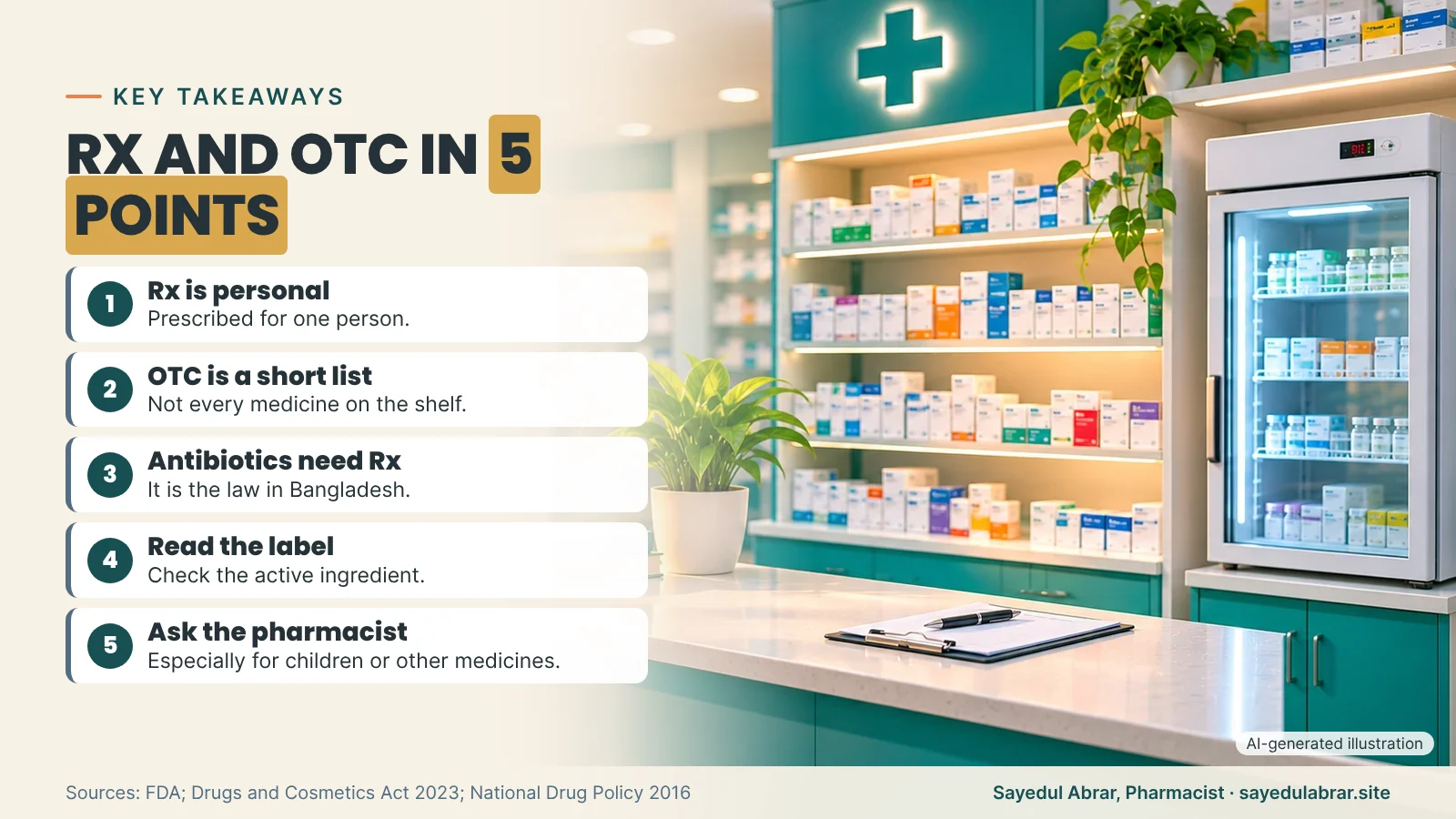
- A prescription medicine is chosen for one person by a registered doctor.
- In Bangladesh, section 40 allows prescription-free sale only for medicines covered by the applicable DGDA OTC list.
- Do not self-select antibiotics. Follow the pack warning and seek advice from a registered physician or pharmacist.
- Read the label and check the active ingredient to avoid double dosing.
- Ask the pharmacist, especially for children, pregnancy or when you take other medicines.
Frequently asked questions
What is the difference between prescription and OTC medicines?
A prescription medicine is chosen by a registered doctor for one person and dispensed against that prescription. An OTC medicine can be bought without a prescription for minor, short-term problems when the label is followed.
Is there an official OTC medicine list in Bangladesh?
Yes. The National Drug Policy 2016 says the OTC medicines are published in its appendices. A 2020 news report counted 39 medicines on the list. All other medicines need a registered physician's prescription.
Can a pharmacy sell antibiotics without a prescription in Bangladesh?
No. The Drugs and Cosmetics Act 2023 does not allow antibiotics or other non-OTC medicines to be sold without a registered physician's prescription.
What does the red label on antibiotic packs mean?
Since 2022, DGDA has required antibiotic packs to show a red marking, the word Antibiotic and a warning not to use without the prescription of a registered physician.
Are OTC medicines completely safe?
No medicine is completely safe. OTC medicines are suitable for self-care when used as the label says, but taking too much, for too long or with other medicines can cause harm. Ask a pharmacist if you are unsure.
Related reading
- Why You Must Complete an Antibiotic Course
- Generic Name vs Brand Name
- Expiry Date vs Manufacturing Date
- Drug vs Medicine
References and further reading
- U.S. FDA. Prescription Drugs and Over-the-Counter (OTC) Drugs: Questions and Answers. fda.gov
- U.S. FDA. OTC Drug Facts Label. fda.gov
- U.S. FDA. Over-the-Counter Medicines: What's Right for You?. fda.gov
- MedlinePlus. Using over-the-counter medicines safely. medlineplus.gov
- Laws of Bangladesh. ঔষধ ও কসমেটিকস আইন, ২০২৩ (Drugs and Cosmetics Act 2023). bdlaws.minlaw.gov.bd
- Directorate General of Drug Administration (DGDA). National Guideline on Accreditation of Model Pharmacy and Model Medicine Shop in Bangladesh (2024), Annex 5: OTC Medicines/Drugs. dgda.gov.bd (PDF)
- Bangladesh Gazette. Drugs and Cosmetics Act 2023 (18 September 2023), section 40 and Schedule, item 22. Official Gazette (PDF)
- WHO Bangladesh. Establishing red label of antibiotics for curbing antimicrobial resistance in Bangladesh (7 Mar 2023). who.int
- WHO. Utilizing data on antimicrobial use and knowledge to inform regulatory changes to antibiotic packaging in Bangladesh (25 Sep 2024). who.int
- Islam MA, et al. Antibiotic dispensing in community pharmacies in Bangladesh. Antibiotics (Basel) 2022. doi.org
- WHO. Antimicrobial resistance fact sheet. who.int

Sayedul Abrar
A Grade Pharmacist · Registration Code: A-22040
Product Executive, Product Management Department (PMD) · Opsonin Pharma Ltd.