 Sayedul Abrar
1. What is pharmacovigilance?
Pharmacovigilance (PV) is the science and organised activity of detecting, assessing, understanding and preventing adverse effects and other medicine-related problems. The World Health Organization (WHO) describes it as an essential part of patient care and the rational use of medicines. It covers more than tablets and capsules: vaccines, biological products, herbal and complementary medicines and other health products may also be monitored.
In simple terms, pharmacovigilance asks a continuing question: what are people experiencing when a health product is used in real life, and what should be done with that information? It connects patients, healthcare professionals, manufacturers, regulators and public-health systems. Its purpose is not to blame a patient, prescriber or manufacturer. It is to learn from safety information and reduce preventable harm.
Pharmacovigilance is closely related to, but broader than, adverse drug reaction (ADR) reporting. Reporting is one important input. The full system also includes case review, signal detection, benefit–risk assessment, risk minimisation and communication.
2. Why monitor medicines after approval?
Before approval, clinical trials provide important evidence about a medicine's quality, efficacy and safety. However, trials usually involve a limited number of carefully selected participants, defined treatment periods and controlled conditions. Some groups—such as people with several illnesses, people taking many medicines, pregnant people, very young children or older adults—may be under-represented or excluded. Rare reactions may also be too uncommon to appear in a trial of modest size.
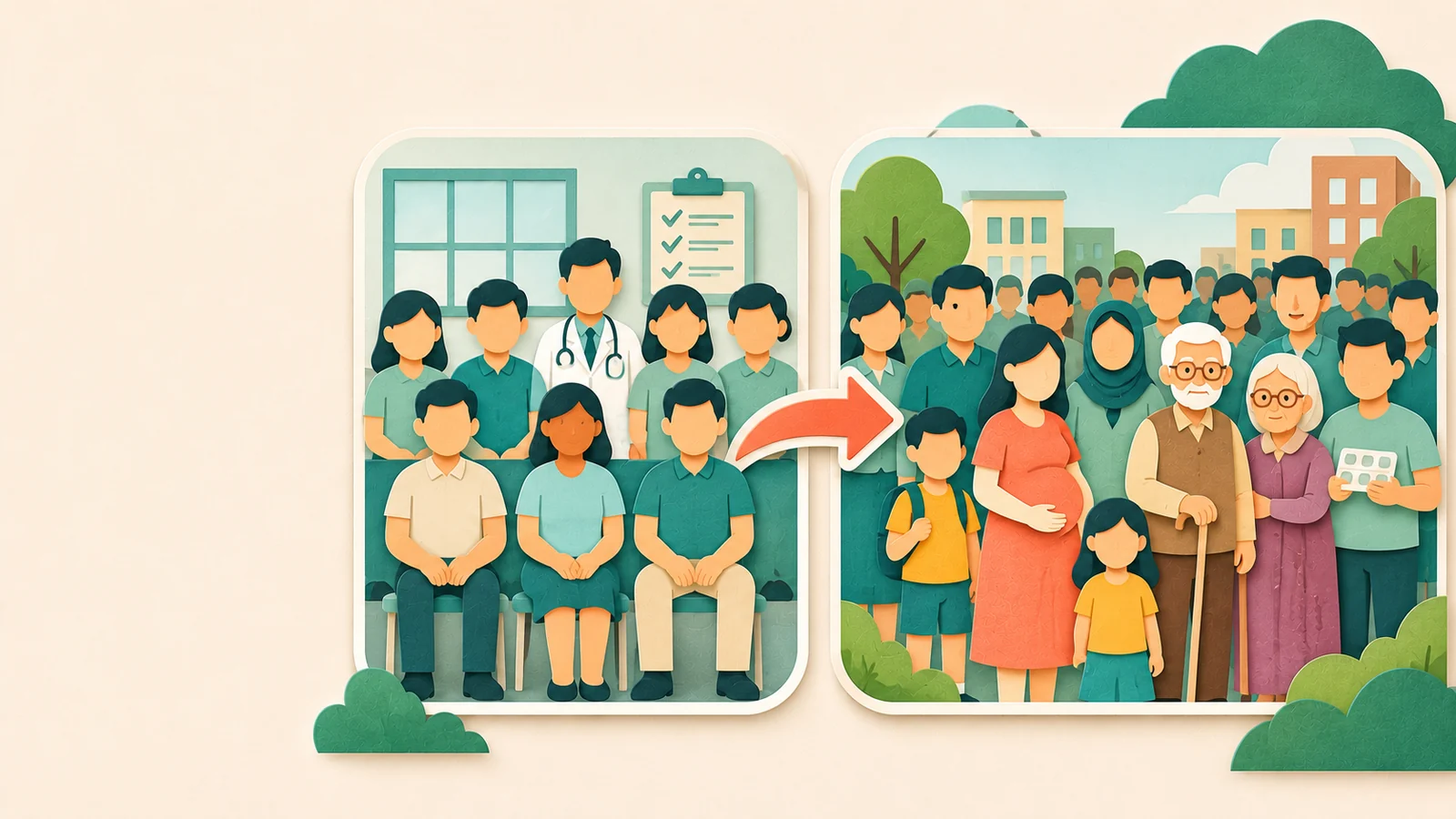
- Before approvalA limited, carefully selected group in controlled trials.
- After approvalMany more people, with different ages, illnesses and medicines.
After a medicine is used by a much larger and more diverse population, new information can emerge. A reaction may be rarer than expected, occur after longer exposure, appear with a particular combination of medicines, or be associated with a specific patient characteristic. A manufacturing or storage problem may also affect product quality. Post-marketing monitoring helps identify these issues and reassess whether the known benefits continue to outweigh the risks in the intended population.
Approval is therefore not the end of safety evaluation. It is the beginning of monitoring in routine practice.
3. What should be reported?
A report does not need to prove that a medicine caused an event. A suspected association is enough to raise a concern through the appropriate reporting pathway. Depending on the national system, reports may include:
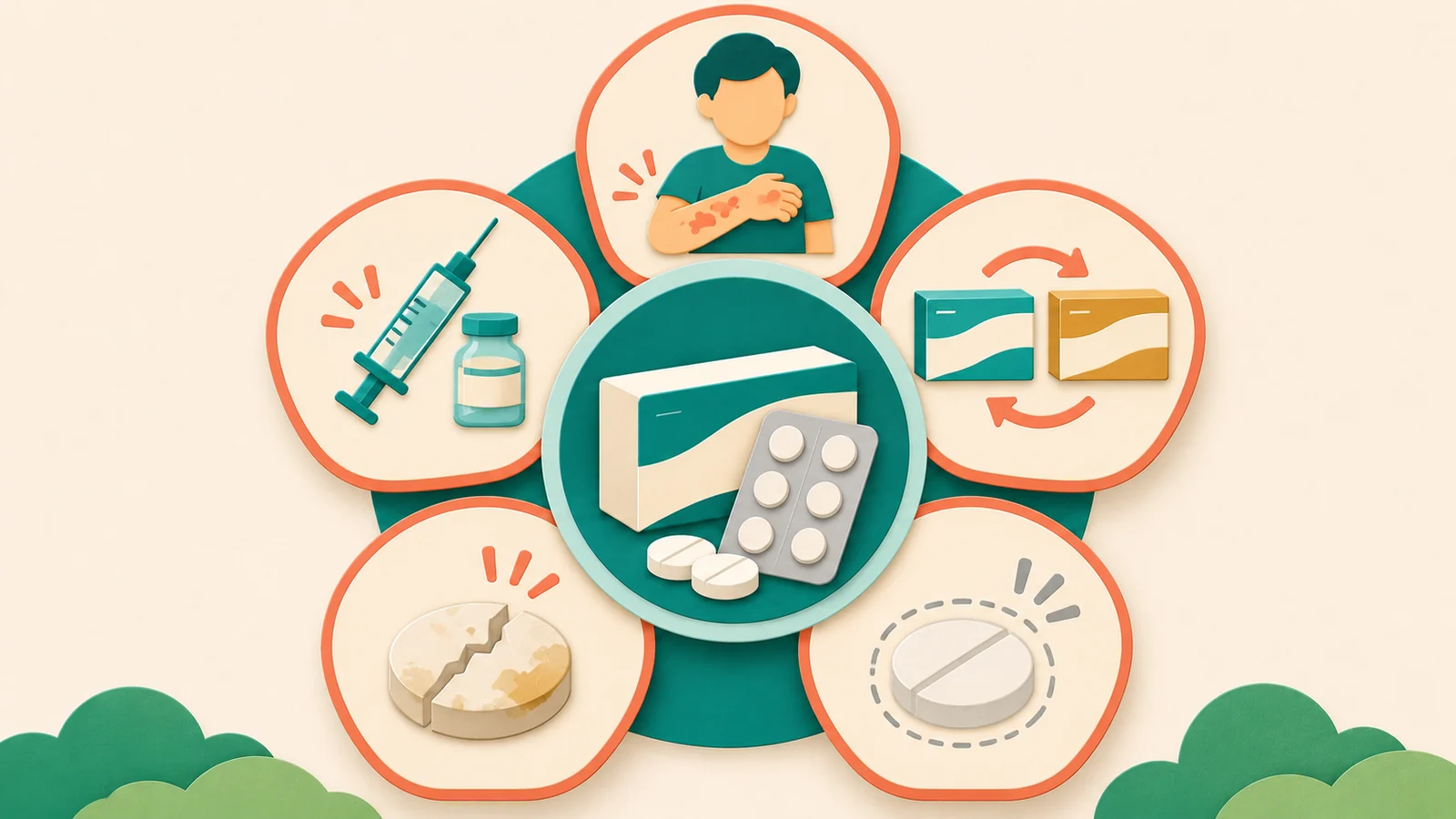
- Suspected reactionan unwanted effect of a medicine
- Vaccine event (AEFI)a health event after vaccination
- Medication errora mistake in prescribing, dispensing or use
- Product-quality concerndamaged, contaminated or wrongly labelled product
- Unusual lack of effectthe product does not seem to work as expected
- Suspected adverse drug reactions: unwanted or harmful responses occurring with normal use of a medicine.
- Adverse events following immunisation (AEFI): health events observed after vaccination; the timing alone does not establish that the vaccine caused them.
- Medication errors: errors in prescribing, dispensing, preparation, administration or use, whether or not harm occurred.
- Product-quality concerns: suspected contamination, unusual appearance or smell, damaged or incorrect packaging, labelling problems, or other defects.
- Therapeutic ineffectiveness or unusual lack of effect: when a product does not appear to work as expected and a product, use or safety issue may need investigation.
Do not wait for certainty or for a reaction to be listed in a package insert. A report is a safety observation, not a final diagnosis or a verdict on causality. A healthcare professional should assess urgent symptoms and provide appropriate care first; reporting must never delay treatment.
4. How does the pharmacovigilance cycle work?
The process can be understood as a loop. A patient or professional notices an event; relevant information is documented and reported; the report is checked and assessed; similar cases and other data are analysed for patterns; the possible risk is evaluated; and suitable action and feedback are communicated. New reports then help determine whether the action is working.
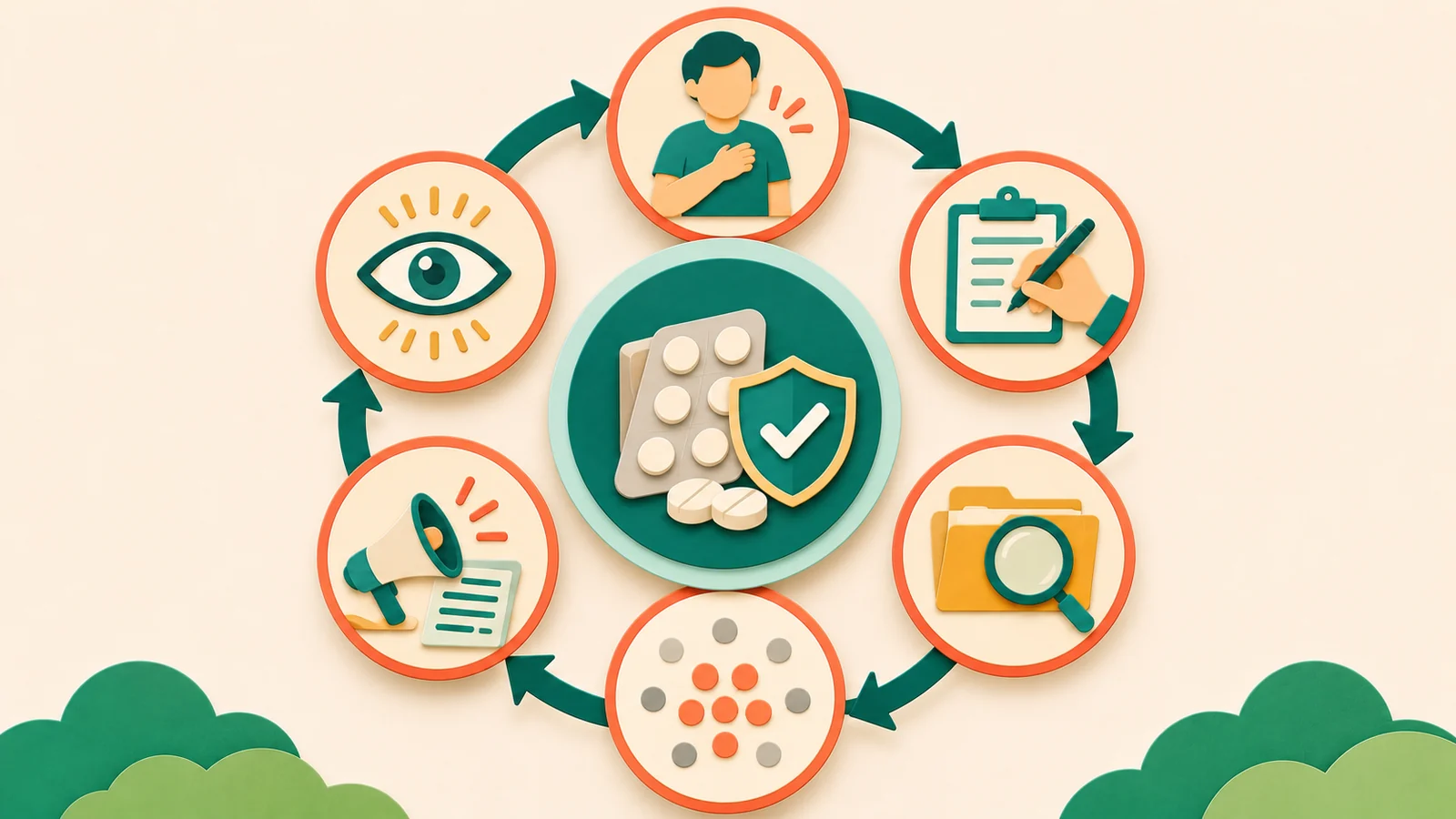
- Noticea patient or professional sees a possible problem
- Document and reportwrite down the facts and send them
- Assess the casecheck completeness, seriousness and clinical details
- Look for patternssignal detection across similar cases
- Evaluate risk, act and communicatechoose a proportionate response
- Keep monitoringnew reports show whether the action works
Reports are usually reviewed for completeness and may be followed up for missing information. A case may be assessed for seriousness, expectedness, clinical details, alternative explanations, timing and outcome. A single report can be important—especially for a rare, serious or unusual event—even though one report rarely answers every scientific question. Under-reporting is another important limitation. A 2026 systematic review of 11 cross-sectional studies involving 38,962 patients found that the proportion of suspected ADRs not formally reported ranged from 71.7% to 100% (median 98.05%). The studies were heterogeneous and had considerable risk of bias, and the authors rated the overall certainty of evidence as very low. These figures are not a Bangladesh estimate; they illustrate why accessible reporting routes, training and follow-up matter.
5. What is a safety signal?
A safety signal is information suggesting a possible new causal association, or a new aspect of a known association, between a medicine and an event that deserves further investigation. It may come from spontaneous reports, clinical studies, scientific literature, medicine-use data, product-quality information or other sources.

- Reports arrivescattered cases from many places
- A pattern stands outreviewers look more closely
- Cases are checkeda signal is a question, not a verdict
Signal detection looks for patterns that are unusual or stronger than expected. Reviewers may compare the reported medicine–event combination with other reports, examine timing and clinical details, consider known pharmacology, and look for alternative explanations. Statistical tools can help identify disproportional reporting patterns, but they do not prove that a medicine caused an event. The quality, completeness and context of the cases matter. A 2024 systematic review identified 31 signal-detection methods across 93 publications and found that methods can produce different results; the appropriate approach depends on the database, medicine, event and safety question. Bangladesh's national guideline says that more than one report is generally needed, depending on seriousness and information quality; for spontaneous ADR reporting it describes a series of similar cases and gives three as a general minimum. This does not mean a single serious or unusual report should be ignored. Every statistical alert still needs clinical and regulatory review.
A signal is a prompt to investigate—not proof of harm, a confirmed ADR, or an automatic instruction to stop treatment. Regulators and safety experts review the evidence before deciding whether product information, monitoring, prescribing advice or other measures should change.
6. How are causality and benefit–risk assessed?
When an event is reported after medicine use, the sequence in time is important but does not by itself prove causation. The assessor considers when the medicine was started, when the event began, whether it improved after withdrawal, whether it returned after re-exposure (if this occurred), the known safety profile, dose, co-medications, medical history, laboratory findings and other plausible causes. Rechallenge should never be deliberately attempted simply to test a suspected reaction when it could put a person at risk.
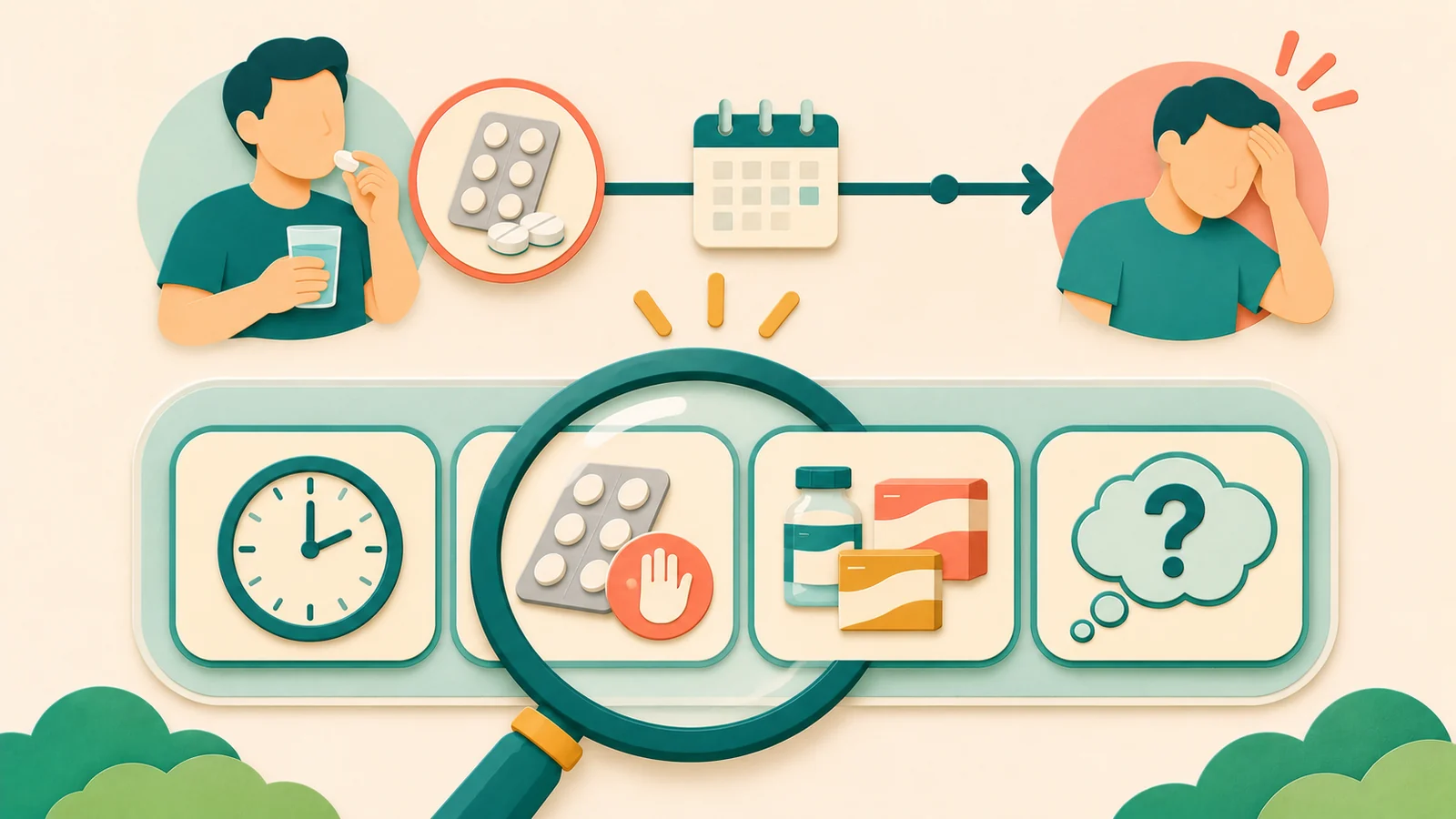
- Timingwhen the medicine started and when the event began
- Stopping the medicinedid the problem improve afterwards?
- Other medicinesco-medications and doses
- Other possible causesillness, history and tests
Even when causality remains uncertain, the report may still be useful. A collection of well-documented cases can reveal a pattern that would be difficult to recognise from one patient's experience. The next question is whether the possible risk changes the medicine's overall benefit–risk balance for a particular population or use.
Possible responses range from no change, continued monitoring or additional studies to updated warnings, changes in instructions, targeted communication, restricted use, suspension or recall. The response should be proportionate to the evidence and the seriousness of the potential risk.

- Keep monitoringwatch for new reports
- Review more evidencestudies and data
- Communicate new warningsupdate information and advice
- Change use if neededrestrict, suspend or recall
7. How does pharmacovigilance work in Bangladesh?
Bangladesh has a national framework led by the Directorate General of Drug Administration (DGDA). The DGDA's National Guideline on the Pharmacovigilance System in Bangladesh (Version 02, effective August 2023) identifies the DGDA as the National Pharmacovigilance Centre. The guideline describes the Adverse Drug Reaction Monitoring (ADRM) Cell and the Adverse Drug Reaction Advisory Committee (ADRAC) as parts of the national system.
The guideline recognises spontaneous reporting as an important surveillance method. Healthcare professionals—including doctors, nurses and pharmacists—community health workers, patients, consumers and members of the public can submit reports through the appropriate route. Healthcare professionals should use their facility's pharmacovigilance focal point where one exists; if there is no designated focal point, the guideline describes direct reporting to the ADRM Cell. Patients are encouraged to tell a healthcare professional or health facility; the guideline also describes direct contact with the ADRM Cell when immediate access to a professional or facility is not available.
The guideline’s serious-event category includes death, life-threatening conditions, disability, congenital anomaly, hospitalisation, or a change in therapy because of toxicity. The Bangladesh guideline asks that serious suspected adverse events be reported as soon as they occur or are notified. It specifies that the completed reporting form for a serious event should reach the ADRM Cell within 15 calendar days. Non-serious reports should be submitted no later than 30 calendar days after they are reported to the health facility. Product-quality concerns should be reported as soon as possible. These are timeframes in the cited national guideline; organisations and reporters should check the latest DGDA instructions and applicable requirements before operational use.
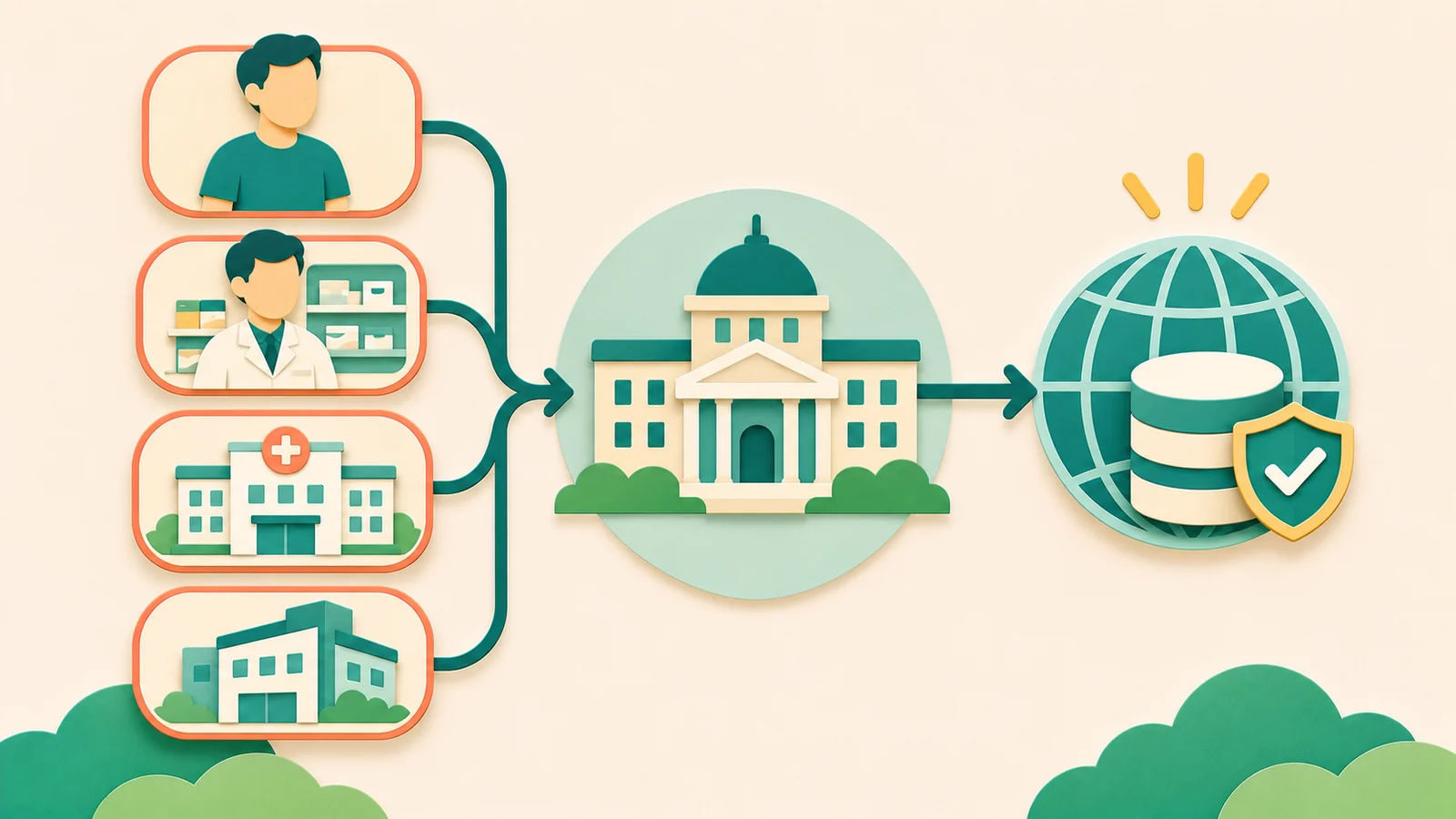
- Patients and consumers
- Doctors, nurses and pharmacists
- Hospitals and clinicsuse the PV focal point where one exists
- Other health facilities
- DGDA · ADRM Cellnational review
- National databaseWHO-UMC VigiFlow
- Serious event
15 calendar days for the completed form to reach the ADRM Cell - Non-serious report
30 calendar days after it is reported to the health facility
Reports are reviewed, may be investigated or assessed for causality, and can contribute to national signal detection and regulatory recommendations. The guideline describes WHO-UMC VigiFlow as the national adverse-event database. The DGDA website lists PViMS as an online pharmacovigilance reporting route. Follow current DGDA instructions and your facility’s PV focal point; do not assume that the reporting portal and the database are the same interface. If the portal is unavailable, use the current reporting options and contact details published by DGDA.
8. What information makes a useful report?
A clear report helps reviewers understand what happened and ask the right follow-up questions. Record what is known, distinguish observed facts from assumptions, and do not delay an urgent report just because every detail is not yet available. The Bangladesh guideline identifies minimum information covering the patient, suspected event, product and reporter. Additional useful details may include:

- Patientidentifier, age, sex where relevant
- Eventsymptoms, dates, outcome
- Suspected product and dosename, strength, batch if known
- Other medicines and historywhat else was taken
- Reporter contactso reviewers can follow up
- Privacyuse authorised channels only
- Patient details: an appropriate identifier, age or age group, sex where relevant, and pertinent medical history—following the form's privacy instructions.
- Event details: symptoms or diagnosis, onset date, seriousness, investigations, treatment given and outcome.
- Product details: brand and generic name, manufacturer, strength, dose, route, indication, batch or lot number if available, and start/stop dates.
- Other exposures: prescription medicines, non-prescription products, supplements and relevant recent changes.
- Reporter details: a way for the authorised safety team to seek clarification, handled confidentially under the applicable system.
Keep relevant packaging, photographs or records when appropriate and safe to do so. Do not send identifiable patient information through public comments or social media. Follow the official reporting form and local privacy procedures.
9. What is the role of pharmaceutical companies?
Marketing authorisation holders and manufacturers need an organised way to receive, document, evaluate and forward safety information in line with applicable requirements. Their work may include maintaining a pharmacovigilance system, training relevant staff, reviewing cases, monitoring literature, evaluating signals, preparing periodic safety reports or risk-management documents where required, and communicating new safety information.

- Receive and recordevery report, however informal
- Pass it on promptlyto the responsible PV team
- Safety before targetssales goals never decide what is reported
Sales, medical, regulatory, quality, customer-care and field teams may be the first to hear a complaint or suspected reaction. They should recognise that safety information can arrive in an informal conversation, email, call, social-media message or product-quality complaint. A defined internal process should route it promptly to the responsible pharmacovigilance personnel. Commercial targets must never influence whether a safety report is recorded or escalated.
Pharmacovigilance is also connected to quality assurance. A cluster of similar complaints may indicate a product defect, storage problem, medication-use error or a genuine adverse reaction—or more than one issue at the same time. Collaboration helps the responsible teams investigate without prematurely assuming the cause.
10. What should patients and healthcare professionals remember?
Patients should seek urgent medical help for severe or rapidly worsening symptoms. For a suspected medicine-related problem, contact a doctor, pharmacist or other qualified healthcare professional and share the medicine pack, dose and timing if possible. Do not stop an essential treatment, restart a medicine, or change a dose solely because of a blog post or an unverified online claim; obtain individual clinical advice.
Healthcare professionals should document suspected events, report through the appropriate local and national channel, and explain to patients that reporting helps improve the safety knowledge around medicines. A report does not automatically mean that the product is unsafe or that the reporter has established causation. It is one part of a system that turns real-world experience into better-informed decisions.

- Write down what happened
- Note medicine, dose and timing
- Watch symptomsget urgent help if severe
- Talk to a doctor or pharmacist
- Report through the right channel
The key message: pharmacovigilance does not end when a medicine reaches the market. It is continuous learning—notice, report, assess, detect patterns, act and communicate—to help keep the benefits of medicines greater than their risks.
Key takeaways
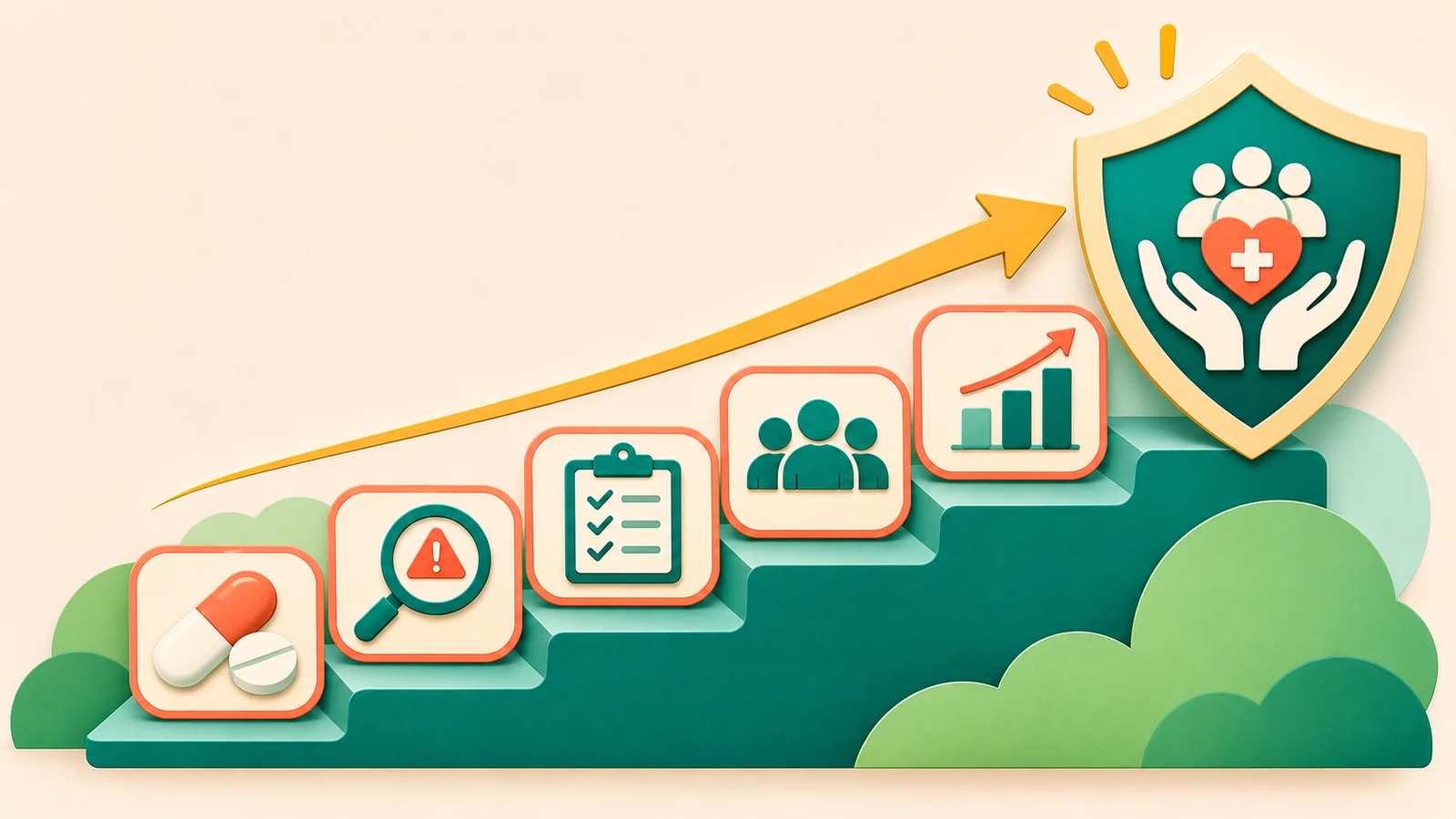
- Watched after approvalmedicines are monitored in real-world use
- Report without proofa suspected problem is enough
- Checked and assessedreports are reviewed, not just collected
- Everyone takes partpatients, professionals, companies and regulators
- Evidence guides actionresponses are proportionate to the risk
Frequently asked questions
Is pharmacovigilance the same as ADR reporting?
No. ADR reporting is one important source of information. Pharmacovigilance also includes case assessment, signal detection, benefit–risk review, risk minimisation and safety communication.
Does an adverse event report prove that a medicine caused the problem?
No. It records a suspected event. Timing and other details are assessed, and alternative causes may exist. A report is not proof of causation.
Who can report a suspected adverse event in Bangladesh?
The national guideline allows healthcare professionals, community health workers, patients, consumers and the general public to submit spontaneous reports through the appropriate route.
Do I need to wait until a reaction is confirmed?
No. Report a suspected event through the appropriate channel. Do not delay urgent clinical care while completing a report.
What is a safety signal?
A safety signal is information suggesting a possible new or changed medicine–event association that needs further evaluation. It is not, by itself, proof of causation.
What are the reporting timeframes in Bangladesh?
The cited DGDA national guideline says serious events should be reported as soon as possible and the completed form sent within 15 calendar days; non-serious reports are due within 30 calendar days after they are reported to the health facility. Check current DGDA requirements.
Should a patient stop a medicine after a suspected reaction?
Not automatically. Seek advice from a qualified healthcare professional. Severe or rapidly worsening symptoms require urgent medical attention.
References
- WHO — Pharmacovigilance strategies
- WHO — Tools and innovations in pharmacovigilance
- DGDA — National Guideline on the Pharmacovigilance System in Bangladesh (Version 02; effective August 2023)
- Nohr AK, et al. Reporting of suspected adverse drug reactions: a systematic review comparing clinical settings and pharmacovigilance systems. Naunyn-Schmiedebergs Archives of Pharmacology. 2026. doi:10.1007/s00210-026-05917-2.
- Jiao X-F, et al. Adverse drug reaction signal detection methods in spontaneous reporting system: a systematic review. Pharmacoepidemiology and Drug Safety. 2024;33(3):e5768. doi:10.1002/pds.5768.
- DGDA — PViMS online pharmacovigilance reporting portal
- DGDA — Official website and medicine-safety information

Sayedul Abrar
Pharmacist · Product Executive, Product Management Department
Opsonin Pharma Ltd.