 Sayedul Abrar

1. What is the pharmaceutical industry?
Think about a simple tablet you might see in a pharmacy. It looks like a small, finished object. But behind that tablet may be years of scientific research, chemical or biological production, formulation development, testing, regulatory assessment, manufacturing controls, packaging decisions and a distribution network.
That connected ecosystem is the pharmaceutical industry. It is not limited to factories that press tablets or fill capsules. It includes research scientists, pharmacists, physicians, chemists, engineers, statisticians, quality specialists, regulatory professionals, clinical researchers, supply-chain teams and many others.
The industry's central responsibility is to help make medicines available that meet the required standards for quality, safety and efficacy. The exact evidence and regulatory requirements depend on the product and the country in which it is developed or marketed.
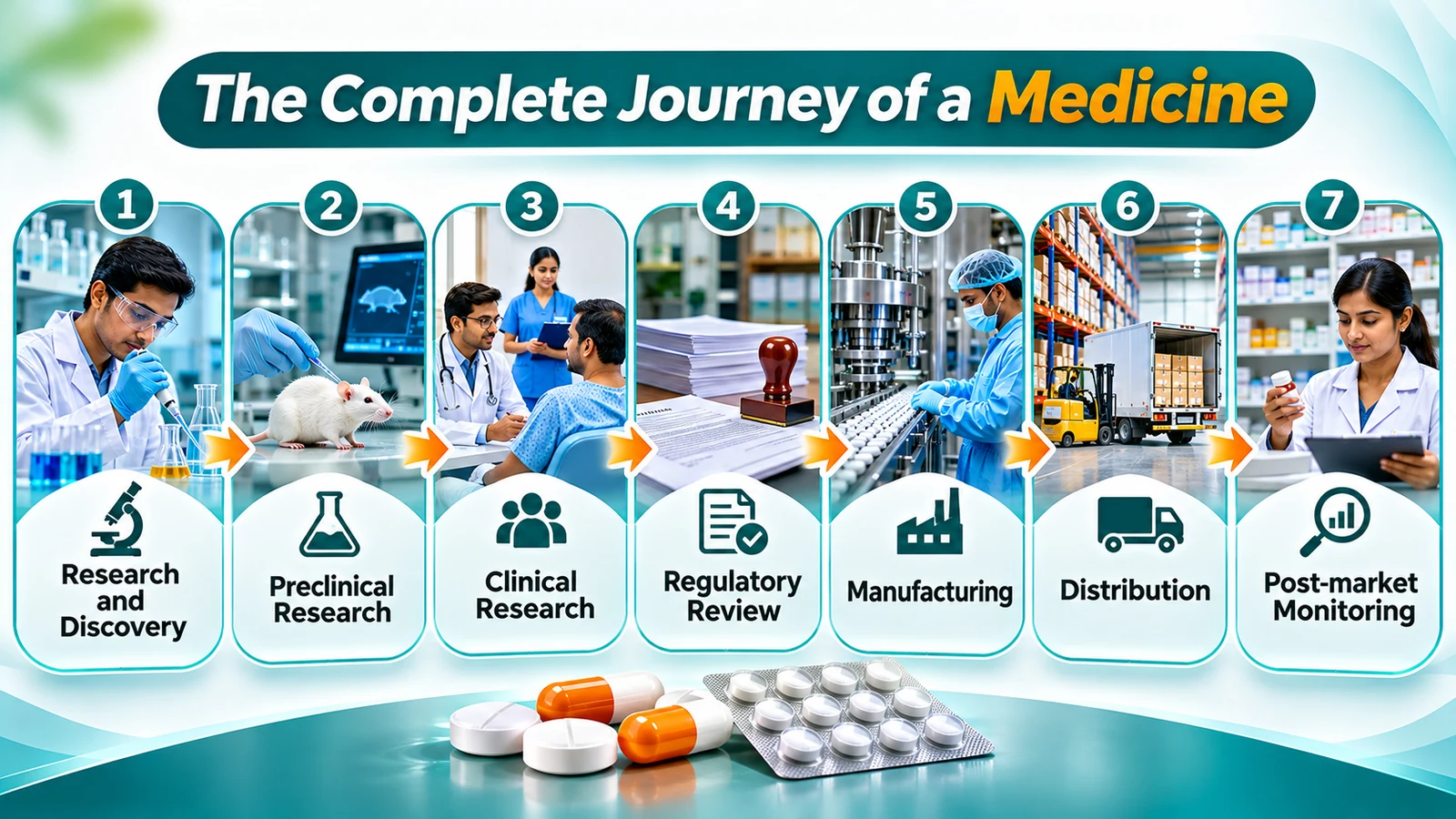
2. How does a medicine move from an idea to a patient?
Not every medicine follows an identical route. A new chemical entity, a biological medicine and a generic version of an already established medicine have different development pathways. However, the following stages provide a useful overview.
Step 1 — Research and discovery
Researchers investigate a disease, identify a biological target or mechanism and look for a substance that may produce a useful effect. Early work may involve computer modelling, laboratory experiments, screening compounds and studying how a candidate behaves in biological systems. A promising laboratory result is a starting point—not proof that a medicine will work in people.
Step 2 — Preclinical studies
Before a new investigational medicine is tested in humans, developers conduct appropriate laboratory and non-clinical studies to examine pharmacology, toxicity and other safety questions. The results help determine whether there is enough evidence to justify carefully controlled human research. The exact package depends on the product and applicable rules.
Step 3 — Clinical research
Clinical studies assess a candidate medicine in people under an approved research protocol and ethical oversight. Early studies commonly examine safety, tolerability, dose and how the body handles the medicine. Later studies may evaluate whether it provides a meaningful benefit for a defined condition and how its risks compare with existing options. Study phases and designs vary; not every product follows the same sequence.
Step 4 — Regulatory review
The company or sponsor submits a dossier to the relevant national regulatory authority. The submission may include clinical and non-clinical evidence, product quality data, proposed labelling and manufacturing information. The regulator assesses whether the evidence supports the proposed use and whether the manufacturing and quality controls are suitable. Approval in one country does not automatically mean approval in every other country.
Step 5 — Manufacturing and release
Once the product is authorised for manufacture and sale under the applicable system, commercial production takes place under controlled procedures. Each batch must meet approved specifications and pass the required review before release. Packaging and labelling are also controlled parts of the process.
Step 6 — Distribution and post-market monitoring
Medicines move through authorised distribution channels, with storage and transport conditions appropriate to the product. Safety monitoring continues after launch because clinical trials cannot identify every possible adverse effect or every issue that may emerge when a medicine is used by a much larger and more diverse population.
3. What are the different types of pharmaceutical companies?
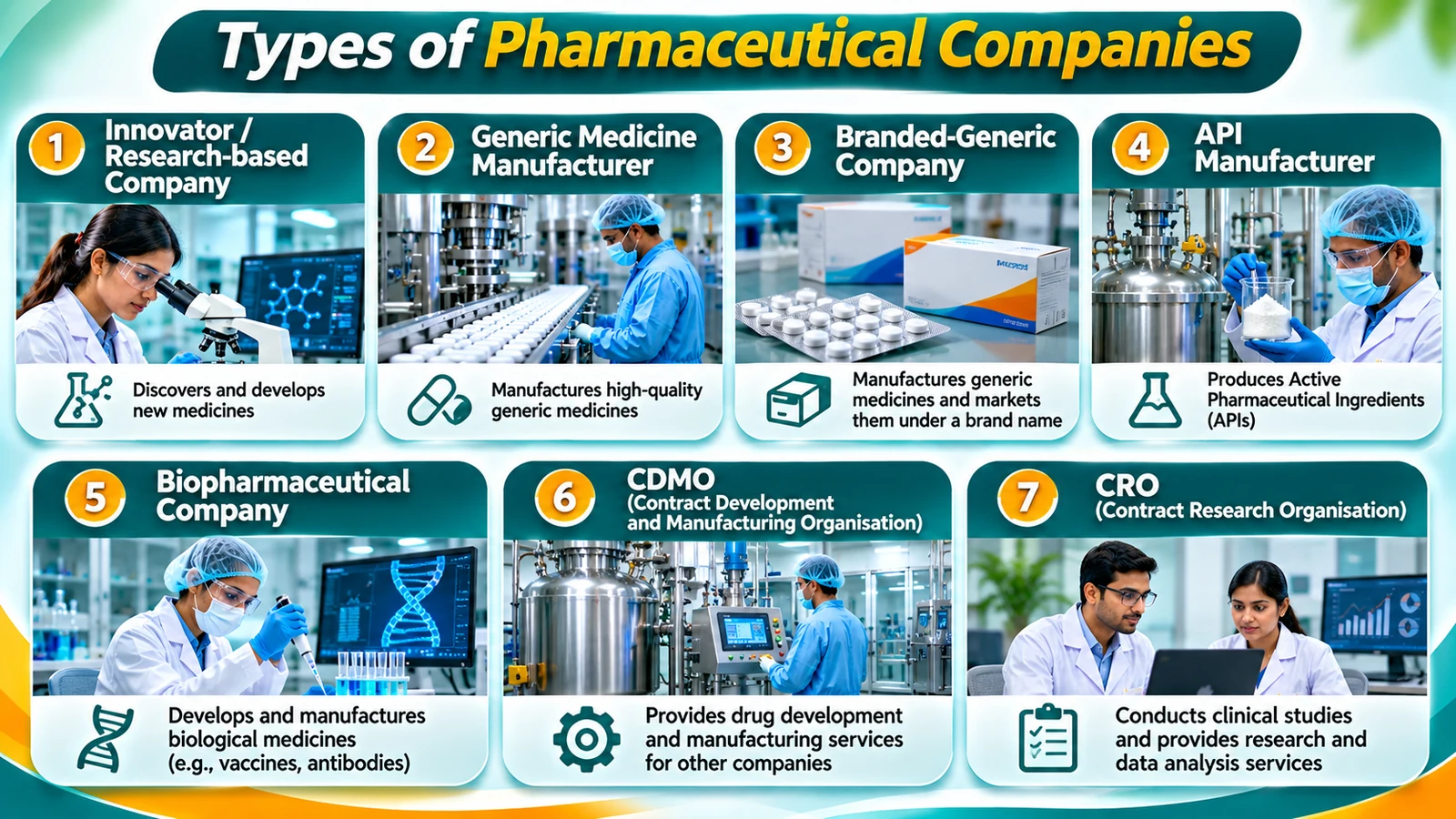
People often imagine that every pharmaceutical company does the same thing. In reality, companies may specialise in different parts of the value chain. These categories can overlap: a large company may research, manufacture, market and distribute products, while another may focus on only one service.
1. Research-based or innovator companies
These organisations invest in discovering and developing new medicines. Their work may include target research, candidate selection, non-clinical studies, clinical trials, regulatory submissions and lifecycle management. Developing a new medicine is expensive, uncertain and time-consuming; many research candidates never become approved products.
2. Generic medicine manufacturers
These companies develop and manufacture medicines that are intended to be equivalent to an approved reference product under the relevant regulatory pathway. Requirements vary by jurisdiction and product. Depending on the medicine, evidence may include pharmaceutical equivalence, bioequivalence, quality data and compliance with manufacturing standards. A generic medicine is not simply an untested copy.
3. Branded-generic companies
In Bangladesh, many medicines are sold under a company-selected brand name even though the active ingredient is a well-known generic medicine. For example, a pack may show a brand name on the front and “Paracetamol 500 mg” as the generic name or composition. The brand identifies the marketed product; paracetamol identifies the active ingredient. A familiar or expensive brand name alone does not prove that a medicine is clinically better than another. The approved formulation, quality, evidence and correct use matter. To go deeper, read my article on generic name vs brand name.
4. Active pharmaceutical ingredient (API) manufacturers
API manufacturers produce the active substances that provide the intended pharmacological activity in a medicine. For example, paracetamol is the API in a paracetamol tablet. An API supplier may provide this material to a separate formulation manufacturer, which combines it with suitable excipients and makes the finished tablet. API quality is critical, but an API powder or drum is not the same as the finished medicine a patient buys from a pharmacy. This distinction is especially important in Bangladesh because a large share of API requirements is still imported.
5. Biopharmaceutical and biotechnology companies
These companies develop or manufacture medicines derived from biological systems or biotechnology processes. Examples include some vaccines, therapeutic proteins, monoclonal antibodies and cell or gene-based products. Their manufacturing and quality controls can involve specialised biological processes and analytical methods.
6. Contract Development and Manufacturing Organisations (CDMOs)
A CDMO provides development and/or manufacturing services to another company. A client may outsource formulation development, process scale-up, analytical work, clinical or commercial manufacturing, packaging or other technical activities. The exact services depend on the organisation.
7. Contract Research Organisations (CROs)
A CRO provides research services to sponsors. These may include clinical-trial operations, study monitoring, data management, biostatistics, medical writing and regulatory support. A CRO is a research service partner; it is not necessarily the owner or manufacturer of the medicine being studied.
8. Specialty and niche pharmaceutical companies
Some companies focus on particular therapeutic areas, complex dosage forms, hospital medicines, rare diseases, vaccines, dermatology, oncology or other specialised segments. Their focus may be research, manufacturing, marketing or a combination of these.
| Company type | Main focus | Typical role |
|---|---|---|
| Innovator / research-based | New medicines | Discovery, development and clinical evidence |
| Generic / branded-generic | Established active ingredients | Developing and manufacturing products under applicable generic pathways |
| API manufacturer | Active ingredients | Producing pharmaceutical substances used in finished products |
| Biopharmaceutical | Biological medicines | Developing or manufacturing biotechnology-derived products |
| CDMO | Development and manufacturing services | Supporting another company's product development or production |
| CRO | Research services | Supporting non-clinical or clinical research activities |
4. What happens inside a pharmaceutical manufacturing facility?
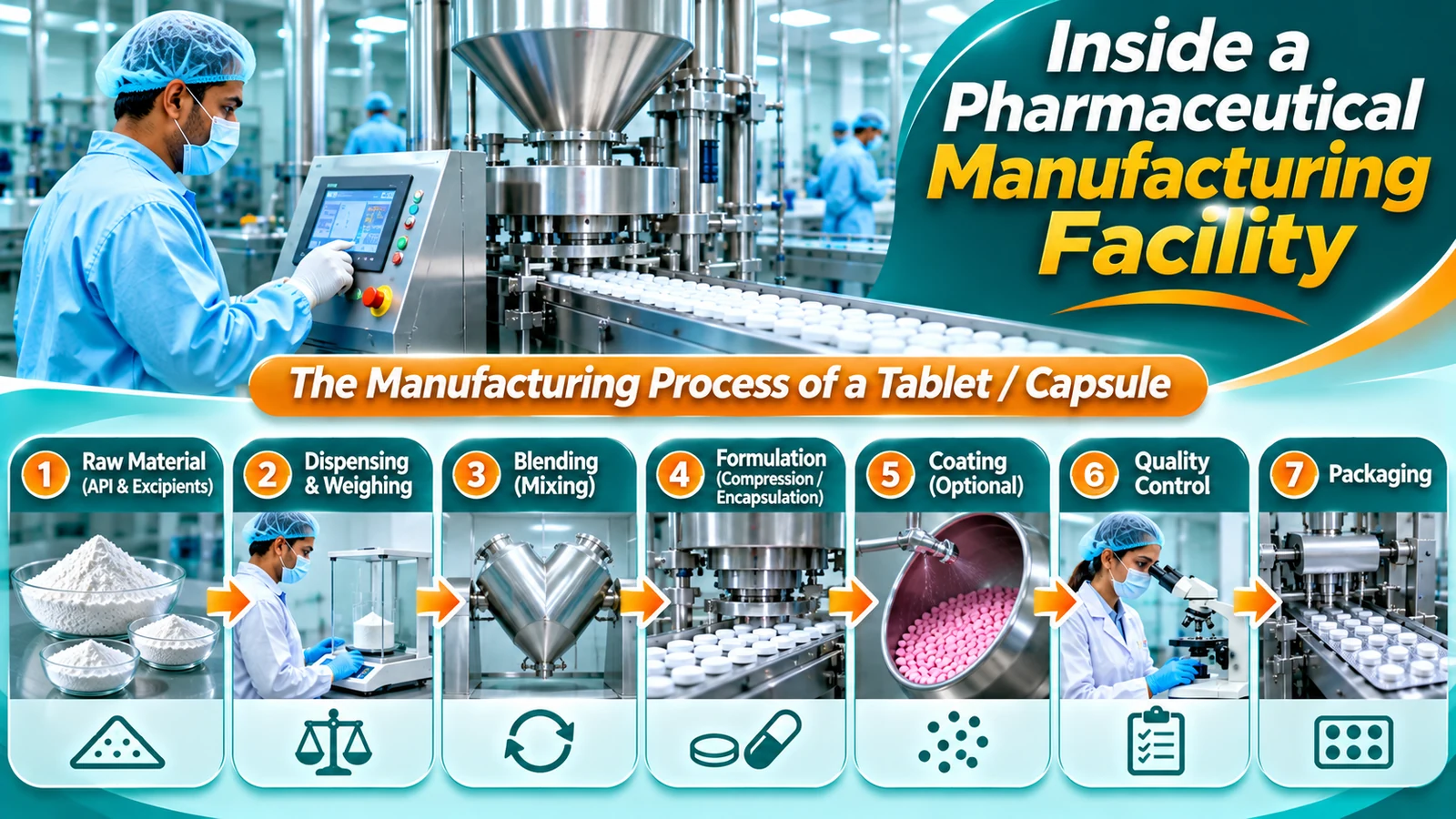
Manufacturing is a controlled sequence of operations—not simply mixing ingredients and putting them into a box. The process depends on the dosage form and product. A conventional tablet, sterile injection, inhaler and biological medicine require different equipment, controls and expertise.
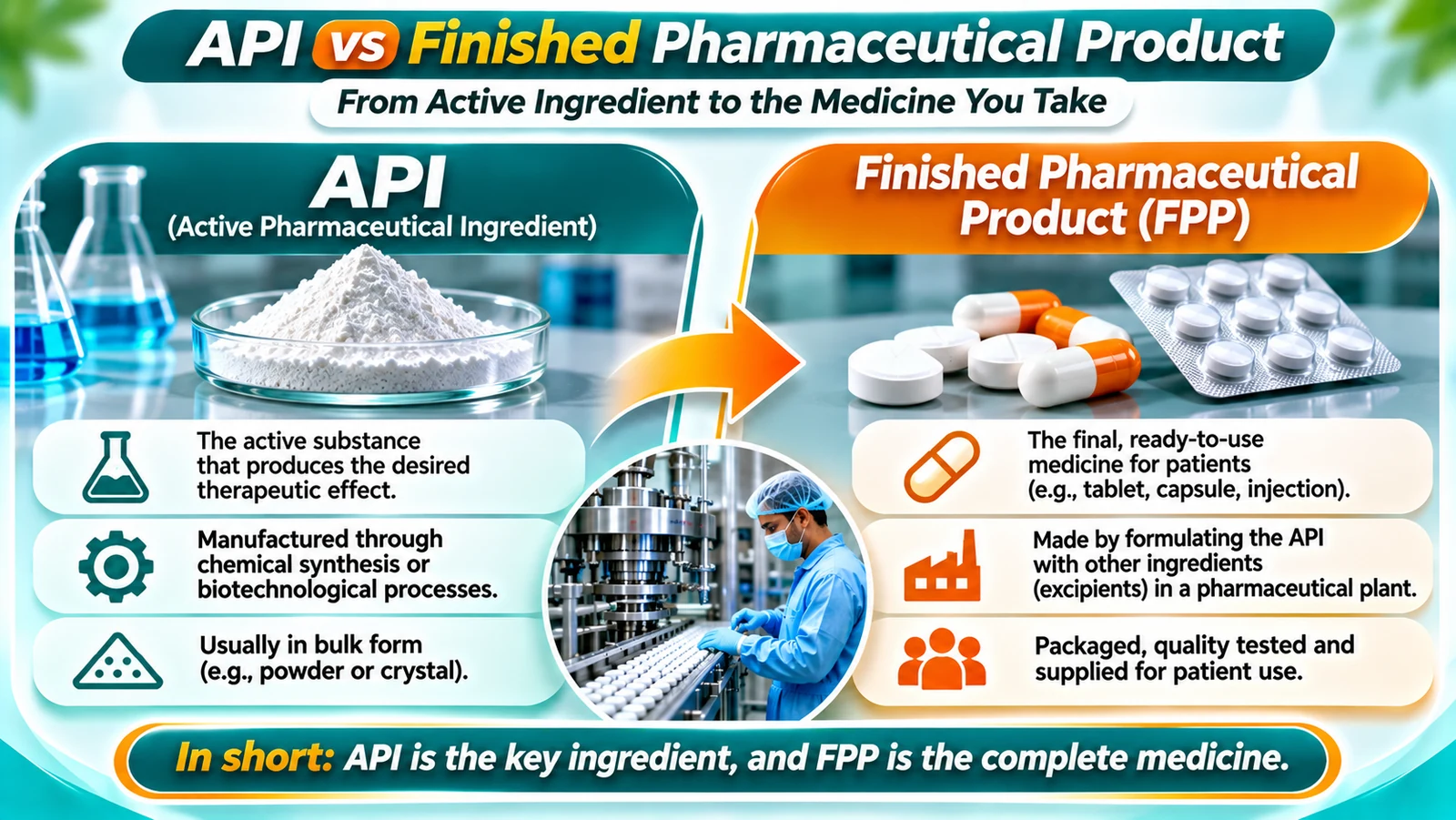
API and excipients: the two important formulation components
The active pharmaceutical ingredient (API) is the substance intended to provide the pharmacological activity or other direct effect. Excipients are the other formulation ingredients. Depending on the product, they may help with manufacturing, stability, dose uniformity, disintegration, taste, preservation or delivery of the active ingredient. “Inactive” does not mean that an excipient is irrelevant; its suitability and quality must also be assessed.
From formulation to finished product
For a tablet, a simplified process may include dispensing and weighing materials, blending, granulation when required, drying, compression, coating when appropriate, packaging and labelling. Capsules, liquids, creams, sterile products and biologics follow different processes. Not every tablet uses every listed step.
A finished pharmaceutical product (FPP) is a finished dosage form that has completed the required manufacturing stages, including packaging in its final container and labelling. This is why the API and the finished medicine should not be treated as interchangeable terms.
5. How are medicine quality and safety maintained?
Good Manufacturing Practice (GMP)
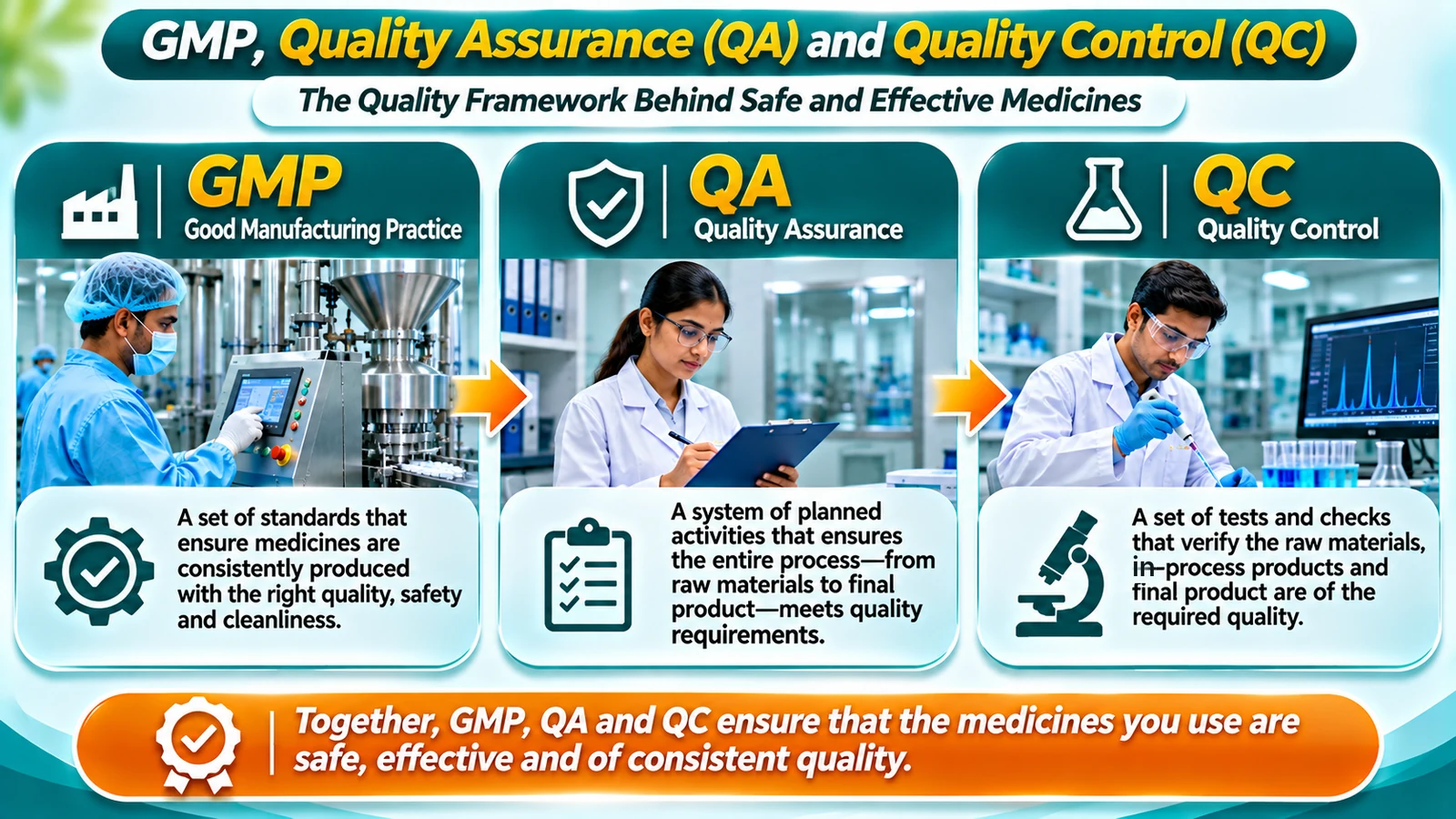
GMP is a part of pharmaceutical quality assurance. It helps ensure that medicines are consistently produced and controlled according to appropriate quality standards and their authorised requirements. It covers more than a clean factory: trained personnel, suitable premises and equipment, validated processes, documentation, hygiene, prevention of mix-ups and cross-contamination, investigation of deviations and controlled changes all matter.
Quality Assurance (QA) vs Quality Control (QC)
Quality Assurance is the broader system designed to build quality into processes and provide confidence that requirements are met. Quality Control includes sampling, specifications, testing and other checks used to assess whether materials, in-process products and finished batches meet defined criteria. QC is an important part of the overall quality system; it does not replace QA.
Regulatory affairs
Regulatory professionals coordinate the information and procedures needed to register and maintain products in each market. Their work may include product dossiers, variations, renewals, labelling, responses to regulator questions and tracking changing requirements. A medicine must comply with the rules of the country where it is marketed.
Pharmacovigilance
Pharmacovigilance is the science and activities involved in detecting, assessing, understanding and preventing adverse effects and other medicine-related problems. Companies, healthcare professionals, regulators and patients all contribute to medicine safety monitoring. It continues after approval because real-world use can reveal information that was not apparent in pre-approval studies.
Good distribution and storage practices
Quality can be compromised after a medicine leaves the factory if it is stored or transported incorrectly. Distribution systems therefore need appropriate temperature and humidity controls where required, secure handling, traceability, authorised supply channels, documentation and procedures for complaints, returns and recalls. In Bangladesh's hot and humid climate, storage instructions on the pack matter. Pharmacies and medicine shops should store products according to the manufacturer's labelled conditions and applicable DGDA requirements—not in direct sunlight, near heat or in damp places.
6. How does the pharmaceutical industry work in Bangladesh?
Bangladesh has built a strong local medicine-manufacturing sector. According to the Bangladesh Investment Development Authority (BIDA), local manufacturers meet around 98% of the country's medicine demand and the sector exports to more than 150 destinations. BIDA's online profile also says that more than 85% of the country's API requirement is imported. These are sector-profile figures, not a live count of today's sales or production, so they should be read with the reporting period and methodology in mind. The same profile also refers to 213 active companies and puts annual API imports at about USD 1.3 billion; like the other figures, these carry no year on the page.
What does this mean in everyday life? A medicine sold at a pharmacy in Dhaka, Gazipur, Chattogram or a smaller town may have been formulated and packed in a Bangladeshi factory, while its API or some other raw materials may have come from another country. Local manufacturing and local raw-material production are two different things.
Who regulates medicines in Bangladesh?
The Directorate General of Drug Administration (DGDA) is Bangladesh's national drug regulatory authority. The Drugs and Cosmetics Act, 2023 (Act No. 29 of 2023) provides the current principal legal framework for matters including the manufacture, import, export, sale, storage, distribution and quality control of drugs and cosmetics. Companies must also follow applicable rules, policies, official guidance and product-specific regulatory decisions. Always check the latest DGDA information rather than relying on an old checklist or a social-media post.
How does a locally made medicine reach a patient?
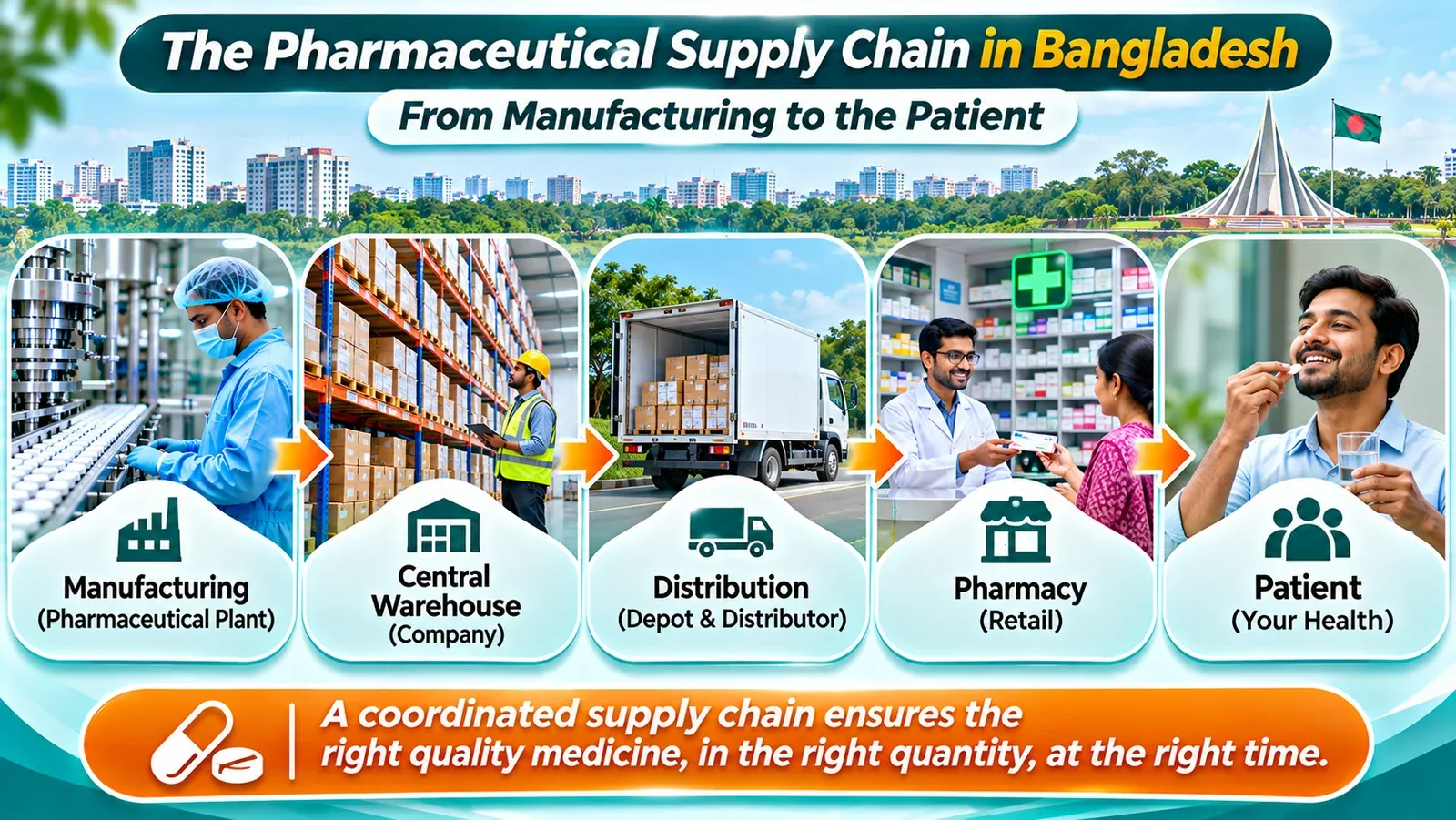
Consider a simple example: a Bangladeshi manufacturer plans to produce a paracetamol tablet. It obtains an approved-quality API and suitable excipients, checks incoming materials, manufactures the tablet under controlled procedures, tests the batch, reviews the manufacturing and quality records, and releases the batch only when the required specifications are met. The packed medicine then moves through authorised distribution channels to pharmacies, hospitals or other permitted outlets. A patient receives the medicine after it has passed through this chain—not directly from a mixing machine.
This example is simplified. Actual product requirements, testing, licences, records and release procedures depend on the medicine, its approved dossier and current Bangladesh regulations. A locally manufactured product may still depend on imported APIs, excipients, packaging materials or equipment.
What are the main opportunities and challenges?
Bangladesh's strengths include a large local manufacturing base, a skilled workforce and experience supplying medicines to overseas markets. Important areas for further development include greater API manufacturing capability, research and development, advanced formulations, strong quality culture, reliable utilities and supply chains, skilled technical people, and the ability to meet the different regulatory requirements of export markets. An API industrial park in Munshiganj is part of the country's effort to develop this part of the supply chain, but an industrial park by itself does not mean the country is already self-sufficient in APIs.
7. Who works in the pharmaceutical industry?
The industry brings together many professional disciplines. Some common functions include:
- Research and development: scientists and formulation teams explore molecules, formulations and product improvements.
- Production and engineering: teams operate, maintain and improve manufacturing processes and facilities.
- Quality Assurance and Quality Control: professionals manage quality systems, sampling, testing, documentation and batch-related decisions.
- Regulatory affairs: teams coordinate submissions, approvals, variations and compliance.
- Medical affairs: scientific professionals support accurate medical information, scientific exchange and evidence communication.
- Pharmacovigilance: teams collect and assess safety information and coordinate required reporting.
- Supply chain and distribution: professionals plan procurement, inventory, storage, transport and availability.
- Sales, marketing and product management: teams communicate approved product information, understand market needs and plan responsible commercial activities within applicable laws and ethical standards.
Pharmacists can contribute across many of these areas. Their education in medicines, dosage forms, pharmacology, quality and patient care can be valuable in both technical and commercial roles.
Frequently asked questions
1. What is the pharmaceutical industry in simple words?
It is the group of companies, professionals and organisations that research, develop, manufacture, test, regulate, distribute and monitor medicines.
2. Is a pharmaceutical company the same as a medicine factory?
Not always. Some companies own manufacturing facilities, while others focus on research, regulatory services, marketing, distribution, API production or outsourced services. Some operate across several activities.
3. What is an API in the pharmaceutical industry?
An active pharmaceutical ingredient is the substance in a medicine intended to provide its pharmacological activity or other direct therapeutic effect.
4. What is the difference between API and finished pharmaceutical product?
An API is the active substance. A finished pharmaceutical product is the completed dosage form, such as a tablet or capsule, that has undergone the required manufacturing stages and final packaging and labelling.
5. What is GMP?
Good Manufacturing Practice is a quality-assurance framework that helps ensure medicines are consistently produced and controlled according to appropriate standards and authorised requirements.
6. What is the difference between QA and QC?
QA is the broader system for building and assuring quality. QC includes sampling and testing to check whether materials and products meet specifications. QC is part of the overall quality system.
7. What does a CRO do?
A Contract Research Organisation provides research services, such as clinical-trial management, monitoring, data management, biostatistics or medical writing, to a sponsor.
8. What does a CDMO do?
A Contract Development and Manufacturing Organisation provides some combination of product or process development and manufacturing services for another company.
9. Does a medicine stop being monitored after approval?
No. Pharmacovigilance and quality monitoring continue after marketing authorisation because uncommon or long-term problems may become apparent only after wider use.
10. Who regulates medicines in Bangladesh?
The Directorate General of Drug Administration (DGDA) is Bangladesh's national drug regulatory authority. Product and company requirements should be checked against current DGDA legislation, rules and official guidance.
11. How much of Bangladesh's medicine demand is met by local manufacturers?
According to the BIDA sector profile, local manufacturers meet about 98% of the country's medicine demand. The page gives no year or methodology, so treat it as a profile figure rather than a live statistic.
12. Does Bangladesh make its own APIs?
Only a small share. BIDA's profile says Bangladesh imports over 85% of its API needs, and it describes a 200-acre BSCIC API Park at Munshiganj as helping to build domestic API production. Making finished tablets locally is different from making the API locally.
13. What is a branded-generic medicine?
A medicine sold under a company-selected brand name whose active ingredient is a well-known generic substance, such as paracetamol. The brand identifies the product and the generic name identifies the ingredient. See Generic Name vs Brand Name.
Key takeaways
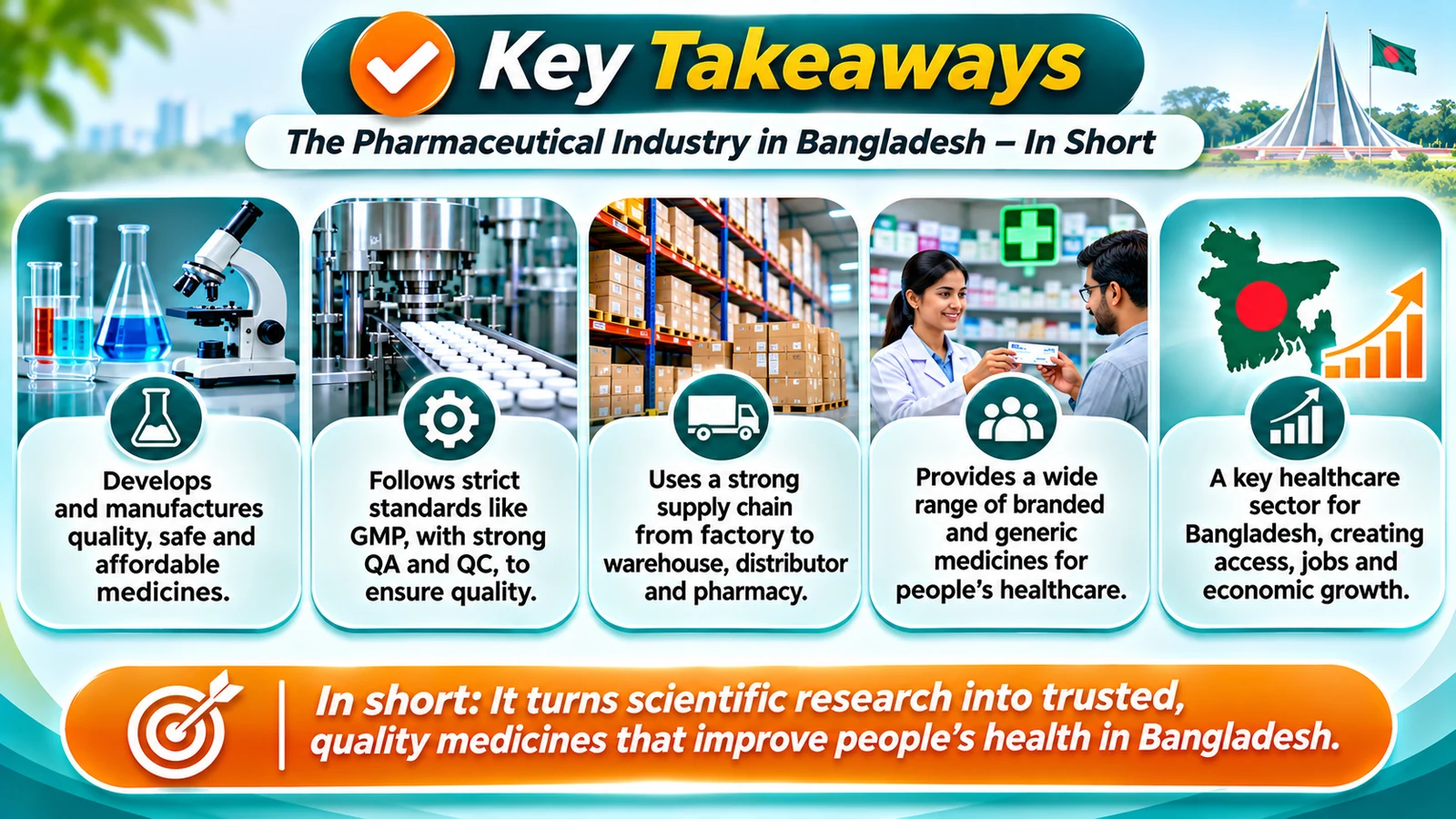
- The pharmaceutical industry is a complete ecosystem, not just a manufacturing factory.
- APIs, excipients and finished dosage forms are related but different concepts.
- Innovator, generic, API, biotechnology, CRO and CDMO organisations play different roles, and their activities can overlap.
- GMP, QA, QC, regulatory affairs and pharmacovigilance protect different parts of medicine quality and safety.
- Distribution and storage are also essential to preserving product quality.
Explore manufacturing and quality topics
The pharmaceutical industry depends on more than the finished product. These guides explain key parts of the manufacturing and quality system:
- Active pharmaceutical ingredients (APIs)
- Good Manufacturing Practices (GMP)
- Quality Assurance vs Quality Control
- Medicine stability testing and shelf life
References and further reading
- U.S. Food and Drug Administration (FDA). The Drug Development Process. Overview of discovery, preclinical research, clinical research, regulatory review and post-market safety monitoring.
- FDA. Drug Development and Review Definitions. Information on clinical studies, applications, evidence and manufacturing controls.
- World Health Organization (WHO). Guidelines: Production. WHO overview of production operations and Good Manufacturing Practices.
- WHO. Quality assurance of pharmaceuticals: a compendium of guidelines and related materials, Volume 2: Good manufacturing practices and inspection, 10th ed. 2024.
- WHO Prequalification of Medical Products. Glossary. Definitions including finished pharmaceutical product (FPP).
- WHO. What is Pharmacovigilance? Overview of medicine safety monitoring.
- WHO. Good storage and distribution practices for medical products. WHO Technical Report Series 1025, Annex 7, 2020.
- Bangladesh Investment Development Authority (BIDA). Pharmaceuticals & API sector profile. Industry profile reporting domestic demand coverage, export destinations and API import dependence. Check the profile for the reporting period before reusing statistics.
- Directorate General of Drug Administration (DGDA), Bangladesh. Laws and official regulatory information. Includes the Drugs and Cosmetics Act, 2023 and other applicable instruments.
- Government of Bangladesh. Drugs and Cosmetics Act, 2023 (Act No. 29 of 2023). Official legislation text.
- WHO. Guidelines: Distribution. Quality assurance in the medicine supply chain.
Editorial note: This article is an educational overview, not a regulatory or legal opinion. Requirements differ by product type and jurisdiction. Always consult current local laws, regulator guidance and product-specific approvals.

Sayedul Abrar
A Grade Pharmacist · Registration Code: A-22040
Product Executive, Product Management Department (PMD) · Opsonin Pharma Ltd.